

Contents
What a Turkey skipper is responsible for
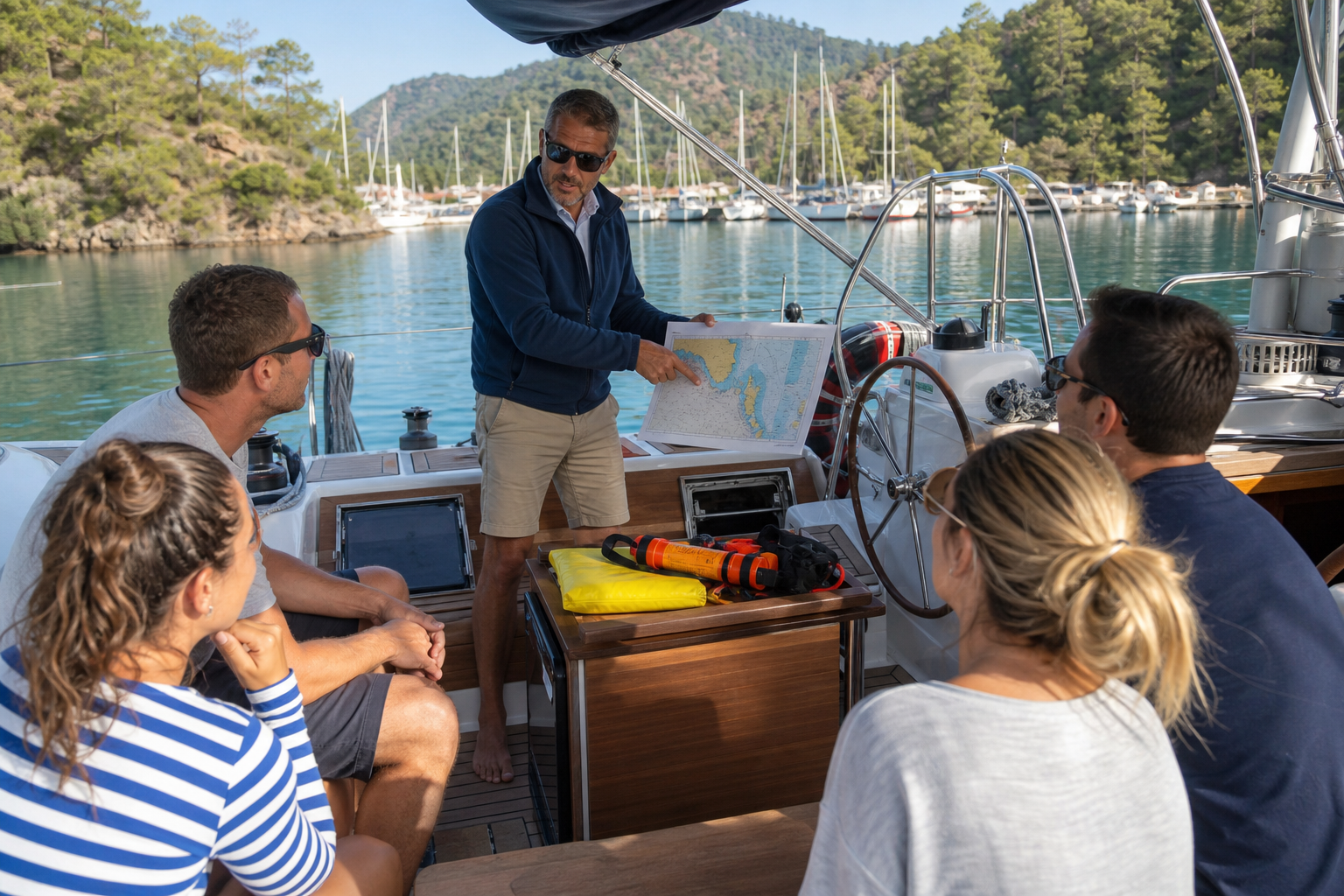
A professional skipper takes responsibility for navigation, manoeuvres, safety briefings and the final decision to leave, shorten or cancel a passage. In Göcek or Marmaris, that includes reading the local wind pattern, choosing a sheltered bay and handling the boat in an unfamiliar marina. The skipper is not a tour guide who must deliver every promised cove. Their first duty is to keep the vessel, guests and return schedule inside a safe plan.
Before paying, ask how the skipper’s working period is defined. Does it cover the full charter, only daylight passages or the handover and return day as well? Clarify who decides the route, whether guests can helm and how emergencies are communicated. Write the answer in the booking confirmation; the phrase “skipper included” is not a complete scope of service.
What the fee covers—and what it leaves out
The fee normally covers the skipper’s professional time, navigation, manoeuvres and safety management during the agreed period. It usually does not include their food, transfers, marina charges, fuel, provisioning or gratuity unless the offer says so. Some operators bundle transit log, cleaning or linen into the yacht price; others keep them separate. Request an itemised quote with the skipper, fixed costs and consumption costs on different lines.
Cabin and meals are the common source of friction. Confirm whether the skipper has a private cabin, access to a head, storage for personal gear and a place to rest while guests use the cockpit. Agree whether the group cooks for everyone, funds a separate allowance or shares restaurant meals. A fair arrangement recognises that the skipper is both a professional and a person who needs rest to make good decisions.
Turn handover into a shared briefing
On arrival, the skipper should walk the group through the boat, not only sign the inventory. Check engine hours, batteries, water, gas, seacocks, bilge pumps, anchor gear, tender, outboard and lifejackets. Ask where the fire extinguishers, first-aid kit and emergency steering are stored. Then practise one departure and one return manoeuvre with the actual boat and pontoon. This is the fastest way to replace anxiety with a shared plan.
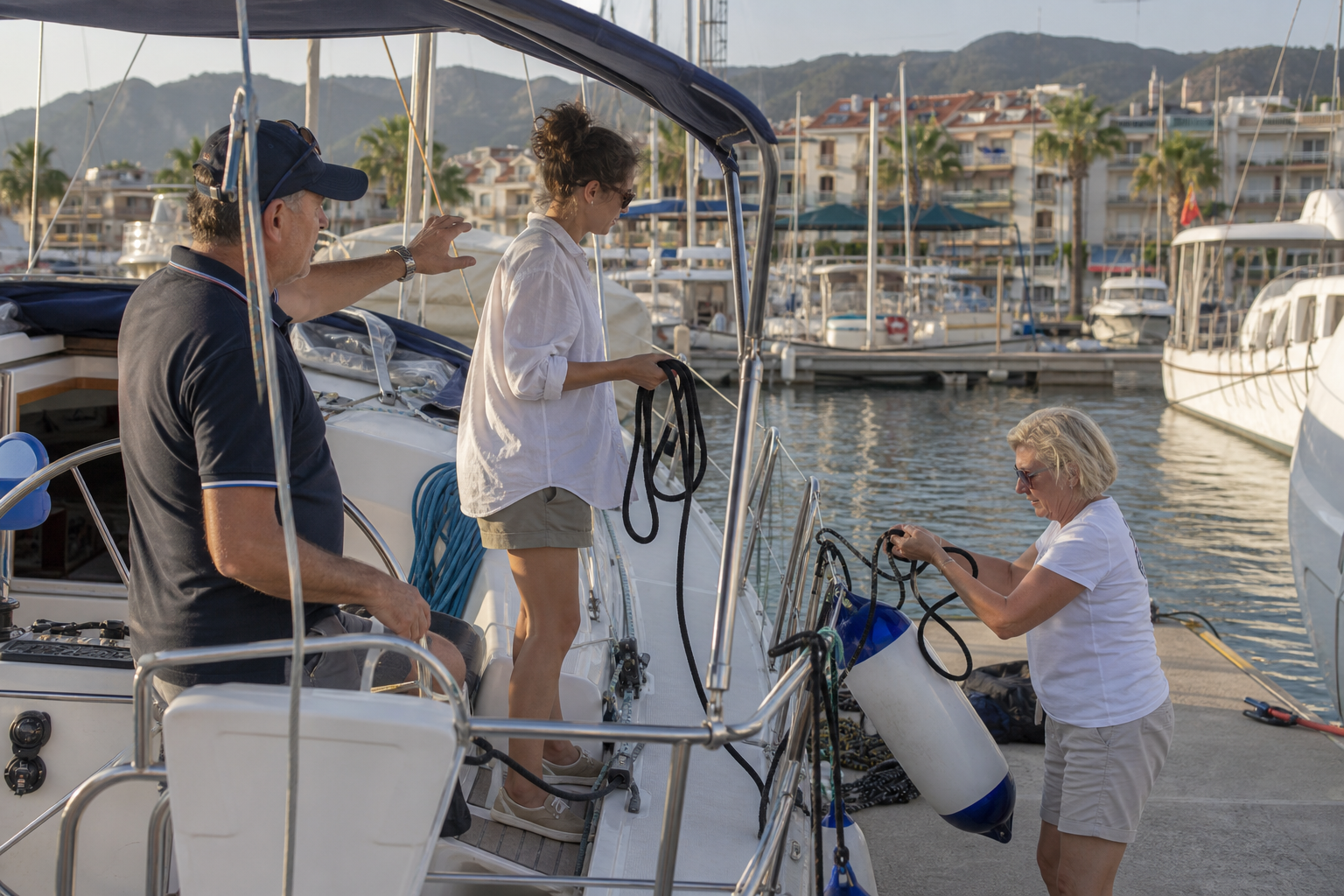
Let every guest learn one small task: a fender, a line, a lookout position or a radio call. The skipper can demonstrate, then decide who is ready to repeat it. Photograph existing damage before leaving the marina and report missing equipment immediately. Clear documentation protects the deposit and lets the skipper focus on navigation instead of arguing about a scratch at the end.
Let local knowledge shape the route
A local skipper knows which bay becomes uncomfortable after the wind shifts, where a tender landing is practical and when a marina fills. Ask for two route versions: a comfortable plan and a shorter plan that still feels like a holiday. In Göcek, the group may prefer protected bay-hopping; from Marmaris, it may combine town nights with longer open legs. The skipper should explain the trade-off so the group understands why a destination changes.
Current forecasts from the Turkish State Meteorological Service are the starting point, not the final word. Combine wind, gusts, sea state, daylight and the group’s energy. Agree a no-go threshold and the last safe time to reach shelter. A skipper who changes the plan early is doing the job you hired them for; a late dramatic return is not a better holiday story.
Agree participation and privacy onboard
Guests can steer, trim sails, handle a fender or help with the tender when the skipper says conditions are suitable. Decide the learning pace in the morning, not during a tight manoeuvre. Children and inexperienced guests need an adult supervisor, a clear lifejacket rule and a place to sit securely. The skipper remains the final safety authority even when the group takes an active role.
Privacy improves when quiet hours, music, cabin access, showers and restaurant invitations are explicit. Ask whether the skipper sleeps onboard every night and how early the working day begins. Moderate alcohol only after the boat is secure keeps the agreement practical. A respectful crew gives the skipper rest; a rested skipper gives the crew better decisions.
A seven-day skippered route with a return plan
Day 1 — Göcek or Marmaris handover: briefing, one practice manoeuvre and a nearby first night. Weather branch: remain in the marina if arrival is late or the forecast is unsettled.
Day 2 — short bay passage: let guests practise lines and steering, then secure an early anchorage. Weather branch: use a mainland berth with shore access.
Day 3 — Sarsala, Tersane or another confirmed stop: combine a swim with a practical shore plan. Weather branch: stay inside Göcek Bay or shorten toward Marmaris.
Day 4 — flexible town or island day: the skipper chooses the berth after the morning forecast. Weather branch: repeat the protected anchorage and keep the shore meal onboard.
Day 5 — longer leg only if daylight and sea state allow: practise sail handling on the open section. Weather branch: keep the route coastal and avoid a late exposed arrival.
Day 6 — return leg: fuel, water, inventory and a final swim near the base. Weather branch: return earlier and protect the handover window.
Day 7 — final return and handover: report defects together and confirm the deposit process. Weather branch: follow the base’s early-return instruction without extending the last passage.
Turkey skipper-charter checklist
- The skipper’s working period, cabin, meals, transfers and gratuity are written in the offer.
- The actual yacht, berth, equipment and handover manoeuvre are confirmed.
- Fixed, variable, deposit and substitution costs are separated in writing.
- Guests know the participation, quiet-hour, visitor and alcohol boundaries.
- Each day has a sheltered overnight, a weather alternative and an early-return rule.
Sources and verification date
Use the Turkish State Meteorological Service marine forecasts for Göcek, Fethiye and Marmaris. Check D-Marin Göcek’s official page for marina access, VHF and service information; confirm the actual skipper, boat and contract with the operator. Reviewed 31 August 2026.
Sources