


Contents
Start with the role you are buying
A skipper is the person in command of the vessel, but a good brief makes the relationship collaborative. State whether the group wants a relaxed holiday, daily sailing practice, nightlife stops or quiet anchorages; the skipper can then translate that preference into safe choices.
Do not assume “skippered” means a fully crewed luxury service. In many charter packages the skipper navigates and handles the boat, while guests share provisioning, meals and cabin space. Ask what is included in the rate and which services are optional.
Write the decision rights into the brief. The skipper has the final safety call, while the group can define priorities, preferred islands and acceptable passage length. This avoids a conflict when wind or a full buoy field makes the original plan impractical.
What the skipper normally handles
Navigation includes passage planning, charts, depth awareness, traffic and the approach to each berth or buoy. The skipper also runs engine checks, watches the weather and decides when to reef, shorten a leg or remain in sheltered water.
Manoeuvres cover departure, docking, anchoring or picking up a mooring, plus the briefing that keeps guests clear of lines and winches. You can still help with fenders, lines and lookout duties when the skipper says the role is safe and understood.
Local knowledge is valuable but should be specific. Ask which bays are exposed to the forecast, where buoy reservations are required, what the marine-reserve limits are and which marinas can accept your boat’s beam and draft. The official Balearic guidance points skippers to different wind conditions around Mallorca, Menorca, Ibiza and Formentera, so the answer should follow your route.
Cabin, meals and life on board
The skipper needs a proper sleeping place and reasonable privacy. On a catamaran this is often a dedicated aft or fore cabin; on a monohull it may be a small forepeak or a shared arrangement. Confirm the exact cabin before comparing the guest capacity.
Clarify whether food is bought from the shared provisioning budget, whether the skipper cooks, and how shore meals are handled. A skipper may recommend restaurants and markets without being a private chef. Put allergies, dietary needs and who pays for the skipper’s meals in writing.
Agree quiet hours, shower and bathroom routines, guest steering and the use of the tender. Clear expectations matter on a compact boat where one person’s late-night plan can affect everyone’s sleep and the next day’s departure.
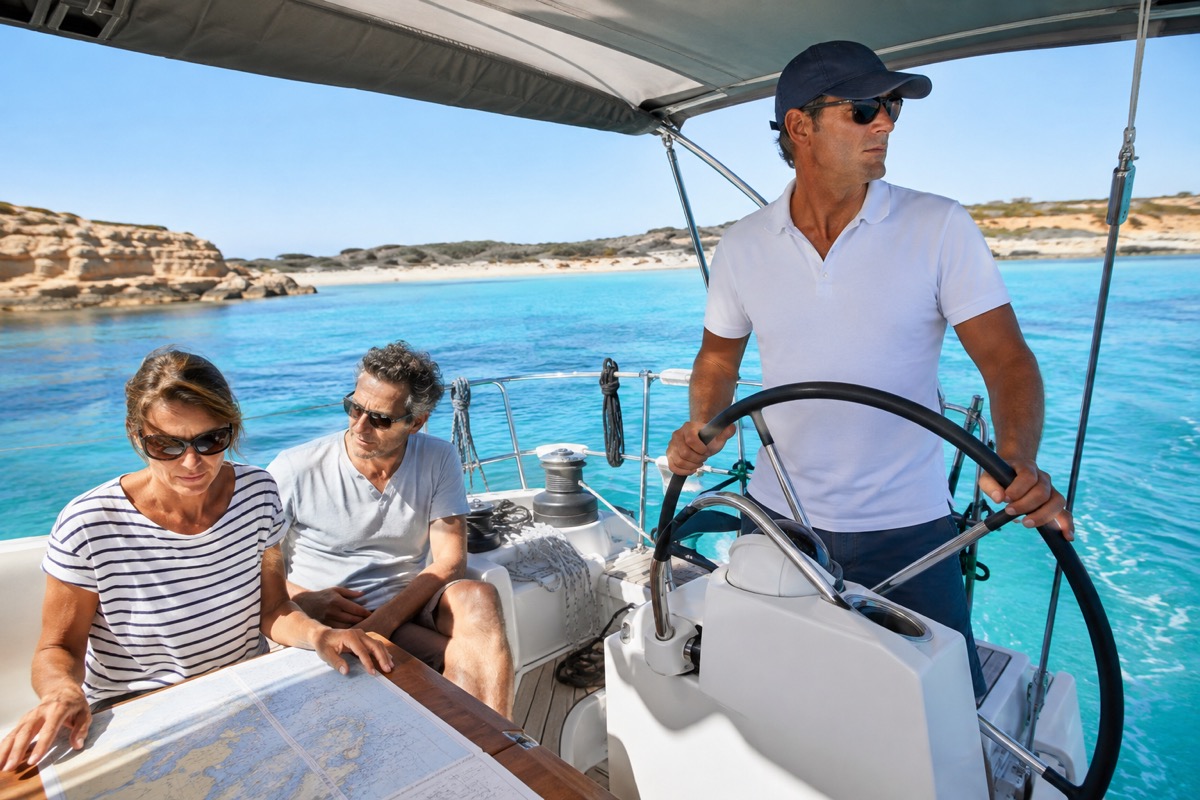
Build the route around decisions, not promises
For Ibiza and Formentera, a skipper can sequence short hops between sheltered coves, beaches and buoy fields, then move to a marina when the forecast or availability changes. For Mallorca and Menorca, the skipper may use an earlier departure or a protected side of the island when the wind builds in the bays.
Set a daily decision point before the thermal wind strengthens. Compare forecast, wave direction, buoy availability, fuel and the group’s energy. The skipper should explain the trade-off in plain language: longer sail, calmer anchorage, or an earlier night alongside.
Do not promise every named cove. The Balearic Government’s Posidonia guidance requires careful anchoring, and regulated buoy fields can fill on popular dates. A professional skipper protects the experience by keeping a legal alternative rather than forcing a famous stop.
Contract and extra-cost questions
Ask whether the skipper fee is fixed per week, charged per day or combined with a crew package. Confirm payment timing, cancellation terms, travel to the base and what happens if the skipper cannot work. Use the written charter contract, not a message summary, as the source of truth.
Budget for the skipper’s cabin, meals, travel, fuel, marinas or buoys, provisioning, cleaning, transfers and deposit or insurance conditions. GOIB publishes information about transit berths and buoy reservations, but availability and charges still depend on the port and date.
A low skipper rate is not automatically a better offer. Compare what is removed from the service: fewer hours, no meal support, shared cabin, no tender handling or no assistance with marina reservations. Choose the package that matches the group’s real expectations.
Handover and safety on day one
Arrive with crew documents, deposit method, allergies, emergency contacts and the agreed language for the safety briefing. Photograph the boat’s condition and learn the location of gas, shore power, water intake, lifejackets, fire extinguishers and spare keys.
The skipper should show the crew how to move on deck, where not to stand during manoeuvres and how the tender, swim ladder and winches work. Keep the first passage short enough to learn the systems without making the group feel tested.
Set a return threshold before leaving the dock. It can include a latest arrival time, minimum fuel and water reserve, and a rule that the boat returns to the base or a named alternative if weather deteriorates. This protects the deposit, the crew and the next charter day.
Skippered Balearic charter checklist
- Write the group’s pace, sailing ambition, preferred islands and shore priorities.
- Confirm skipper’s cabin, meals, travel, hours, guest participation and decision rights.
- Check skipper fee, cancellation, replacement and payment terms in the contract.
- Reserve essential berths or buoys and keep a legal alternative for each night.
- Save current Posidonia and marine-reserve guidance for the selected route.
- Photograph handover, learn safety equipment and set a conservative return threshold.
Sources