


Содержание
Что меняется со шкипером
На чартере со шкипером профессионал отвечает за безопасную навигацию, манёвры, погодные решения и эксплуатационные ограничения лодки. Гости могут управлять или помогать с концами только по приглашению шкипера и при подходящих условиях.
Группа по-прежнему определяет сценарий отдыха: желаемые острова, часы под парусом, купания, ужины на берегу, особенности питания и темп недели. Передайте эти приоритеты заранее, чтобы шкипер превратил их в безопасный маршрут.
Попросите зафиксировать договорённости письменно. Уточните, входят ли в цену работа шкипера, его каюта и питание, трансферы, топливо, финальная уборка и обязательные пакеты или оплачиваются отдельно.
Выбирайте базу и лодку вместе
Портиско — практичная база для чартера со шкипером на северо-востоке Сардинии. IGY Portisco Marina указывает 589 мест, максимальную осадку 10 м, VHF 69 для захода, круглосуточную помощь, топливо, рестораны и провизию с доставкой на борт. Это упрощает день, когда шкипер, гости и продукты приезжают в разное время.
Из Портиско можно объединить бухты Коста-Смеральды с Капрерой и Ла-Маддаленой. SardegnaTurismo описывает Ла-Маддалену как обитаемый центр архипелага примерно из 60 островов и островков; местный шкипер поможет выбрать защищённую последовательность, а не обещать каждый пляж из списка.
Подбирайте корпус под гостей. Катамаран даёт отдельные каюты, ровный кокпит и больше тени; монохул — более узкую платформу и сильнее ощущение парусного хода. Шкипер может управлять обоими типами, но планировка всё равно определяет комфорт.
Согласуйте каюту шкипера и ритм дня
Шкиперу нужно полноценное спальное место и удобный доступ к кокпиту. Не предполагайте, что ему подойдёт салон или общая каюта; до оплаты подтвердите точную схему размещения.
Договоритесь о коротком ежедневном брифинге: прогноз, маршрут, время выхода, бухта или марина, расход воды и время возвращения на борт. Шкипер принимает решение по безопасности, а группа при подходящих условиях выбирает из двух безопасных вариантов.
Обсудите язык, детей, ограничения мобильности, аллергии, ночные переходы и приватность. Хорошее совпадение — это не только лицензия и резюме, но и стиль общения, при котором вопросы задают заранее.
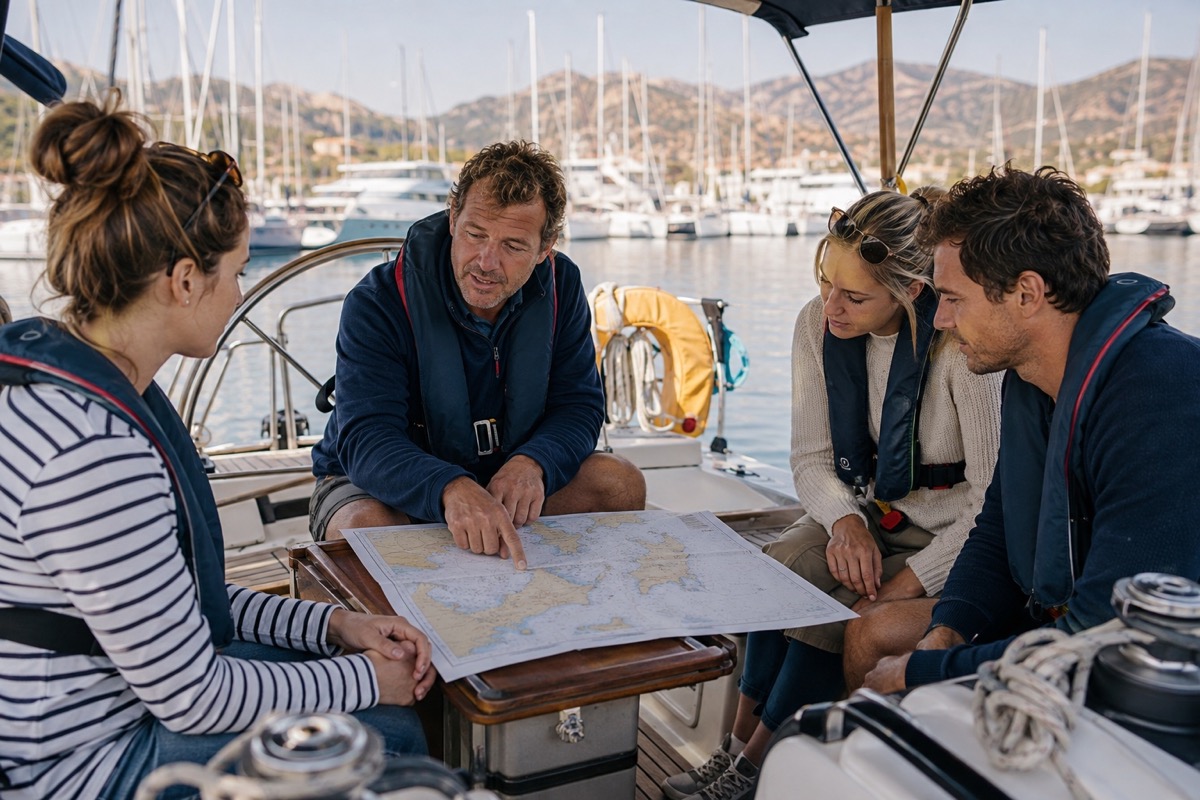
Стройте маршрут как разговор
Начните с двухслойного плана: основной маршрут и защищённая альтернатива для каждого длинного перехода. Неделя из Портиско может включать Коста-Смеральду, Капреру, Ла-Маддалену и Спарджи, но порядок должен зависеть от прогноза, доступности буёв и местных знаний шкипера.
Используйте парк как охраняемую акваторию, а не как свободную площадку. Официальные материалы SardegnaTurismo указывают, что национальный парк занимает более 20 000 гектаров и регулирует спорт, рыбалку и дайвинг. Уточняйте, где в этот день разрешены якорь, швартовка, купание и высадка.
Оставьте один день без решений. Повторить удачную бухту или остаться в Ла-Маддалене часто лучше, чем форсировать переход ради пункта в исходном плане. Шкипер должен объяснить компромисс простыми словами.
Разделяйте включённые услуги и доплаты
Попросите построчную смету: чартер, работа шкипера, его каюта и питание, топливо, марины и буи, уборка, transit log, страховка или депозит, провизия, трансферы и водные игрушки.
Одни позиции оплачиваются чартерной компании, другие — марине, третьи идут из общего фонда группы. В официальной информации Портиско указаны топливо, провизия и доставка на борт, но доступность, часы и цены нужно подтвердить на ваши даты.
Заранее решите, как оплачиваются чаевые, рестораны, такси и дополнительная ночь в марине. Соберите резерв до посадки, чтобы шкипер не кредитовал расходы и не собирал чеки во время отдыха.
Дайте шкиперу бриф как партнёру
Отправьте одну страницу о гостях: имена, опыт, привычки сна, аллергии, дети, ограничения мобильности, праздники и три главных желания. Добавьте жёсткое время возврата и то, чем группа не готова жертвовать.
В первый вечер спросите, где шкипер видит точки принятия решений. Ветер, волнение, вместимость марины, правила парка и расход воды могут изменить план. Если знать это заранее, смена маршрута воспринимается как хорошая навигация, а не как невыполненное обещание.
Уважайте время отдыха шкипера. Договоритесь, когда заканчивается рабочий день, как гости пользуются камбузом и присоединяется ли шкипер к ужинам. Чёткие границы дают всем больше приватности и лучший сервис.
Чек-лист чартера со шкипером в Сардинии
- Определить бриф группы: острова, часы под парусом, купания, береговые ужины и темп.
- Подтвердить оплату шкипера, его каюту, питание, трансферы, топливо, уборку, страховку и обязательные пакеты.
- Проверить планировку лодки, настоящие каюты, санузлы, тень, воду, тендер и хранение.
- Согласовать язык, ежедневный брифинг, участие гостей, приватность и ночные переходы.
- Подготовить основной маршрут и защищённую альтернативу для каждого длинного перехода.
- Проверить актуальные правила Ла-Маддалены для якорей, буёв, активностей и высадок.
- Собрать общий резерв и передать данные гостей, экстренные контакты и время возврата.
Источники