

Contents
Decide what Turkish water should feel like
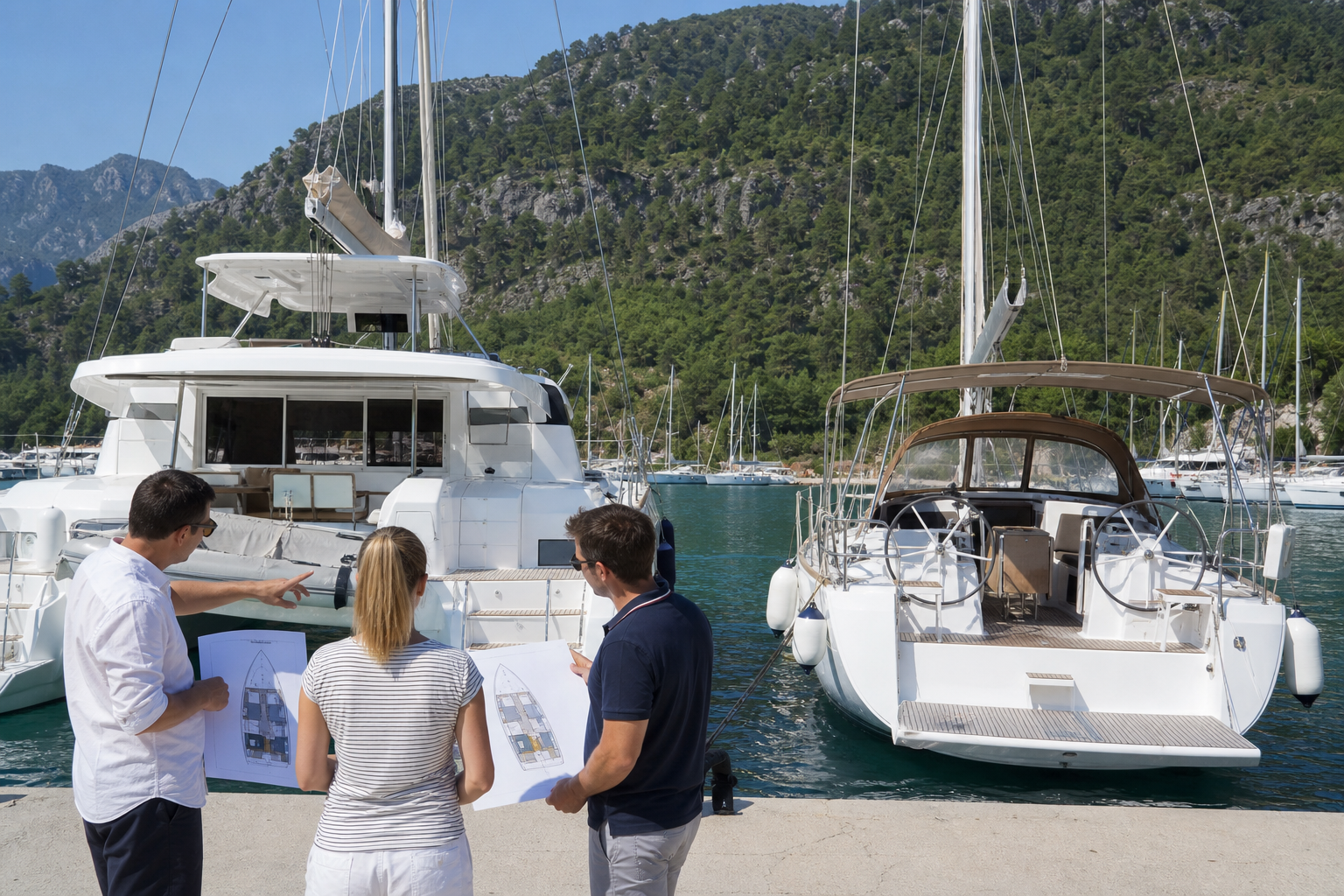
A Turkish charter can be a sequence of short swims in pine-lined bays or a sailing holiday with long, visible legs between towns. A catamaran supports the first version with level social space and easy movement at anchor. A monohull rewards the second with a narrower hull, clearer sailing feedback and more traditional handling. Start with the hours your group wants to spend onboard, then test the boat against that pattern instead of choosing by length alone.
Use the departure base as a filter. Göcek favours bay-hopping and protected anchorages; Marmaris adds a larger town, marina infrastructure and an easier shore programme. The best type can change with the same crew if the itinerary changes. Write the base, guest count, skipper format and preferred overnight style in the request for offers so the broker compares usable boats rather than generic categories.
Space at anchor is a daily decision
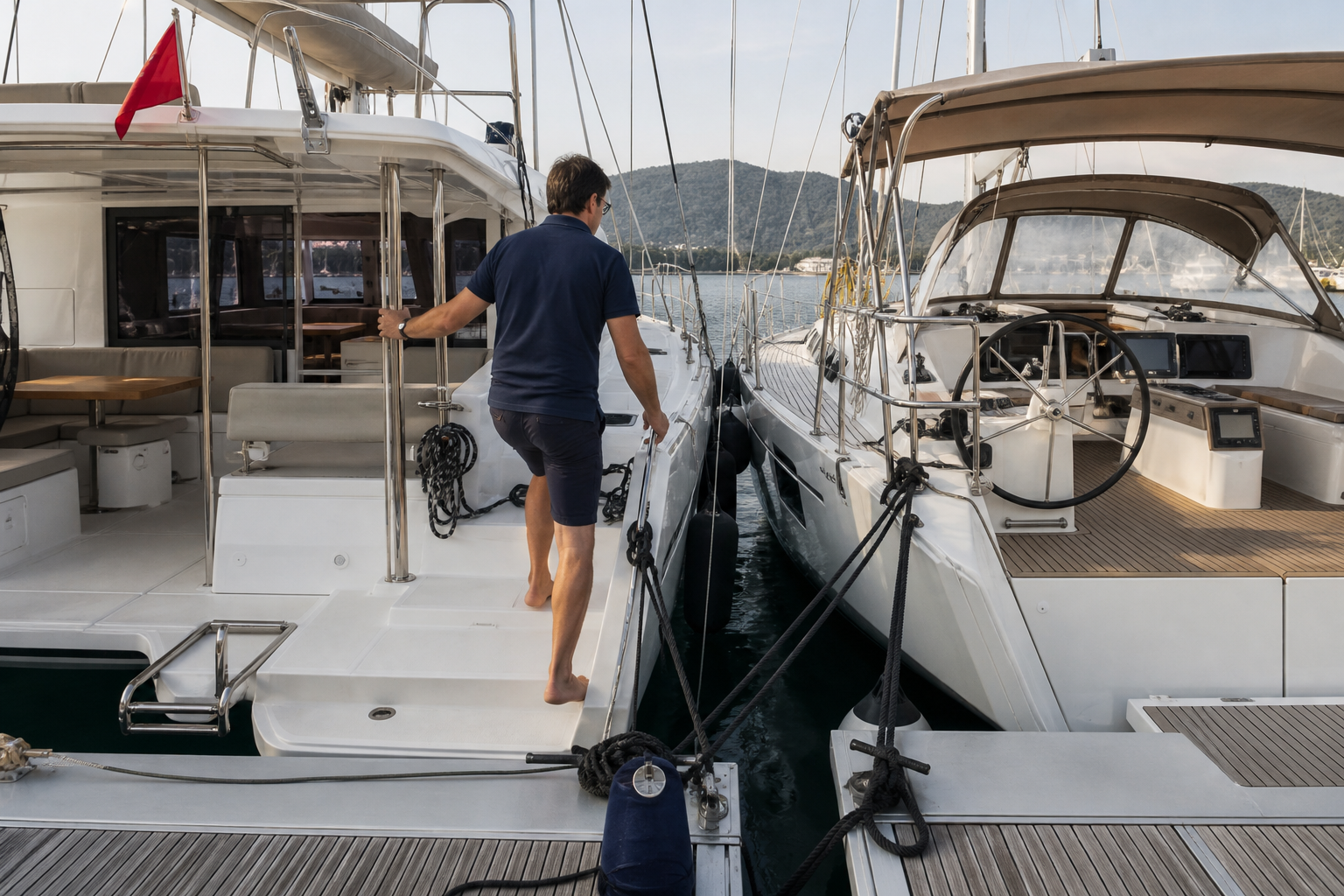
Catamarans make a social day simple: the cockpit, foredeck and saloon stay level, and two hulls can separate sleeping from conversation. That matters when a group wants breakfast, a swim and a nap without packing the boat away. The trade-off is width: the same beam that gives comfort can limit a narrow berth or require an earlier marina reservation. Ask for cockpit shade at the actual model, not the fleet photograph.
A monohull uses less deck width but creates a more compact shared interior. It can feel lively in a short chop, particularly for guests sleeping forward, yet many sailors prefer the rhythm and airflow. Check ventilation, berth lee cloths, handholds and where wet gear dries. A boat that looks smaller on paper may feel calmer for a crew that spends most of the day ashore.
Sailing feel and low-speed control
A monohull usually communicates trim and apparent wind more directly. That is valuable for a crew that wants to learn or spend several hours sailing rather than motoring between bays. A catamaran stays level for guests and often uses two engines, which can make a tight marina turn predictable for a trained skipper. Do not confuse stability with immunity: a stable cockpit does not remove the need to shorten sail or seek shelter.
At handover, ask for one deliberate manoeuvre: reverse, turn in a confined space and pick up a mooring under light wind. Notice the helm sightline, thruster response, propeller walk and line-handling distance. Turkish bases can have different pontoons and current patterns; the exact boat and berth are a pair. A confident decision comes from seeing the combination in practice.
Beam, draft and marina reality
Record the actual length overall, beam, draft and air draft of the offered model. A shallow catamaran may reach a sandy bay earlier, but a wide platform can need a larger berth. A deep-keel monohull may fit more pontoons while limiting some anchorages. Ask the marina or operator for minimum depth, mooring method, fuel access and a late-arrival procedure instead of relying on a map pin.
The Turkish State Meteorological Service lists marine forecasts by coastal station, which is useful for comparing a Göcek bay day with an exposed passage toward Marmaris. Read wind, gusts and sea state together. Choose the hull that leaves two legal, comfortable overnight options rather than one perfect photograph. Flexibility is a design requirement for a charter week.
Price the whole week, not the hull
Build the same cost sheet for both types: weekly charter, cleaning, transit log, skipper, fuel, water, marina and buoy nights, provisioning, transfers and security deposit. A catamaran may have a higher berth charge but reduce hotel or cabin compromises; a monohull may cost less to berth but require more shore nights for a large group. Compare the total for your guest count and dates.
Put substitution, cancellation and damage-waiver terms beside the number. Confirm the actual model, year, beam, draft, equipment list and the time the deposit is released. If a boat is replaced, ask whether the replacement changes the berth or sleeping plan. A clear written offer beats a category label such as “premium catamaran” or “classic sailing yacht”.
Turn the comparison into a crew matrix
Score each boat from one to five for the things the group will actually use: sleep privacy, cockpit shade, helm visibility, galley workflow, swim access, draft, marina access and sailing performance. Double the two criteria that matter most. A family may weight shade and easy boarding; a sailing couple may weight helm feedback and a responsive rig. The score is not a scientific verdict—it is a way to reveal which compromise the group is willing to make.
Then test the winner against a bad-weather day. Can the least confident guest sit securely? Is there a protected berth within a short leg? Can the skipper manoeuvre the actual beam in the marina? If the answer is unclear, the higher score is meaningless. Turkey rewards flexible planning: a boat that remains comfortable when the route shrinks is often a better choice than one that looks perfect in a calm-weather brochure.
Turkey yacht-type decision checklist
- The departure base and overnight style are fixed before comparing boats.
- The real beam, draft, layout, shade and equipment list are confirmed.
- A berth, depth, mooring method and fuel plan fit the selected hull.
- The complete budget includes fixed, variable and deposit-related costs.
- Two safe weather options remain available for every overnight.
Sources and verification date
Use the Turkish State Meteorological Service marine forecasts for Göcek, Fethiye and Marmaris. Check D-Marin Göcek’s official marina information for berth, access, VHF and service details, then confirm the actual boat and contract with the charter operator. Reviewed 31 August 2026.
Sources