

Contents
The decision in 30 seconds
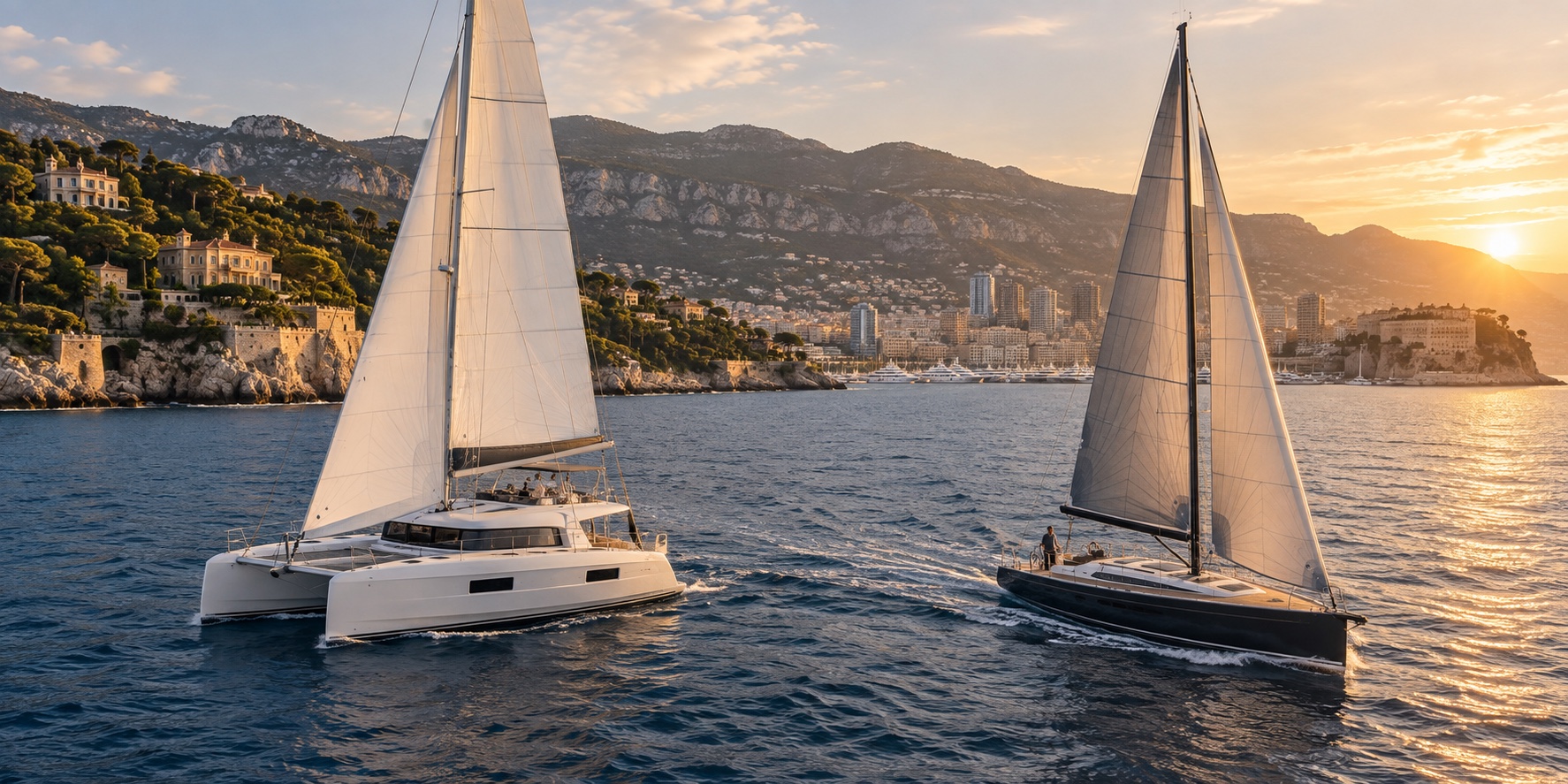
For an Antibes-based week that mixes shore visits, short passages and time at anchor, a modern catamaran is usually the comfortable default for six to eight guests. Its beam creates a wide cockpit and saloon connection, while the shallow-draft options common in charter fleets can make a sandy swim stop easier. Confirm the exact dimensions: a wide boat is still a wide boat when a busy berth or narrow fuel dock is involved.
A monohull earns the advantage when the itinerary prioritises sailing performance, a compact stern-to manoeuvre or a smaller budget at equal cabin count. On the east coast, where ports and shore plans can dominate the day, the monohull’s narrower footprint may remove friction. A skipper should match the platform to the actual marinas, not to a generic Riviera label.
| Decision criterion | Catamaran | Monohull |
|---|---|---|
| Space and privacy | Wide cockpit, saloon and cabins spread across two hulls; strong for mixed groups | More compact shared space; often better for a crew that wants one social cockpit |
| Beam and berthing | More beam to reserve; check marina limits, finger layout and turning room | Narrower beam usually simplifies berth search and close manoeuvres |
| Draft and swim stops | Many models offer modest draft, but rudders and twin engines still need clearance | Single hull may have deeper draft; check the actual keel and propeller clearance |
| Underway motion | Stable at rest; motion underway depends on sea state and loading | Heels under sail and gives classic sailing feedback; motion is more noticeable for some guests |
| Fuel and systems | Two engines, more systems and sometimes higher service complexity | Usually one engine and a simpler propulsion layout |
| Best crew profile | Families, two couples, groups that spend time aboard | Sailing-focused crews, tighter groups and confident manoeuvring teams |
What Port Vauban changes about the choice
Port Vauban is a large yachting base, but a large marina is not the same as unlimited room for every charter boat. Ask for the assigned berth, turning space, shore-power position and the boat’s beam and draft in metres. The marina’s published VHF channel 9 and booking information are useful operational references; the base team’s handover briefing remains the final authority for your exact pontoon.
A catamaran’s twin engines can make low-speed control intuitive for a trained skipper, yet the extra width can complicate a crowded finger pontoon. A monohull may fit the berth more naturally but needs the crew to understand prop walk, spring lines and the effect of wind on the bow. During the handover, practise one departure and one return rather than saving every manoeuvre for the final afternoon.
Cannes and the Lérins Islands reward dimension-aware planning
Cannes Port Canto publishes a maximum draft range, berth information and harbour-master contacts. Near Sainte-Marguerite, the city also publishes a seasonal pleasure-craft mooring area for vessels from 6 to 20 metres and a larger no-anchor zone. Treat those figures as current local rules to check, not as a promise that every charter catamaran will fit every buoy.
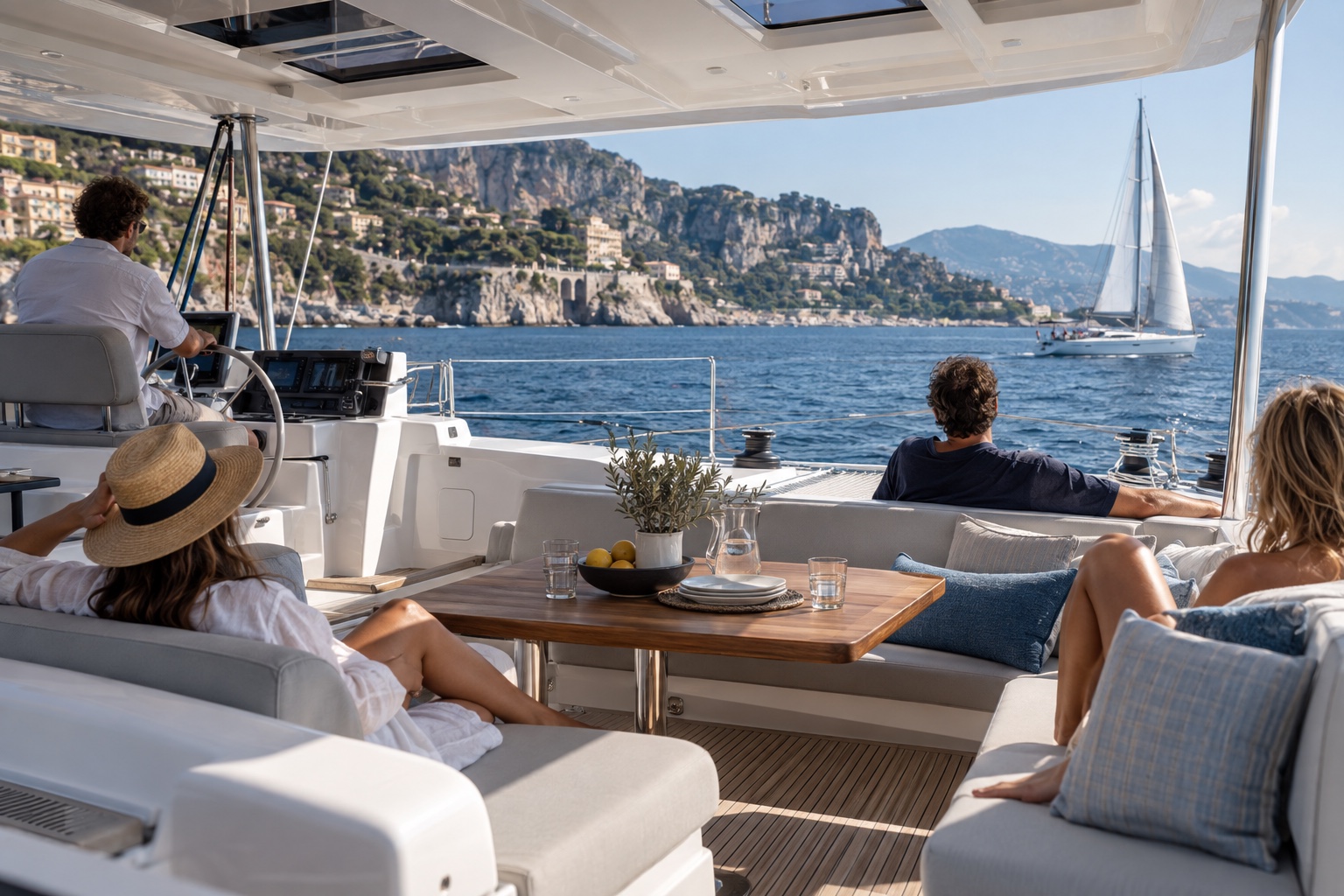
The monohull’s narrower beam can make a quick tender landing and a tight marina night feel simpler. The catamaran’s shallow-draft model can be excellent for a clear-water swim, but the skipper still needs a charted sandy patch, safe swinging room and clearance for both hulls. Never drop the anchor on Posidonia or inside a restricted area; use the authorised mooring or a marina when local instructions require it.
Crew comfort is a technical specification
Ask who will sleep where, who gets seasick, and whether the group needs two separate social zones. A catamaran gives couples more separation and usually a level salon, while a monohull keeps everyone closer and may feel more connected under sail. Neither platform removes the need for shade, ventilation, lee cloths, child safety and a clear night-watch plan.
If a skipper is aboard, include them in the layout decision. A professional may prefer the manoeuvrability of twin engines or the sailing behaviour of a monohull depending on the berth and forecast. Put the skipper’s cabin, access to the helm, tender handling and meal expectations into the quote so the apparent boat advantage survives contact with the real crew.
| Cost line to compare | Why it changes the final number | Question to ask |
|---|---|---|
| Weekly charter rate | Changes by model, age, cabin layout and date | Is the price gross, and what is excluded? |
| Cleaning and transit documents | Often fixed or mandatory at the base | Are final cleaning and transit log already included? |
| Fuel and engine hours | Twin engines and generator use can change consumption | Which fuel policy and return level apply? |
| Berths and moorings | Beam, length and event dates affect availability and price | Which nights are assumed in the estimate? |
| Deposit or damage waiver | Platform, value and operator policy change the exposure | What is the deductible and claim process? |
| Skipper and provisions | Crewed service, meals and drinks may be separate | Who sleeps aboard and what does the allowance cover? |
Boat brief for a French Riviera comparison
- Number of guests, cabins and whether anyone is new to boats.
- Exact start base and likely berths in Antibes, Cannes or Monaco.
- Maximum acceptable beam and draft for your chosen marinas.
- Priority split: sailing performance, level living, privacy or swim access.
- Skipper cabin, tender size, shade, air conditioning and generator expectations.
- A full quote with fuel, berths, cleaning, deposit or insurance and taxes separated.
How to choose without being distracted by glossy photos
Shortlist one catamaran and one monohull with the same guest count, dates and service level. Read the plan view, not just the exterior photograph: compare cabin access, heads, cockpit shade, helm position, storage and the route’s likely berth dimensions. Then ask the operator to mark the two places where each boat is easiest and the two places where it needs more care.
TrimTeam’s fleet can narrow the models; Helm can translate the choice into a route that respects the boat’s draft, beam and crew rhythm. The best boat is the one whose limitations are visible before the deposit is paid.
Sources