

Contents
Choose the operating profile before the hull
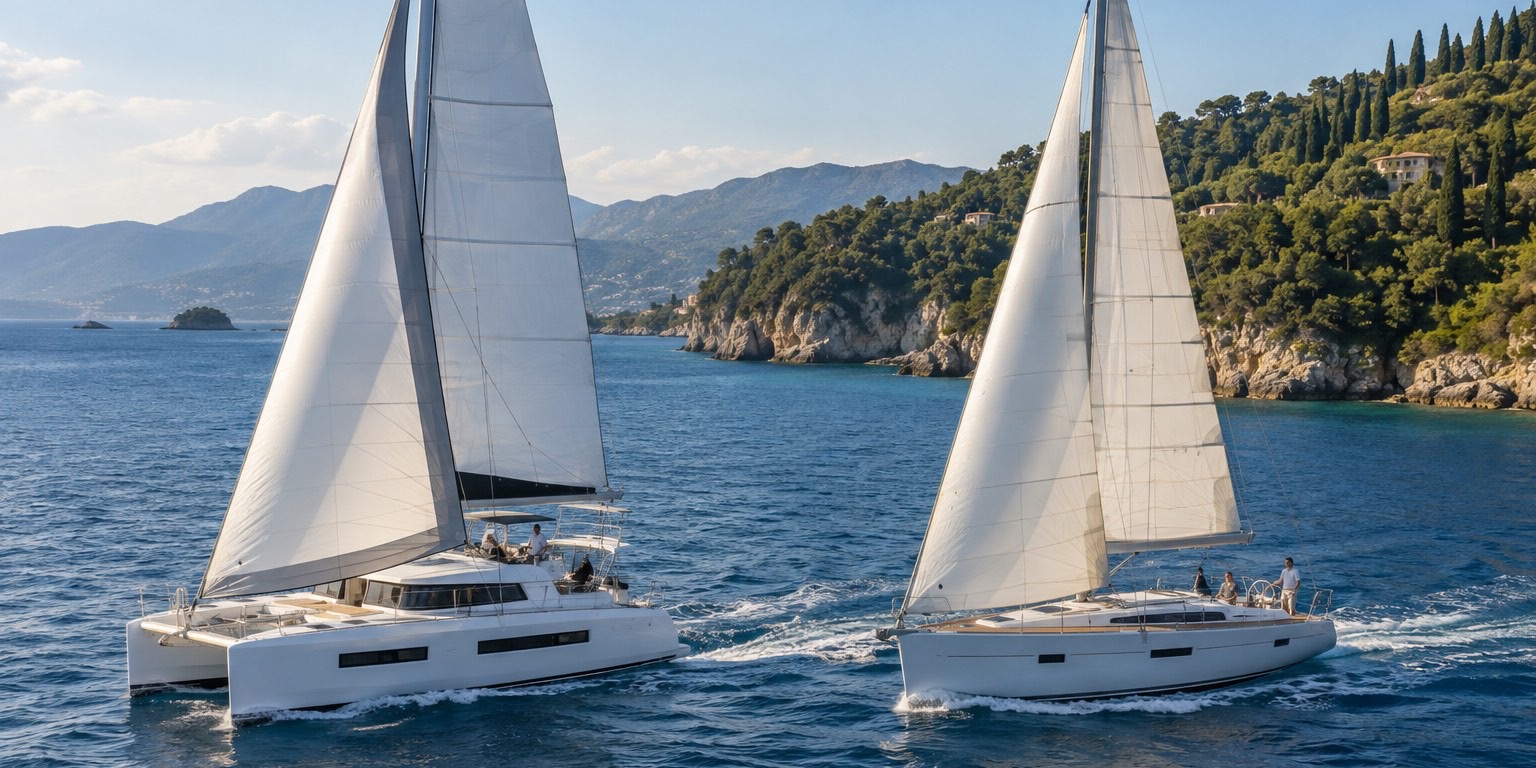
Corfu, Paxos and Antipaxos reward a week that moves between marina services, village quays, short anchorages and tender landings. Visit Corfu describes Gouvia as a major sailing centre and lists smaller harbours with limited or no services; Visit Greece highlights Paxos caves, olive paths and Antipaxos beaches. That mix makes the hull decision practical. A wide catamaran may be the calmest platform for a family but harder to fit in a tight quay; a monohull may fit more easily but feel busier under sail.
Start with the actual base and boat available. Ask TrimTeam to test the fleet against Gouvia, Gaios or Lakka, the draft and beam limits, the tender plan and the number of guests aboard during the day. A length-only shortlist hides the details that decide whether a village is an overnight, a shore stop or a scenic pass.
| Decision factor | Catamaran | Monohull |
|---|---|---|
| At anchor | Stable platform and less roll in a protected bay | More motion beam-on to swell; rewarding for sailors |
| Cockpit and shade | Wide social cockpit, trampoline and strong shade options | Compact cockpit; usually less shade and deck separation |
| Sailing feel | Comfortable, efficient and flatter under way | Heel, feedback and a more direct sailing sensation |
| Village berths | Beam can reduce options; confirm Gouvia and Paxos space | Narrower profile can simplify access; draft remains critical |
| Tender days | High freeboard needs a proper ladder and crew help | Lower side can simplify boarding; cockpit volume is smaller |
| Best default crew | Families, mixed experience and swimming-focused weeks | Small confident crew that wants the passage itself |
Match the boat to the guest profile
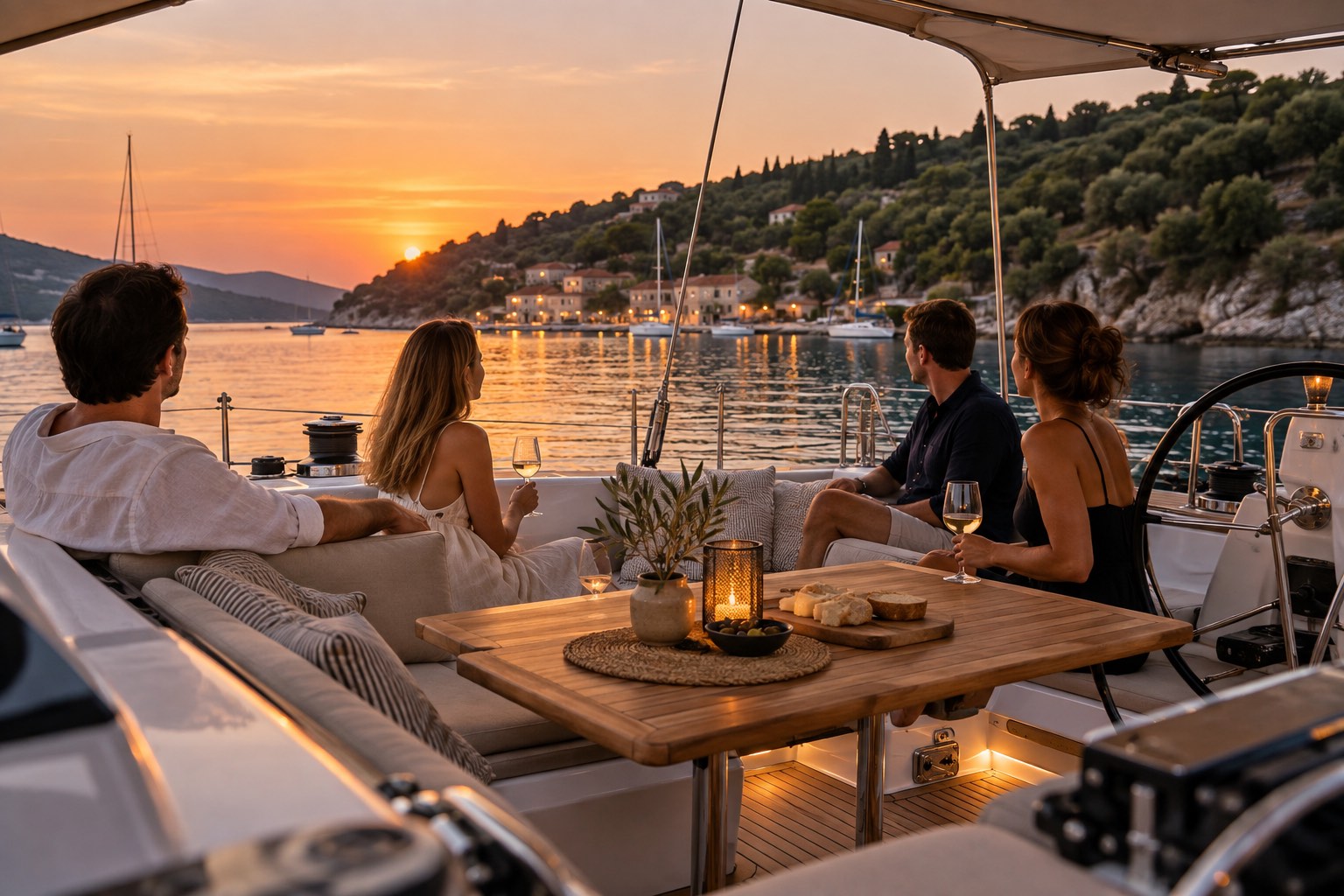
A crewed catamaran is the common default for families and mixed groups. The level cockpit helps children and first-time guests move around while the skipper handles lines, while separate hull cabins give the group more quiet space. The swim platform is useful for daily water time, but check the freeboard, boarding ladder, handholds, certified day capacity and tender lifting arrangement.
A monohull is compelling when two to six guests want the sailing itself to be the main experience. Heel, narrower side decks and a compact cockpit demand a clear briefing for anyone with motion sensitivity or reduced mobility. Ask how reefing will be handled, where guests sit during a passage, how the skipper’s cabin is arranged and whether the proposed Paxos crossing is comfortable for this particular boat.
Beam, draft and berth access in the Ionian
Gouvia has the infrastructure to handle a broad range of charter yachts, but a berth request still needs the actual boat’s dimensions. Small Corfu harbours and Paxos villages are less interchangeable: one may have a quay, another a lazy line, another only an anchorage with a tender landing. Corfu Port Authority manages facilities on Corfu and Paxos, while local operators confirm the day-to-day berth details. Get the exact berth and mooring type in writing.
Paxos and Antipaxos also make tender design important. A high catamaran side, heavy outboard or awkward ladder can turn an easy beach stop into a stressful operation. Compare tender size, fuel, boarding ladder, swim platform, dinghy davits and crew assistance. Do not treat a beach photo as proof that a landing is safe or permitted.
Weather comfort, windage and the decision to move
The Ionian often looks inviting because of green, sheltered scenery, yet headlands and open crossings can still build wind and swell. A catamaran can feel calmer at anchor but has more windage in a village manoeuvre; a monohull can point efficiently and fit narrower spaces but communicates motion more clearly. The skipper’s route and the live forecast outrank the brochure’s hull comparison.
Request two route scenarios: a Corfu–Paxos–Antipaxos headline loop and a Corfu-local plan with one optional southbound day. Keep the order flexible and avoid tying a non-refundable Antipaxos transfer or tavern booking to one anchorage. The Helm team can compare both boats on the same dates, including what changes when one night moves back to Gouvia.
Compare the complete cost of the boat
The weekly catamaran rate can be higher, but the social deck may reduce the need for shore rooms and makes long swim days easier. A monohull may show a lower base rate while adding tender trips, a less convenient berth or extra marina nights. Compare yacht, skipper, fuel, cleaning, berthing, water, generator use, tender fuel, taxes, deposit and insurance assumptions line by line.
Ask for equal guest capacity and identical inclusions on both quotes. One boat may include a skipper cabin, while another charges it separately; one may price Gouvia berthing, while another assumes anchoring. The final decision should also name who sleeps where, how many heads are available and what happens if the final Paxos night must move.
| Crew priority | Usually points to catamaran | Usually points to monohull |
|---|---|---|
| Stable social week | Level cockpit, shade and easy swim access | Possible, but with less deck volume |
| Sailing sensation | Comfort-first; less heel | Direct feedback and active sailing |
| Small harbour access | Check beam and turning room early | Narrow beam can help, subject to draft |
| First-time confidence | More forgiving movement and separation | Needs a stronger onboard briefing |
| Paxos beach day | Platform and tender space matter | Ladder and cockpit workflow matter |
Corfu and Paxos boat-choice checklist
- Match hull to guest count, children, mobility and motion sensitivity.
- Confirm beam, draft, certified day capacity, cabin layout and skipper cabin.
- Check the exact Gouvia, Corfu Town or Paxos berth and mooring type.
- Inspect swim platform, boarding ladder, tender, outboard, davits and shade.
- Compare fuel, skipper, berthing, cleaning, taxes and deposit assumptions.
- Approve a full Ionian route and a Corfu-local weather version.
Sources