

Содержание
Примите решение за одну минуту
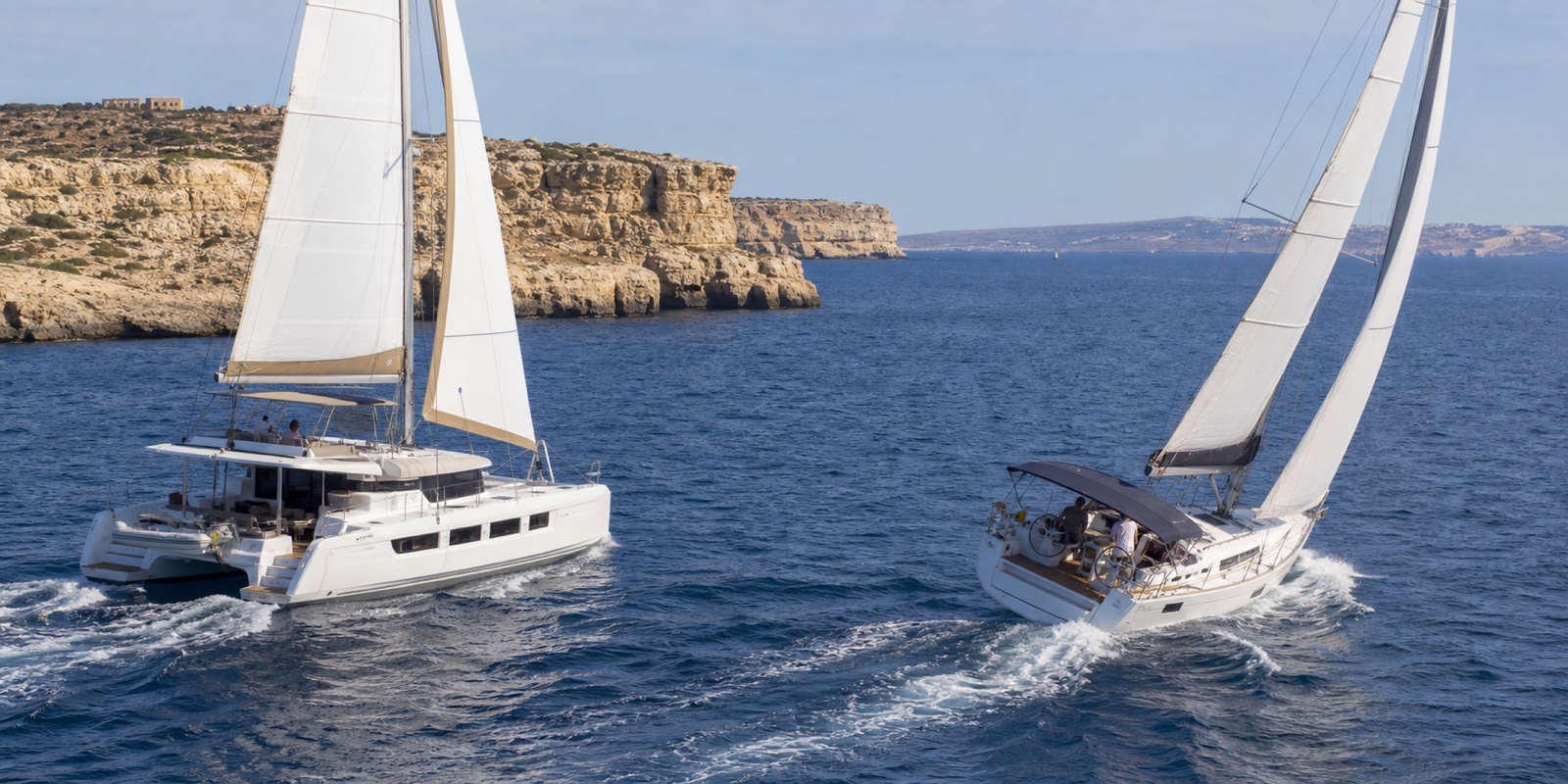
Катамаран выбирайте, если группе важны устойчивые обеды, купание, тень, отдельные каюты и удобный общий кокпит. Монокорпус подходит, если все спокойно относятся к крену, команда небольшая, а главная цель — именно парусный переход, а не отдых в плавучей лаунж-зоне. На Мальте оба формата достигают одних и тех же островов, но дают разный день на воде.
Не сравнивайте только недельную цену и число спальных мест. Спросите, сколько гостей разрешено принимать днём, сколько тени остаётся в движении, где спит шкипер, какова осадка и принимает ли выбранный причал ширину яхты. Именно эти детали определяют комфорт и гибкость маршрута сильнее, чем название модели.
| Критерий | Катамаран | Монокорпус |
|---|---|---|
| Устойчивость | Катамаран устойчивее на стоянке и в движении | Монокорпус кренится; это нравится морякам, но сложнее для чувствительных гостей |
| Жилое пространство | Широкий кокпит, носовая зона и купальная платформа | Компактный кокпит и более узкие проходы |
| Ощущения под парусом | Быстрый, устойчивый и менее кренящийся | Более прямое ощущение ветра и классический крен |
| Осадка и бухты | Часто меньшая осадка, но проверьте запас под рулями | Узкий корпус удобен в марине; осадка зависит от модели |
| Швартовка | Ширина корпуса может ограничить причал | Обычно проще подобрать под стандартный причал |
Выбирайте по профилю группы
Семьям с детьми обычно удобнее ровная палуба катамарана, защищённый кокпит и простой доступ к воде. Но всё равно проверьте леера, сетку, тент и вентиляцию ночью: слово «катамаран» не заменяет инструктаж. Если ребёнку нужен дневной сон, выбирайте каюту подальше от салона и генератора.
Пара или небольшая компания квалифицированных друзей может предпочесть монокорпус из Мсиды или Grand Harbour. Такая яхта быстрее передаёт ощущения ветра и превращает переход в главное впечатление. Уточните, подходит ли она под вашу лицензию, не уменьшает ли каюта шкипера полезное число мест и что будет, если погода потребует сократить маршрут.
Для праздника катамаран часто выигрывает по сценарию: кейтеринг остаётся в устойчивом кокпите, гостям не приходится перемещаться по наклонной палубе, а шкиперу проще контролировать купальную платформу. Музыка, алкоголь, декор и фотограф всё равно требуют письменного согласования с оператором и соблюдения правил марины.
Как выбор корпуса меняет маршрут на Мальте
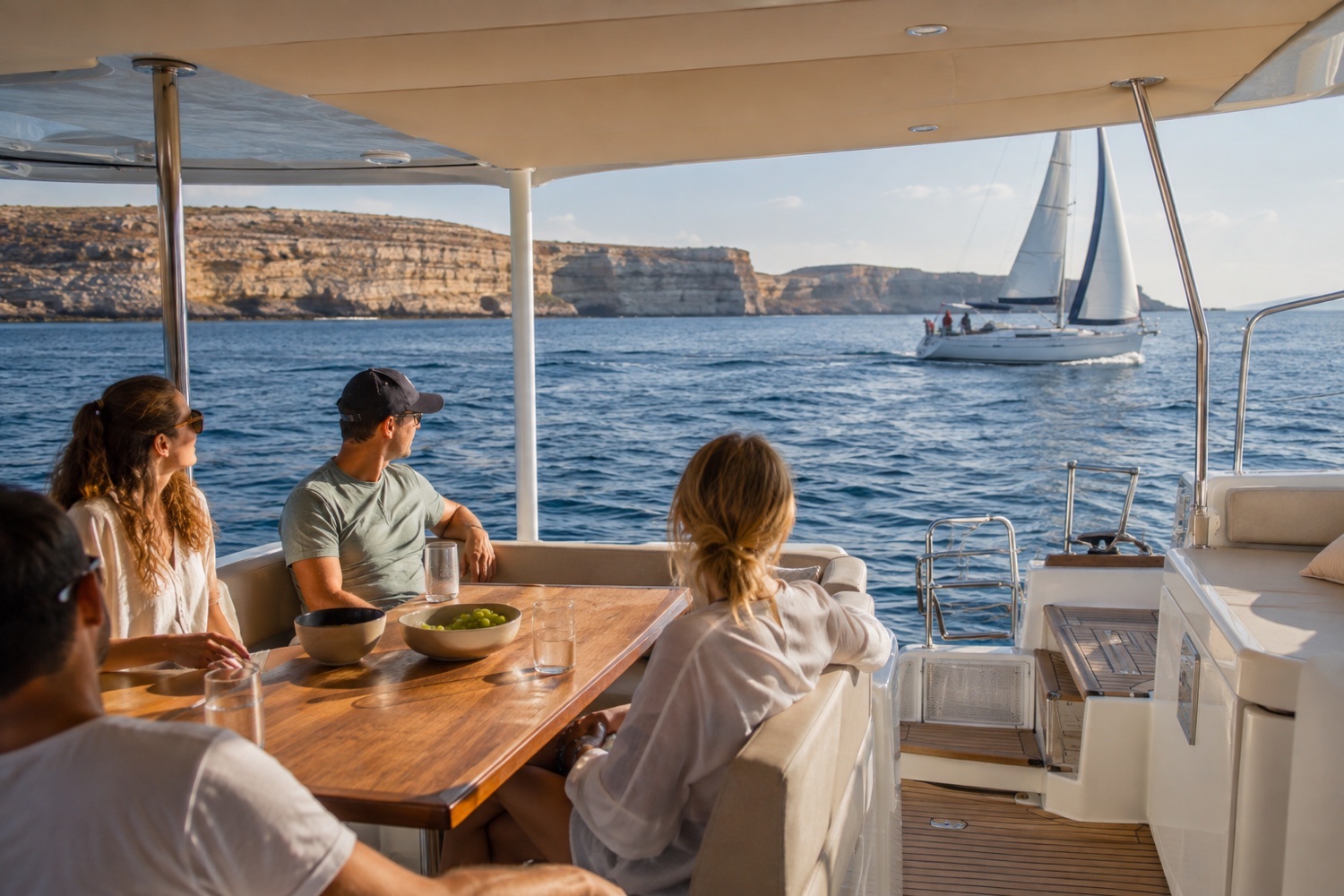
Устойчивость и часто меньшая осадка катамарана упрощают купание у Комино и семейный обед, но большая ширина может ограничить отдельные причалы. Узкий корпус монокорпуса иногда удобнее в тесной марине, зато крен и меньший кокпит могут ухудшить длинный социальный день. Для конкретной яхты подтвердите осадку, ширину и запас под рулями.
Transport Malta отмечает, что Мальта — стратегически расположенный центр яхтинга с развитой сетью марин и меняющимися ветровыми условиями. Поэтому яхту нужно выбирать вместе с маршрутом: широкий катамаран — под марину, которая его принимает, а монокорпус — под прогноз, где вы действительно сможете использовать его ходовые качества. Не выбирайте корпус отдельно от маршрута.
Сравнивайте предложение в правильном порядке
Сначала сравните полезную вместимость, каюты, санузлы, тень и запас воды. Затем — осадку, ширину, моточасы, генератор или батареи, тузик, подвесной мотор, бельё и финальную уборку. Только после этого сравнивайте недельную ставку. Более дешёвый монокорпус может оказаться менее выгодным после добавления каюты шкипера, трансферов, дополнительных ночей в марине или второй яхты для большой группы.
В рабочем бюджете Мальты катамаран обычно получает премию за комфорт, если даёт больше кают, тени и дневной вместимости; не переводите это в фиксированный процент без сметы на конкретные даты. Попросите разнести яхту, шкипера, топливо, причал, провизию, трансферы и кейтеринг. В смете должны быть дата проверки и пункты, которые нужно подтвердить перед оплатой.
Пусть прогноз станет последним критерием
Transport Malta публикует климатические ориентиры Мальты, включая частый северо-западный ветер и сильную сезонную вариативность. Используйте их, чтобы задавать правильные вопросы, а не предсказывать конкретную неделю. При усилении ветра или зыби катамаран может быть комфортнее, но это не разрешение идти по открытому морю; монокорпус может хорошо идти, но всё равно потребовать короткого перехода.
Зафиксируйте в брифе два маршрута: желаемый день между островами и защищённую альтернативу с мариной, береговым обедом или ранним возвратом. Тогда выбор корпуса становится практичным: какая яхта удержит людей, расписание и запас безопасности в одной логике, если идеальный прогноз не сбудется?
Чек-лист выбора яхты для Мальты
- Проверить дневную вместимость отдельно от числа кают.
- Запросить ширину, осадку, запас под рулями и подходящие марины.
- Проверить тень, кокпит, купальную платформу, воду и зарядку.
- Уточнить каюту шкипера, лицензию, тузик и безопасность.
- Сравнить парусный маршрут и защищённый план B до оплаты.
Источники