

Contents
Start with the crew, not the hull label
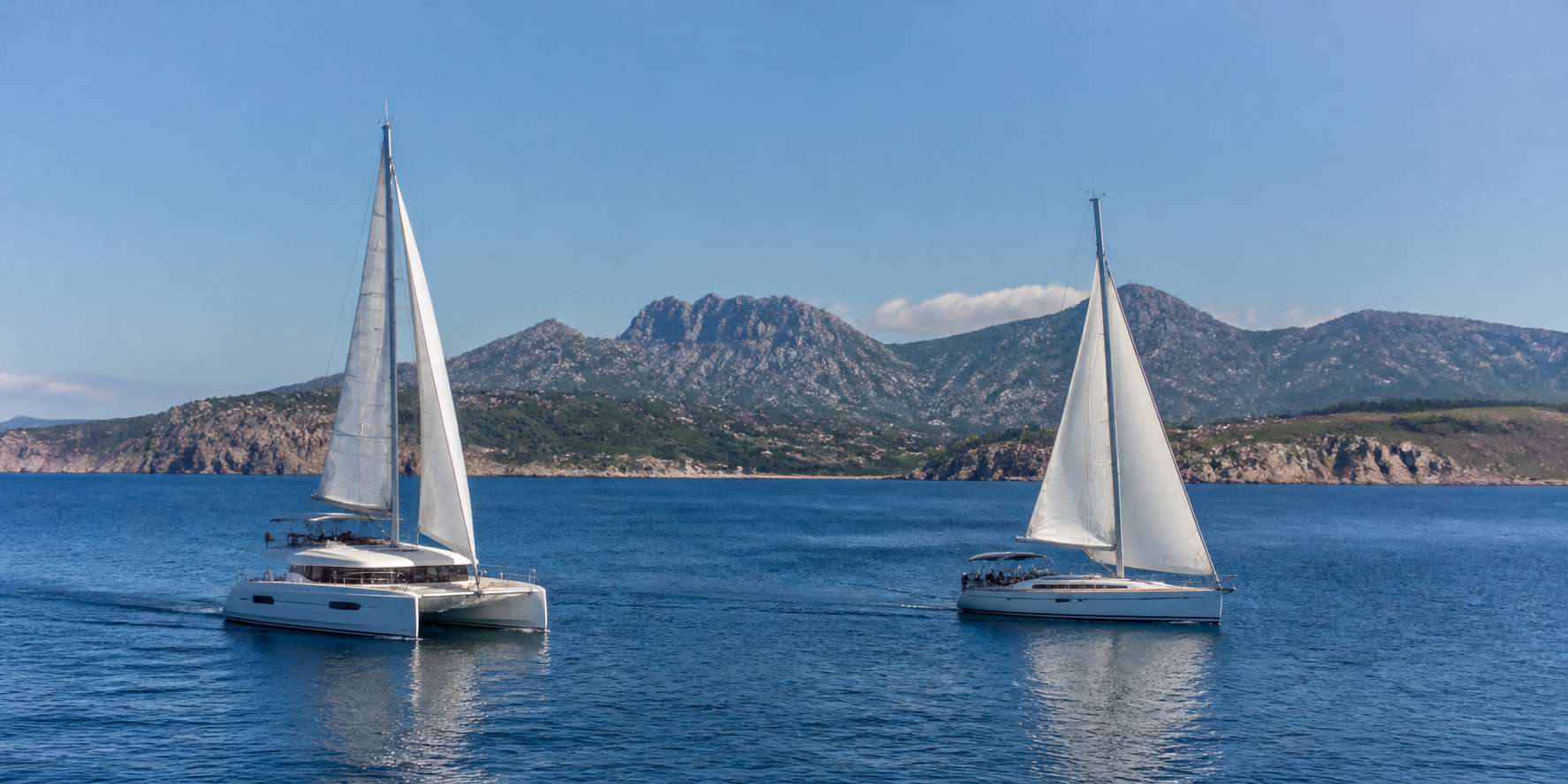
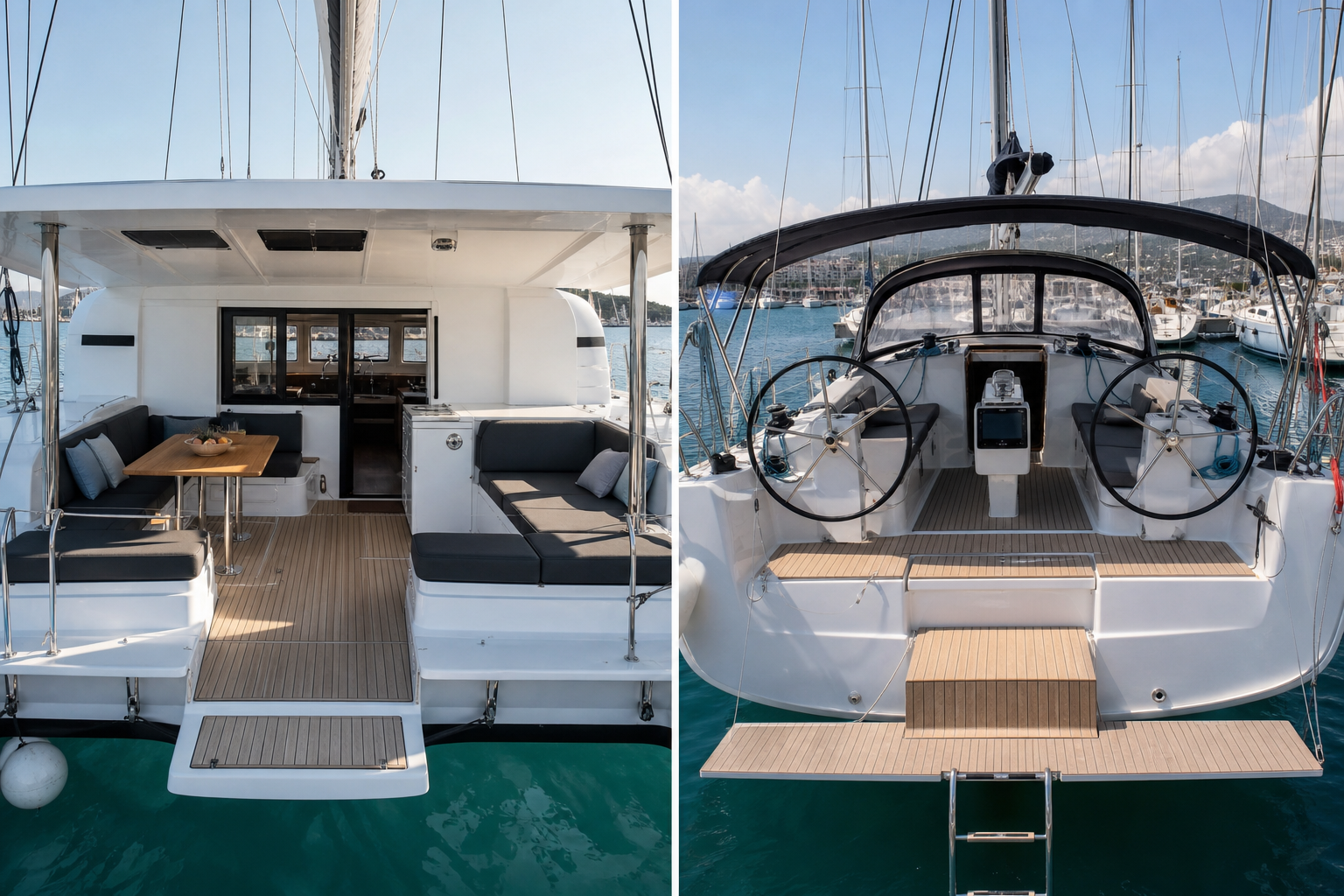
In the Balearics, choose layout before label. A catamaran gives cockpit space, two hulls and a shallower feel at anchor; it may need more room in a marina and can cost more. A monohull usually sails with more feedback, may fit a tighter berth and asks the group to accept less separation between cabins. Compare exact boat inventory, not brochure images.
Space, motion and privacy: the real comparison
Use the Balearic Islands as a planning context, then ask for the exact handover marina, transfer time, check-in window, boat inventory, deposit mechanism and mandatory extras. In July and August, do not assume a favourite bay will be available late in the day. The charter agreement, weather forecast and operator’s local briefing override a generic route suggestion.
What changes at a Balearic marina and anchorage
Day 1 — handover and a nearby protected night. Day 2 — a short passage and the first routine check. Day 3 — the main highlight only in a suitable forecast. Day 4 — flexible swimming, marina or rest day. Day 5 — start returning toward base. Day 6 — buffer day. Day 7 — fuel and check-out.
Before confirming the charter
- Exact marina and transfer confirmed in writing.
- Inventory, deposit and mandatory extras checked.
- A weather alternative and return buffer agreed.
A decision matrix for your exact group
Share your group profile and priority. Ask for a written comparison of suitable boats, skipper availability where relevant, included and excluded costs, insurance terms and the exact base procedure. This guide was checked on 27 August 2026; weather, berth availability and operator rules must be reconfirmed for your dates.
Operational details that shape the week
The practical question is not whether the group likes the idea of a yacht, but how catamaran bridge-deck space, monohull motion, cabin privacy, marina width, draft, tender storage, windage and realistic boat inventory will work after a delayed flight, a hot transfer and the first evening aboard. Write the operating assumptions down before the balance payment: who arrives first, where luggage waits, what happens if the marina handover is late, and what can be cancelled without losing the week. In Spain, Saturday timing matters because check-in, provisioning, fuel and traffic often compete for one short window.
Make the itinerary reversible. Choose a first-night option close to the base, a second option that works in another wind direction, and a final return day that is not used for a headline destination. The skipper or charter company should confirm the exact pontoon, local forecast source and communications procedure. A plan that leaves room for a change of wind is more valuable than an ambitious list of coves.
Before departure, inspect the actual inventory: navigation equipment, tender and outboard, charging, refrigeration, sun protection, water capacity and sleeping arrangements. Ask the operator what is included, what is mandatory, what is optional and how the deposit or excess is handled. Do not rely on a generic listing; boat equipment differs even within the same model.
On board, agree a simple decision rule. If forecast, crew energy, berth availability or daylight no longer supports the original plan, choose the nearer protected option. That rule prevents the familiar late-afternoon argument and gives the group a safe answer when conditions change. Check the forecast again before leaving each morning and confirm the final fuel and return procedure at the start of the week.
Practical controls before and during charter
Make the itinerary reversible. Choose a first-night option close to the base, a second option that works in another wind direction, and a final return day that is not used for a headline destination. The skipper or charter company should confirm the exact pontoon, local forecast source and communications procedure. A plan that leaves room for a change of wind is more valuable than an ambitious list of coves.
Before departure, inspect the actual inventory: navigation equipment, tender and outboard, charging, refrigeration, sun protection, water capacity and sleeping arrangements. Ask the operator what is included, what is mandatory, what is optional and how the deposit or excess is handled. Do not rely on a generic listing; boat equipment differs even within the same model.
On board, agree a simple decision rule. If forecast, crew energy, berth availability or daylight no longer supports the original plan, choose the nearer protected option. That rule prevents the familiar late-afternoon argument and gives the group a safe answer when conditions change. Check the forecast again before leaving each morning and confirm the final fuel and return procedure at the start of the week.
Final pre-departure review
Treat the last confirmation as a planning meeting, not a formality. Recheck crew names, arrival times, passport and licence requirements where relevant, the exact berth, payment method for the deposit, provisioning delivery address, insurance excess and the operator’s emergency number. Ask whether local mooring, park or anchoring rules affect the intended area, and save the relevant official information offline. On arrival, photograph the inventory and any existing damage with the charter team, test the tender and navigation lights, and ask how to report a problem. The best first charter is deliberately unglamorous in these details: the group knows who can make a safety decision, which costs remain variable and when to return. Keep one person responsible for the final check-out appointment, fuel receipt and transfer plan. These small controls make the holiday flexible without making it improvised.
Sources