

Contents
Write the Sicily brief before browsing boats
List the guests, couples, children, sailing experience, dates, airport, base and the type of week you want. Add hard limits: maximum draft, beam, private cabins, air-conditioning, shaded cockpit, a skipper cabin or an easy tender for daily swims.
Separate must-haves from nice-to-haves. Two couples may need four proper cabins and two heads; a family may value a protected cockpit and short, simple passages. A 46-foot catamaran and a 46-foot monohull can advertise the same capacity while offering a completely different daily routine.
Send the brief to the operator and ask for two or three exact boats with current photos. A sister ship, refit or substitution can change the cabin plan, batteries or tender enough to alter the choice.
Make the base and route the first filter
Capo d’Orlando Marina is a direct launch for the Aeolian Islands: it lists 553 berths, boats up to 50 m and a position about 14 nautical miles from the archipelago. Palermo works for a north-west loop with city time and Cefalù; Marina di Ragusa lists 700 berths, vessels up to 50 m, depths from 2.5 to 5 m and VHF 74 for the south-east.
Choose a route that matches the week. A seven-day Aeolian loop needs margin for an exposed crossing and a crowded island berth; a Palermo itinerary may favour easy tender access and an evening return; the south-east works for guests who want Ragusa, Noto or Syracuse ashore.
Ask the base for the actual berth, arrival depth, turning room, shore power, water and fuel. Capo d’Orlando’s official rates state that catamaran transit is priced at twice the monohull rate, so hull choice and base cost are connected from the start.
Compare cabin fairness, shade and systems
Draw the cabin map: real doubles, convertible saloon berths, heads, storage and who must pass through whose space. In July, cockpit shade, ventilation, fridge capacity and water tanks are daily essentials, not luxury extras.
For a catamaran, check the galley position, bridge-deck noise, forepeak access and beam at the berth. For a monohull, check companionway steps, heel-sensitive storage, sail controls and whether the saloon still works when every berth is made up.
Ask for equipment dates and recent photos: tender and outboard, solar output, battery age, generator or shore-power rules, autopilot, plotter, reefing, boarding ladder and correctly sized lifejackets. Sicily’s hot, swim-heavy days expose weak water and energy systems quickly.
Check draft, beam and the weather margin
Draft decides which anchorages remain comfortable; beam decides the berth, windage and manoeuvring space. Many catamarans draw around 1.2–1.4 m, while many monohulls draw 1.9–2.3 m, but only the exact boat’s keel and tanks count.
Volcanic islands create local effects around headlands and channels. Leave room to move to the sheltered side of Lipari, Salina or Vulcano, and keep a mainland or base return option. Do not select a boat whose draft, water capacity or range forces the skipper into an optimistic schedule.
Ask who makes the weather decision, what the safe return time is and how a missed island night is handled. The contract should protect the group from a late substitution while the skipper protects the group from an unsafe crossing.
Read the quote and inspect the handover
A comparable quote names the exact yacht or substitution rule, dates, base, charter fee, transit log, cleaning, deposit, cancellation, fuel, provisioning, moorings, marina nights, taxes and transfers. ‘Subject to availability’ is not a useful answer once flights are booked.
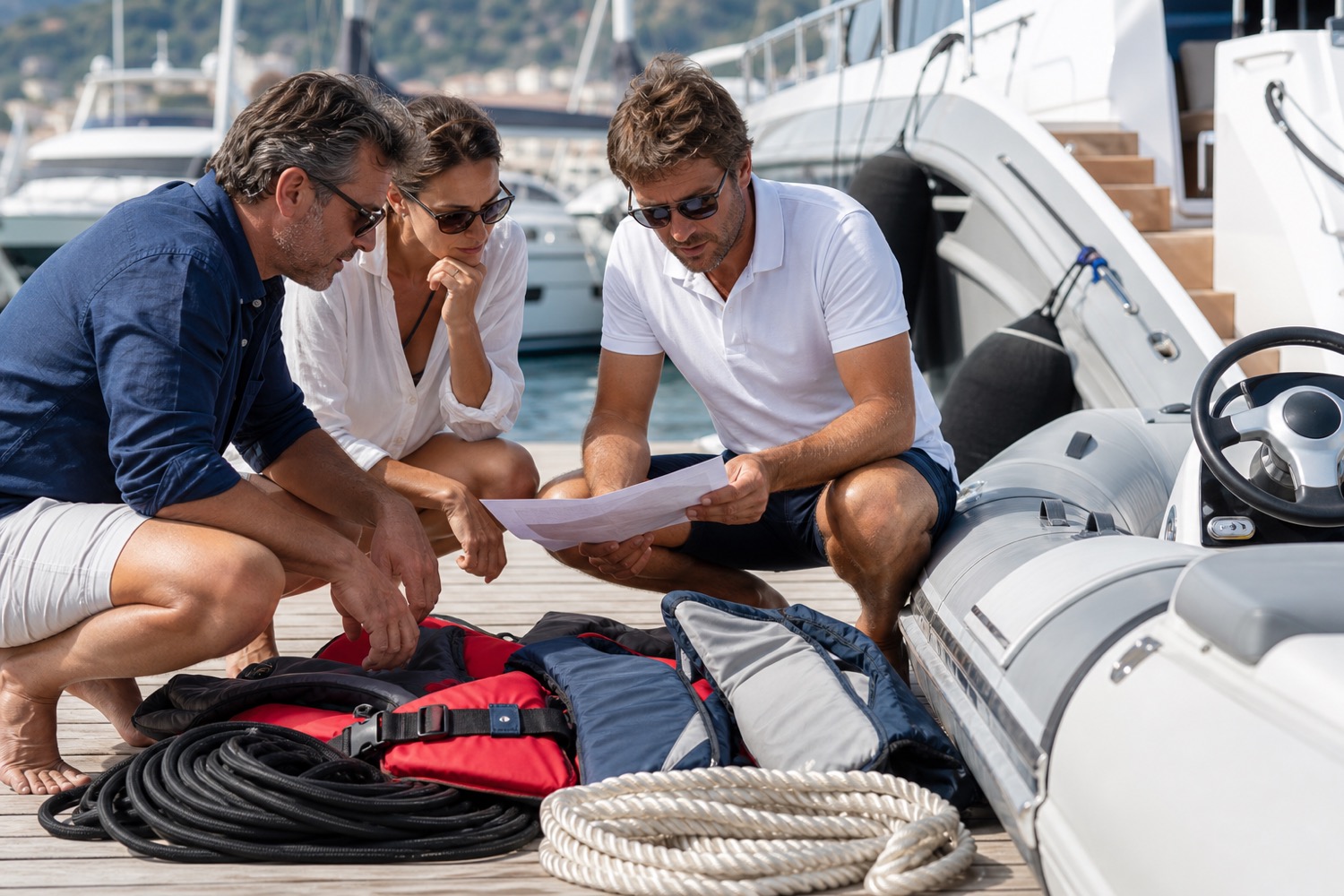
At handover, start engines, check battery and water levels, test the anchor windlass, inspect the tender, open lockers and locate life raft, EPIRB, extinguishers, seacocks and bilge pumps. Photograph hull, sails, instruments and inventory before signing.
Use official marina data to challenge vague costs: Capo d’Orlando publishes seasonal rates and services; Marina di Ragusa publishes depth, VHF and utility details. Written figures make a fair comparison possible.
A simple score that prevents regret
Score every candidate from 1 to 5 for cabin fairness, route fit, draft and beam, equipment, comfort in heat, base convenience and all-in price. Double-weight the two rules the group will not compromise on.
Reject any boat that fails a hard limit, even if the photographs are beautiful. An extra cabin cannot fix a berth that cannot accept the beam; a powerful generator cannot fix a draft that blocks the planned anchorage.
Book when one boat wins on the brief and the offer is explicit. If two boats tie, choose the operator with the clearer weather policy, handover checklist and substitution terms.
Sicily charter yacht selection checklist
- Write group, route, dates, airport, base, experience and all-in budget.
- Verify exact length, beam, draft, keel, tank capacity and berth rules.
- Map real cabins, convertible berths, heads, shade, storage and water.
- Check tender, outboard, sails, autopilot, plotter, solar, batteries and generator.
- Keep a weather margin and a sheltered alternative for Aeolian crossings.
- Separate fixed costs, estimates, deposit, cancellation and substitution rules.
- Photograph handover condition and record every promise in the contract.
Sources