

Contents
Route philosophy: one headline experience, one safe harbour option
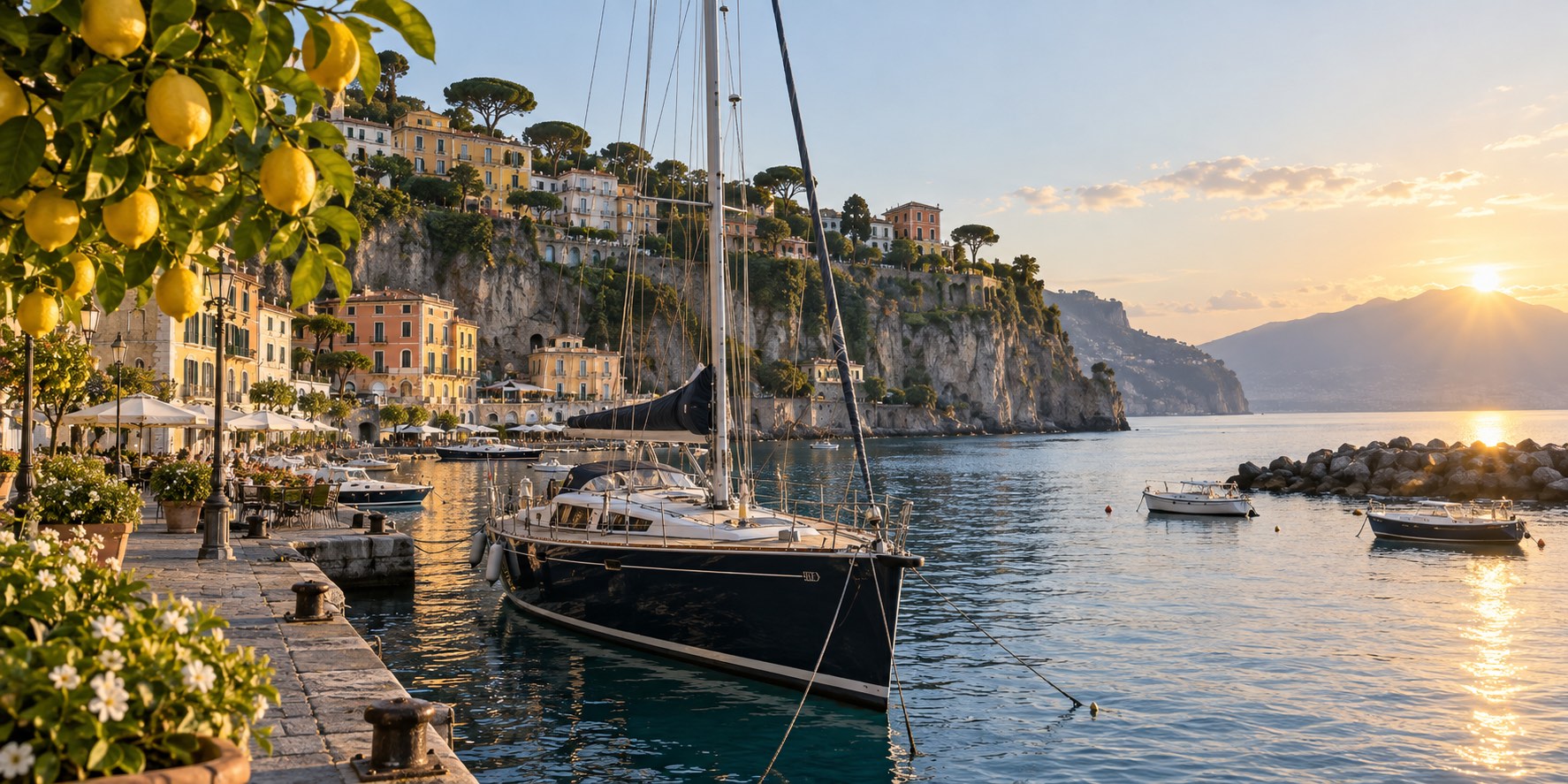
The Gulf of Naples and the Amalfi Coast pack several different sailing environments into a small map: urban harbour approaches, open water around Capri, cliff-lined coves and the protected waters of Punta Campanella. The official Campania tourism portal describes Capri, Sorrento, Ischia and the Amalfi Coast as linked sea destinations; it does not promise that every point belongs in one week. Build the week around a primary experience and a fallback within the same day’s reach.
Sorrento’s Marina Piccola is a useful operational centre because the port sits close to the town and the main attractions of the Gulf of Naples. Marina di Stabia adds parking, technical services and a larger marina environment. Choose the base from the boat actually available, then shape the loop around the skipper’s weather briefing rather than promising a fixed restaurant-to-restaurant schedule.
| Day | Primary plan | Flexible fallback |
|---|---|---|
| 1 — Board and calibrate | Check-in at Sorrento or Stabia; short swim near the peninsula; sleep at base | Stay in the marina, provision properly and start early next morning |
| 2 — Capri | Approach Marina Grande or cruise the Faraglioni; shore time in Capri or Anacapri | Keep the island as a day stop and overnight near Sorrento if berth traffic is heavy |
| 3 — Capri to Positano | Coastal passage via Punta Campanella; swim window; sunset in Positano or Praiano | Shorten at Nerano or return to Sorrento when wind or swell builds |
| 4 — Positano and Amalfi | Morning ashore; Furore or Conca dei Marini by tender if conditions allow; Amalfi stop | Use a sheltered bay and make Amalfi a daytime landing only |
| 5 — Amalfi to Sorrento | Slow coastal day via Maiori, Cetara or Nerano; marina night | Reverse the loop and keep a second Sorrento night |
| 6 — Weather buffer | Capri re-visit, Ischia/Procida option or an easy swim day | Return toward base early and protect the final handover |
| 7 — Return | Fuel, final checks and handover by the operator’s deadline | Do not plan a long morning passage before a flight |
Days 1–2: make the boat and Capri work for you
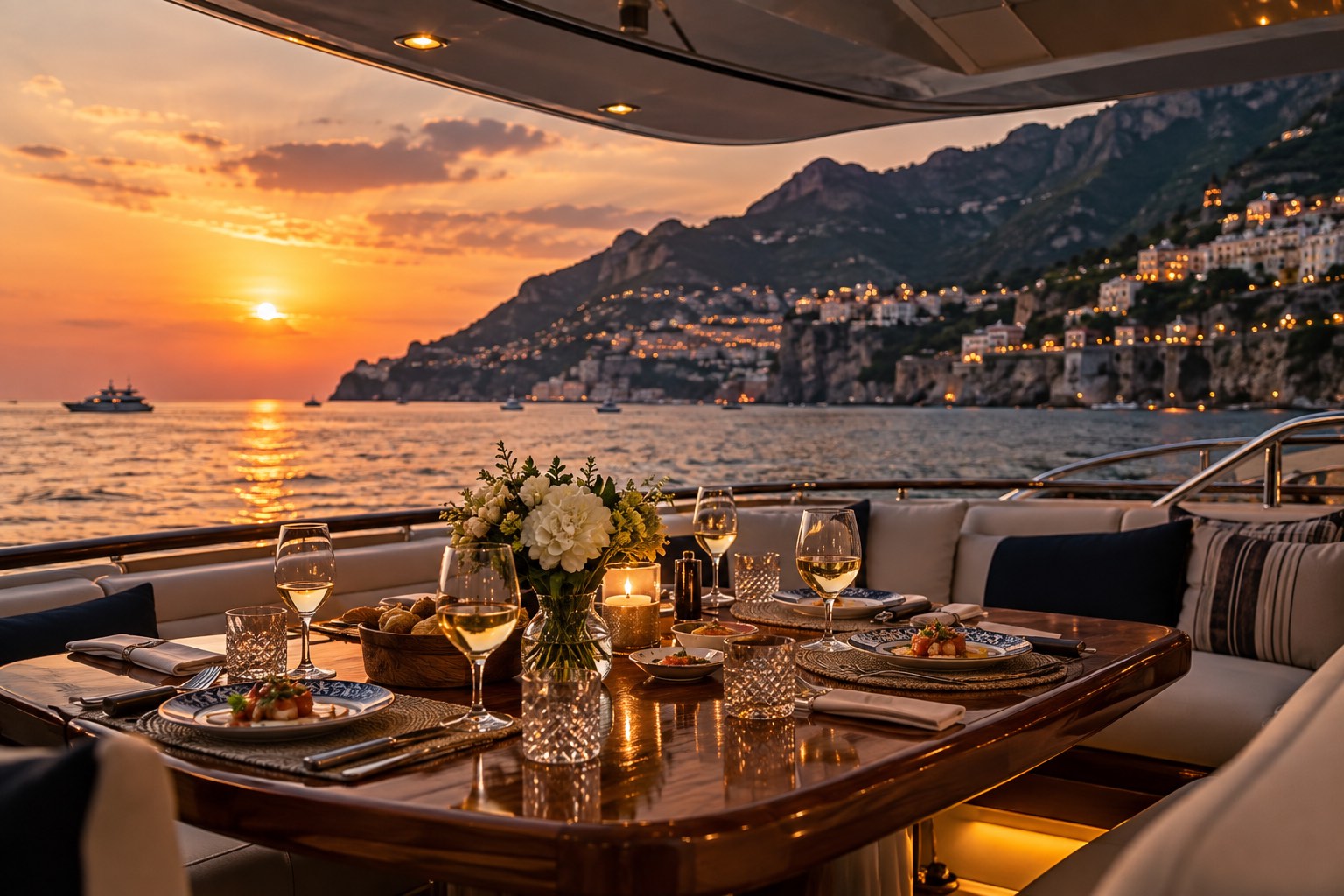
On embarkation day, keep the brief operational: safety talk, cabins, water, tender, galley and a short test under way. A late arrival should never trigger a heroic first crossing. If the boat starts in Sorrento, the first evening can be a town dinner or a nearby anchorage selected by the skipper. If it starts at Stabia, use the marina services to finish provisioning and leave at first light.
Capri deserves time, but not a rigid overnight promise. Italia.it identifies Marina Grande as the first port of call for boats arriving from Naples, Sorrento and Ischia, while the port’s own operator handles current berth information. Treat Marina Grande as a confirmed booking only when the operator has written acceptance. Otherwise, circle the Faraglioni, swim at an approved location and sleep at the base or another confirmed berth.
Days 3–4: cross the visual heart of the coast without overloading it
The transition from Capri toward Positano and Amalfi is the most photogenic leg, but it is also where schedules become fragile. Keep the Punta Campanella chart visible, avoid unapproved anchoring over marked Posidonia and respect speed and access rules in the marine protected area. A skipper can choose whether to run outside the busiest shore traffic, pause near Nerano or continue after a live weather check.
On the Amalfi day, choose one town for a proper walk—Positano or Amalfi—and one sea-level stop such as Furore’s fjord or Conca dei Marini if the tender landing is practical. The official Italian tourism portal notes that many beaches are small pebble cuts below steep cliffs; this is why a landing plan matters more than a long list of names. Keep dinner ashore optional until the return time is safe.
Days 5–7: protect the return, not the pin count
A marina night near Sorrento is the reset point: refill water, charge devices, wash swimwear and check the handover list. Use Day 6 as a real weather buffer, not as an excuse to add another far island. Ischia or Procida can be offered only when the skipper confirms the passage and the charter contract allows the distance. Otherwise, repeat the coast at an easier pace or keep a swim day close to base.
On the final morning, follow the operator’s fuel and return procedure and allow time for inventory, damage notes and document sign-off. If a flight follows, book a transfer after the agreed handover, not after a hoped-for arrival. The Helm team can return two route versions: a headline loop and a shorter protected-weather loop, both mapped to the same boat and dates.
Traffic, weather and protected-area checks
The coast is most comfortable when the skipper can move the order of days. Wind direction, swell around exposed headlands, ferry traffic at Capri and harbour availability matter more than a nominal nautical-mile total. Ask for a briefing that names the decision points: when to leave Capri, where a tender can land, which anchorage is legal and what time the yacht must be back at base.
Punta Campanella’s official rules distinguish zones and restrict anchoring near beaches, steep coast and marked sensitive seabeds. Save the current regulation link in the onboard notes and use the chart, not a screenshot. Near Amalfi, confirm whether the town stop is a berth, a buoy, a tender landing or only a scenic pass; each option changes the timing and guest experience.
Seven-day Naples–Capri–Amalfi route checklist
- Select the actual base and confirm berth, draft, transfer and check-in time.
- Ask for a day-by-day route plus a shorter weather version.
- Treat Capri Marina Grande and Amalfi as confirmed only with written acceptance.
- Load current Punta Campanella zoning and anchoring guidance.
- Reserve one marina night for water, charging, showers and provisioning.
- Place the final handover before the flight in the calendar with a buffer.
Sources