

Contents
Write the brief before you open the fleet list
Record group size, couples, children, sailing experience, preferred dates, airport, route ambition and all-in budget. Then add hard limits: maximum draft, need for air-conditioning, separate beds, accessible cockpit, pet policy or a private skipper cabin.
Separate ‘must have’ from ‘nice to have’. A 50-foot yacht with four generous cabins may suit two families better than a 44-footer advertised for ten. Conversely, a smaller monohull can be the smarter choice for narrow berths and a group that values sailing feel over salon volume.
Share this brief with the operator and ask for two or three exact boats, not a generic model range. Substitutions, refits and sister ships can change the layout enough to change the decision.
Compare the living plan, not the berth count
Draw a simple cabin map: who sleeps where, which berths are double, which convert, how many heads are available and whether anyone must pass through another cabin. Count storage, cockpit shade, fridge volume and water capacity as part of comfort.
On a catamaran, inspect the distance between hulls, the galley position and the forepeak access. On a monohull, check companionway steps, heel-sensitive storage and whether the saloon table still works with every berth made up.
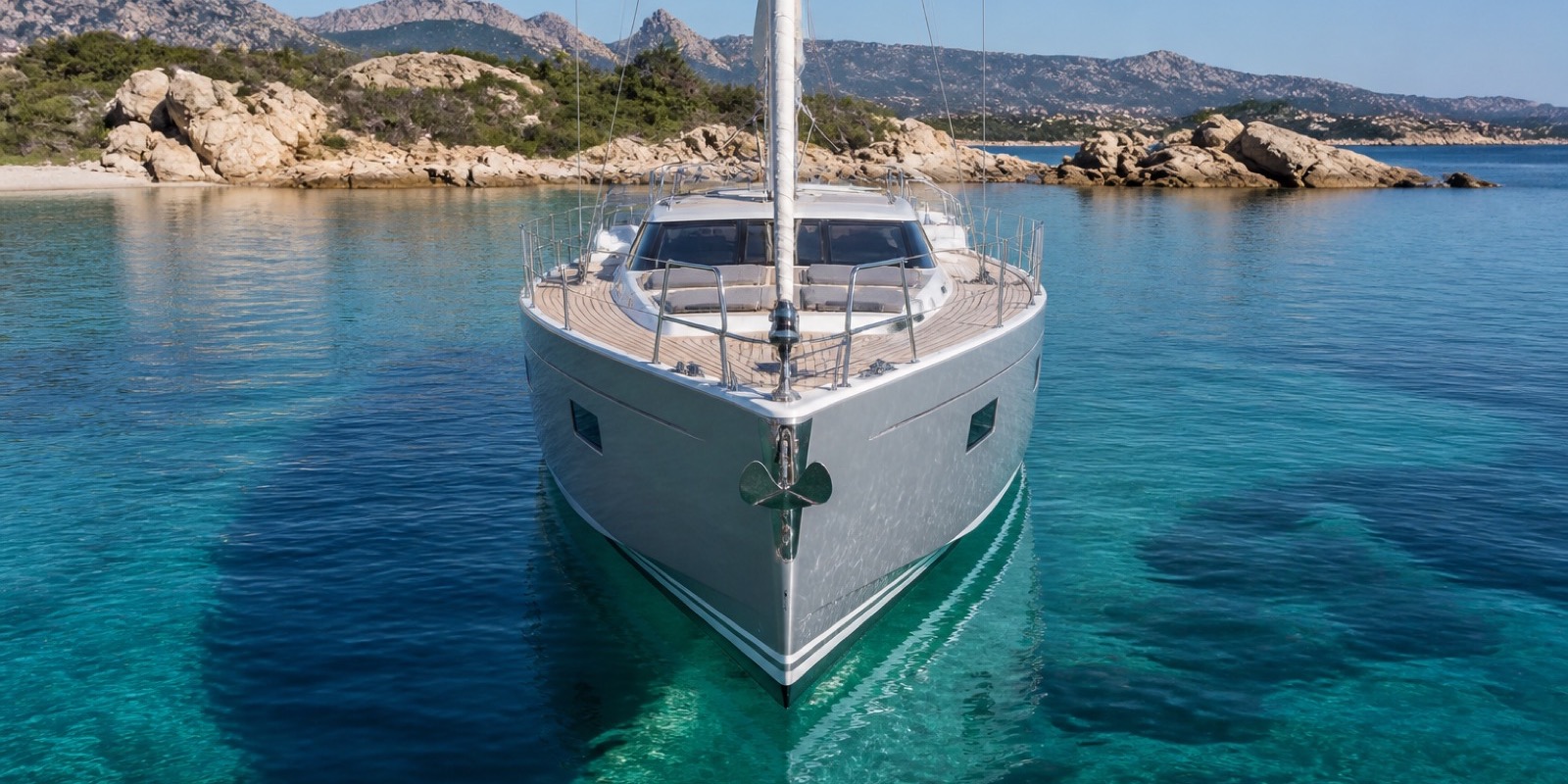
Ask for recent photos of mattresses, cockpit cushions, sails, tender and safety gear. A polished listing image cannot show a tired battery bank, a small dinghy or a head that is awkward for a full crew.
Make draft, beam and base work together
Draft decides which coves and marinas are realistic; beam decides where the boat can berth and how much windage the skipper manages. Marina di Stabia lists fingers for boats up to 18 m and depths up to 6.5 m, but the operator still needs the exact beam for your booked berth.
Portisco works well when airport access and Costa Smeralda bays are priorities. Sardegna Turismo places it near Olbia airport and port, so transfer time can be short. Capo d’Orlando offers 553 berths and the Aeolian Islands about 14 nautical miles away, but its official rates state that catamarans pay twice the monohull transit rate.
Treat the base as part of the boat choice. A wide catamaran from a beam-friendly marina can be easy; the same boat in a crowded, crosswind berth can create an avoidable first-night problem.
Audit equipment against the route
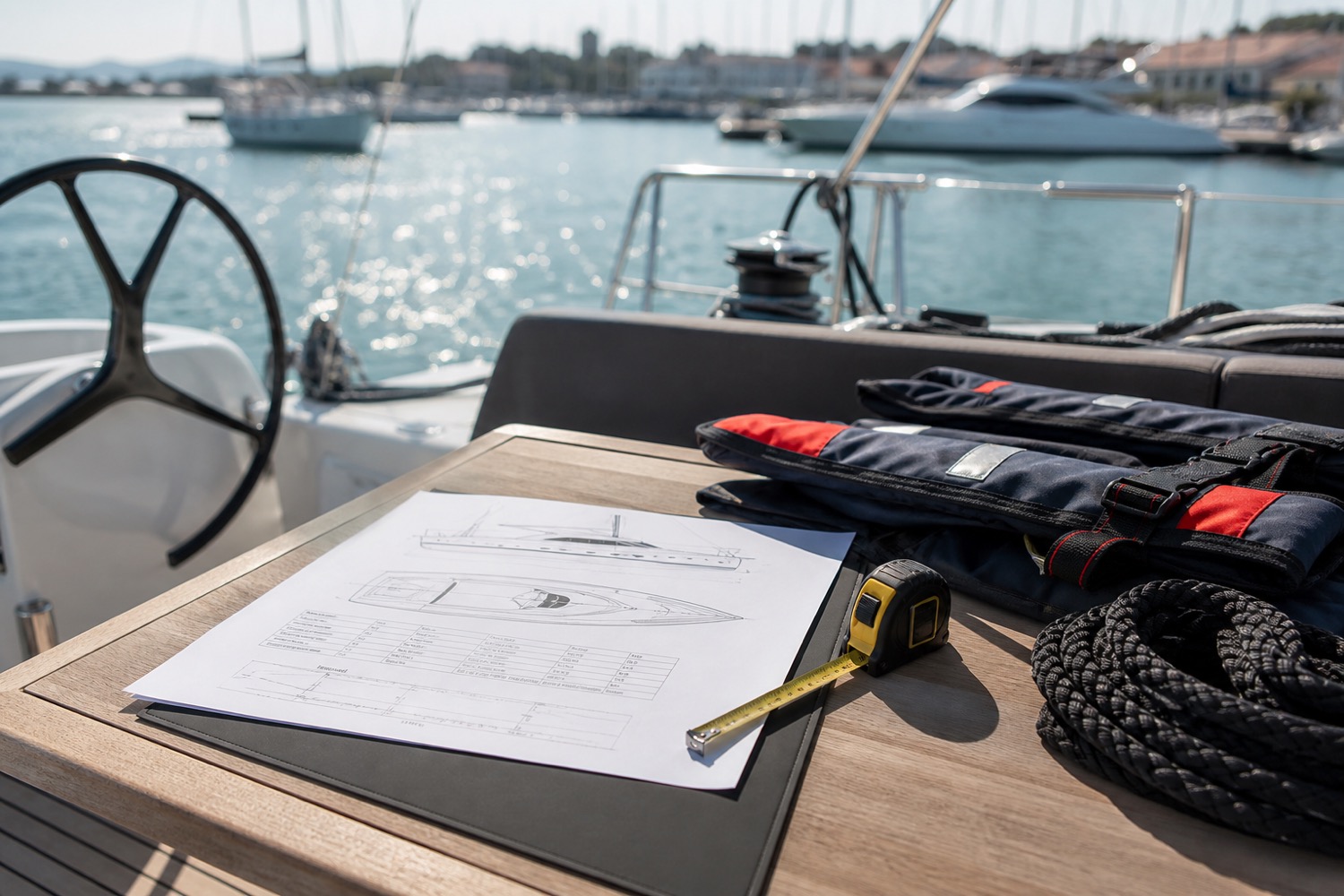
For a week with many swim stops, check tender length, outboard power, boarding ladder, shade and freshwater. For longer sailing legs, ask about sail condition, reefing from the helm, autopilot, plotter visibility and spare lines. For children, verify life-jacket sizes before the deposit.
Look at energy and water: solar output, battery age, generator or shore-power rules, water tanks and desalination. Air-conditioning may be limited to marina power or generator hours, which matters for a July itinerary.
Safety details are not optional extras. Ask where the life raft, EPIRB, first-aid kit, fire extinguishers and harnesses are located, and who gives the briefing. A clear answer is a quality signal from the operator.
Read the offer like a contract
The final quote should identify the exact boat or a substitution rule, charter dates, check-in and check-out, charter fee, mandatory extras, deposit, cancellation, taxes, fuel and marina costs. ‘Subject to availability’ is not enough if flights and villas are already booked.
Ask which items are estimated and which are fixed. Marina di Stabia advertises fuel and 24-hour assistance; Capo d’Orlando publishes seasonal transit rates. Those official references help you challenge vague ‘local costs’ lines in a broker’s estimate.
Before arrival, request the handover checklist and report channel for damage. Photograph the hull, sails, tender, instruments and inventory on day one. Clear evidence protects the group and speeds up a fair deposit release.
A five-minute decision score
Score every candidate from 1 to 5 for cabin fairness, route fit, draft and beam, sailing performance, equipment, base convenience and all-in price. Give double weight to the two rules the group will not compromise on.
Reject a boat that fails a hard limit even if it wins on photos. A perfect cockpit cannot compensate for a draft that blocks the planned anchorage, and an extra cabin cannot compensate for a marina berth that cannot accept the beam.
Book when one boat wins on the brief and the offer is explicit. If two remain tied, choose the operator with the clearer handover, weather policy and substitution terms.
Italy charter yacht selection checklist
- Write group, route, dates, airport, experience and all-in budget.
- Verify exact length, beam, draft, keel, rudder and air-conditioning limits.
- Map real cabins, convertible berths, heads, storage and water capacity.
- Check tender, outboard, safety gear, sails, autopilot and energy system.
- Match the boat to the base, berth width, transfer and first-night shelter.
- Separate fixed costs, estimates, deposit and cancellation terms.
- Photograph the handover and keep every promise in the contract.
Sources