

Contents
Agree on the trip before you choose the boat
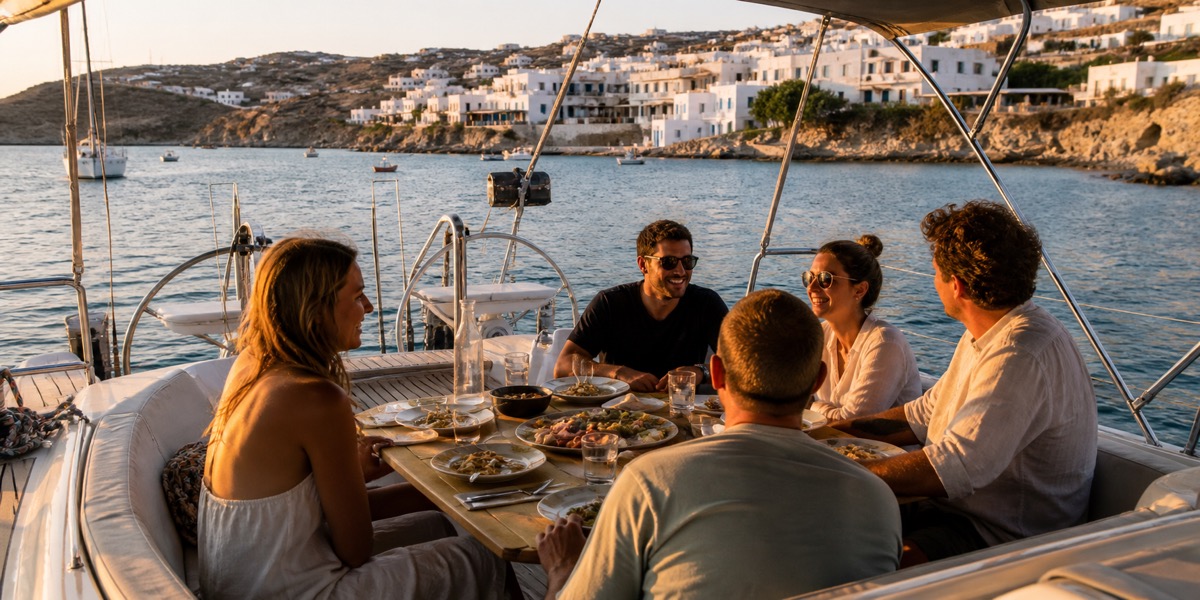
Ask every friend to rank three things: cabin privacy, sailing time and shore nightlife. The answer determines the boat and route. A group that wants long dinners and swim stops may be happier on a catamaran with a shaded cockpit. A group of sailors may accept a narrower monohull for better sailing feedback.
| Decision | Best fit | Trade-off |
|---|---|---|
| Crewed catamaran | Six–eight friends, shared meals, mixed experience | Higher total cost, more beam at tight berths |
| Crewed monohull | Sailing-minded group and couples | Less shared space and more motion |
| Bareboat | One qualified, confident skipper in the group | That person carries navigation and safety responsibility |
Choose a route that lets the group split and reunite
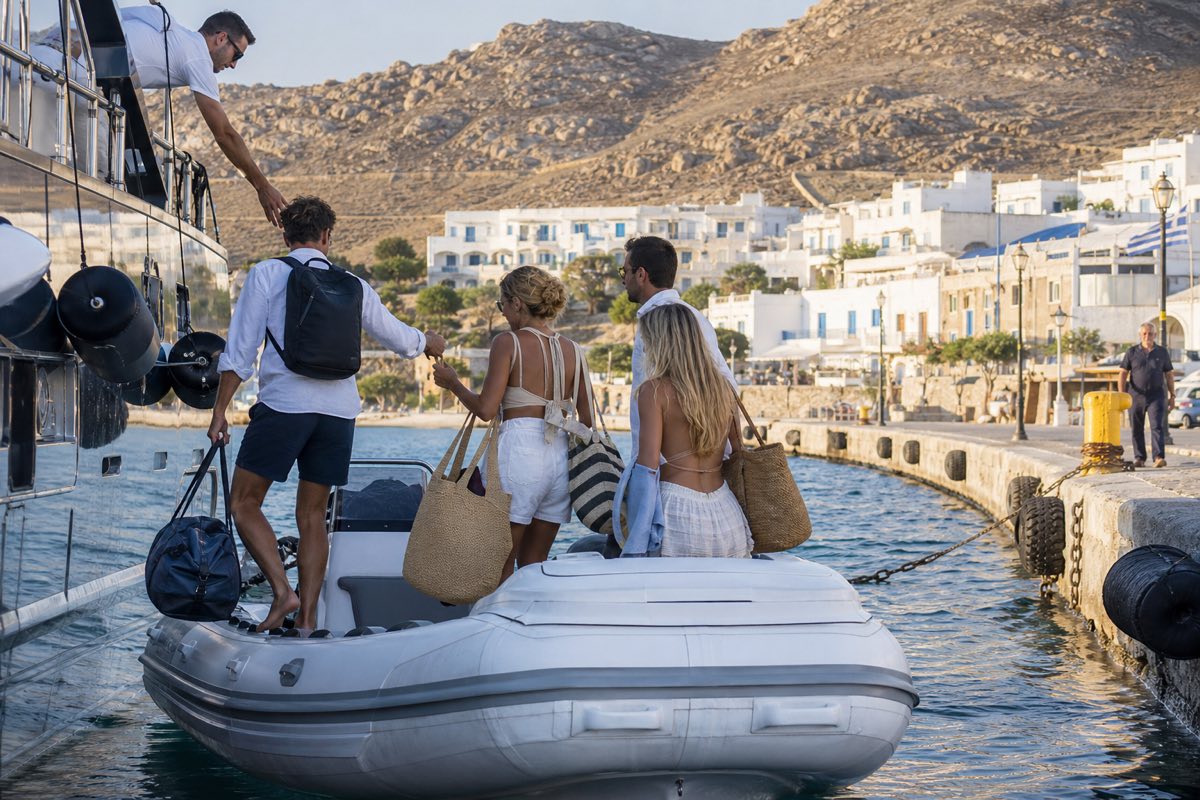
The Saronic Gulf is practical for a first friends charter: Aegina and Agistri offer easy swim stops, Poros has a protected town harbour, and Hydra adds a memorable shore evening. In the Cyclades, build shorter open-water days around a reliable forecast and do not promise every famous island in one week.
Plan one optional shore night and one quiet night. That gives people who want a restaurant or bar a choice, while others can stay aboard, swim or sleep. The best group route is not the one with the most pins; it is the one that keeps decisions simple.
Make money and cabin rules explicit
Split the quote into base charter, skipper or crew, fuel, provisioning, marina nights, transit log, final cleaning and security deposit. Decide whether optional dinners, transfers and water toys are shared or personal. Do this before anyone pays a deposit, not when the first restaurant bill arrives.
Cabin fairness is also financial fairness. Confirm who shares a twin cabin, who takes a forepeak, whether a couple wants privacy and how any difference is balanced. A simple written rule avoids awkward negotiations onboard.
Keep group communication lighter than the itinerary
Create one shared note before departure with the boat name, base address, arrival times, cabin allocation, dietary restrictions and the person who holds the booking. During the week, use a ten-minute evening check-in: what is fixed tomorrow, what is optional and what can change for weather. This prevents the loudest person from silently deciding for everyone and gives quieter guests a practical way to say what they need.
Give the skipper one clear channel for decisions. The group can vote on dinner or a shore stop, but navigation, anchoring and safety are not popularity contests. If the skipper recommends staying in a protected bay, treat that as route expertise, not as a cancellation of the holiday. The best friends charter leaves room for different energy levels: some guests swim, some explore ashore and some simply read in the shade.
Agree on a wake-up time and a latest departure time, but keep the first hour of the morning quiet. Friends may have different sleep patterns after a shore evening. A simple breakfast window and a short briefing keep the group moving without making the holiday feel like a tour bus schedule.
Friends charter checklist
- One person owns the booking, but every friend sees the same quote and cancellation terms.
- Cabins, deposit contribution and optional extras are agreed in writing.
- The skipper can change the route for weather without group pressure.
- There is a quiet-night option for guests who do not want nightlife every evening.
Sources