


Contents
The short answer: the skipper runs the boat, not your whole holiday
The skipper’s core service is command of the vessel. Before each passage, the skipper checks the forecast, sea state, harbour restrictions and the next safe stop. During the day, the skipper handles departure, sails, engine, anchoring and stern-to mooring. In Greece, where a week can include small ports and exposed passages, those decisions are central to the charter experience.
A skipper is not automatically a host, chef, tour guide or housekeeper. A boat may be sold with a skipper only, or with a captain plus host, cook or stewardess. These are different roles, with different cabin arrangements and prices. Ask the operator to list every crew member and every guest-facing task in writing.
| Item | Usually included with a skipper | Usually separate |
|---|---|---|
| Navigation and manoeuvres | Route planning, helm, sails, engine and mooring | — |
| Safety | Briefing, weather monitoring and safe changes | Specialist instructors and extra water toys |
| Meals and shopping | Only if a host or cook is named in the offer | Food, drinks, provisioning and delivery |
| Boat running costs | Use of standard onboard equipment | Fuel, marinas, water, electricity, final cleaning and deposit unless stated otherwise |
What the skipper does during a Greek charter day
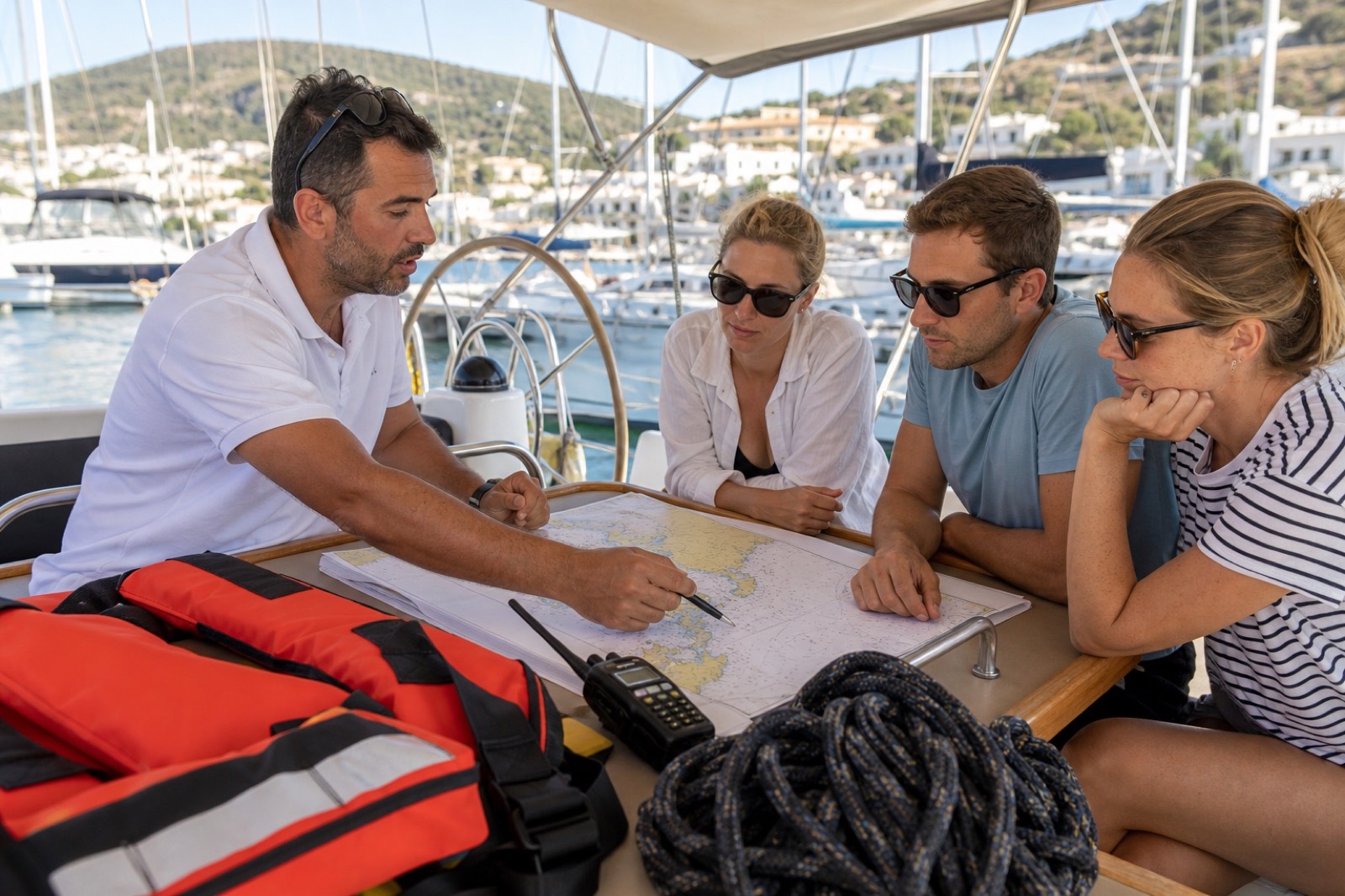
Before departure, the skipper compares the planned route with the actual wind and sea state. A responsible plan stays flexible: a long exposed crossing may be replaced by a short hop to a sheltered island, preserving swimming time and shore visits. The skipper should explain the choice, but the final navigation decision belongs to the person in command.
Guests may help with a line, fenders or a short turn at the wheel under instruction. This is optional. You are not expected to stand watch or navigate alone. Tell the skipper about children, mobility limits, food allergies and seasickness before leaving the dock so the day can be planned around the group.
On arrival, the skipper handles the approach, anchor or stern-to sequence, lines and final safety check. In a crowded Greek harbour this can be the most valuable part of the service. It is also why a route cannot be a rigid list of islands: berth availability and wind direction can change during the week.
Three questions to ask before you pay
Is the skipper fee weekly or daily? Confirm the dates, travel to the base, crew cabin and meals for the skipper. A crew line beside the yacht price is not necessarily the full crew budget.
What does route planning include? It should cover your preferred pace, swimming stops, shore time and realistic passage lengths. It should not promise every named island in every weather pattern. Ask who pays extra fuel or berth costs after a safety-led change.
Which tasks belong to a host? Breakfast, drinks service, cabin cleaning and provisioning help must be assigned to a host, cook or stewardess if you expect them. A skipper may help when safe, but that is not a guaranteed hospitality service.
Separate the charter price from running costs
A clear quote should show the yacht, skipper or crew, operating expenses and optional hospitality separately. Operating expenses can include fuel, marina or harbour fees, water and electricity, final cleaning, provisioning and a refundable deposit. Which items are prepaid depends on the operator and contract.
Do not compare a low headline price with a full-service offer. A skipper-only catamaran may look similar to a crewed yacht until you add provisioning, host service, marina nights and transfers. Ask for one total estimate for your dates and preferred area, with assumptions shown as separate lines.
| Ask to see this line | Why it matters |
|---|---|
| Skipper fee and dates | Shows whether the fee is weekly, daily and inclusive of travel. |
| Fuel and marina treatment | Prevents a surprise when weather or crowded ports change the plan. |
| Host, cook or stewardess | Defines who shops, cooks, serves and cleans. |
| Route change clause | Makes a safety-led change clear without impossible promises. |
What to send the skipper before boarding
Send the real group brief: ages, swimming confidence, allergies, mobility limits, preferred wake-up time, interest in sailing and seasickness. The skipper can then recommend a boat layout, passage length and anchorage plan that fit your group.
Agree how decisions are communicated. Some groups want a morning briefing and two options; others prefer the skipper to decide and explain. Both work if the safety boundary is clear: the skipper can stop a departure, change a passage or refuse an unsafe anchorage.
Before you confirm a skippered charter
- The skipper’s role, dates, fee and cabin are written in the offer.
- You know whether the offer is skipper-only or includes a host, cook or stewardess.
- Fuel, marinas, final cleaning and provisioning have a payment method.
- The contract allows a safety-led route change and explains extra costs.
- The skipper has received your group profile and health or safety information.
Sources