

Contents
Start with the base, not the brochure
The same 45-foot yacht can be an excellent choice from Hyères and an awkward choice from a shallow, busy harbour elsewhere. Begin by fixing the real departure point, the likely overnight pattern and the latest safe return time. From Hyères, a week may include Porquerolles, Port-Cros and a mainland marina, so berth width, draft and access to fuel matter as much as cabin count. Ask the base which berths the actual model normally uses, not which berths are theoretically available.
Season changes the answer. In July and August, shade, ventilation, reliable refrigeration and a cockpit that can be covered are daily necessities. In the shoulder season, heating, spray protection and an easy marina entrance may matter more than a large bathing platform. Write the month, guest count, skipper or bareboat format and one non-negotiable comfort requirement in the first message to the broker. This removes attractive but irrelevant options before a quote is built.
Turn crew habits into specifications
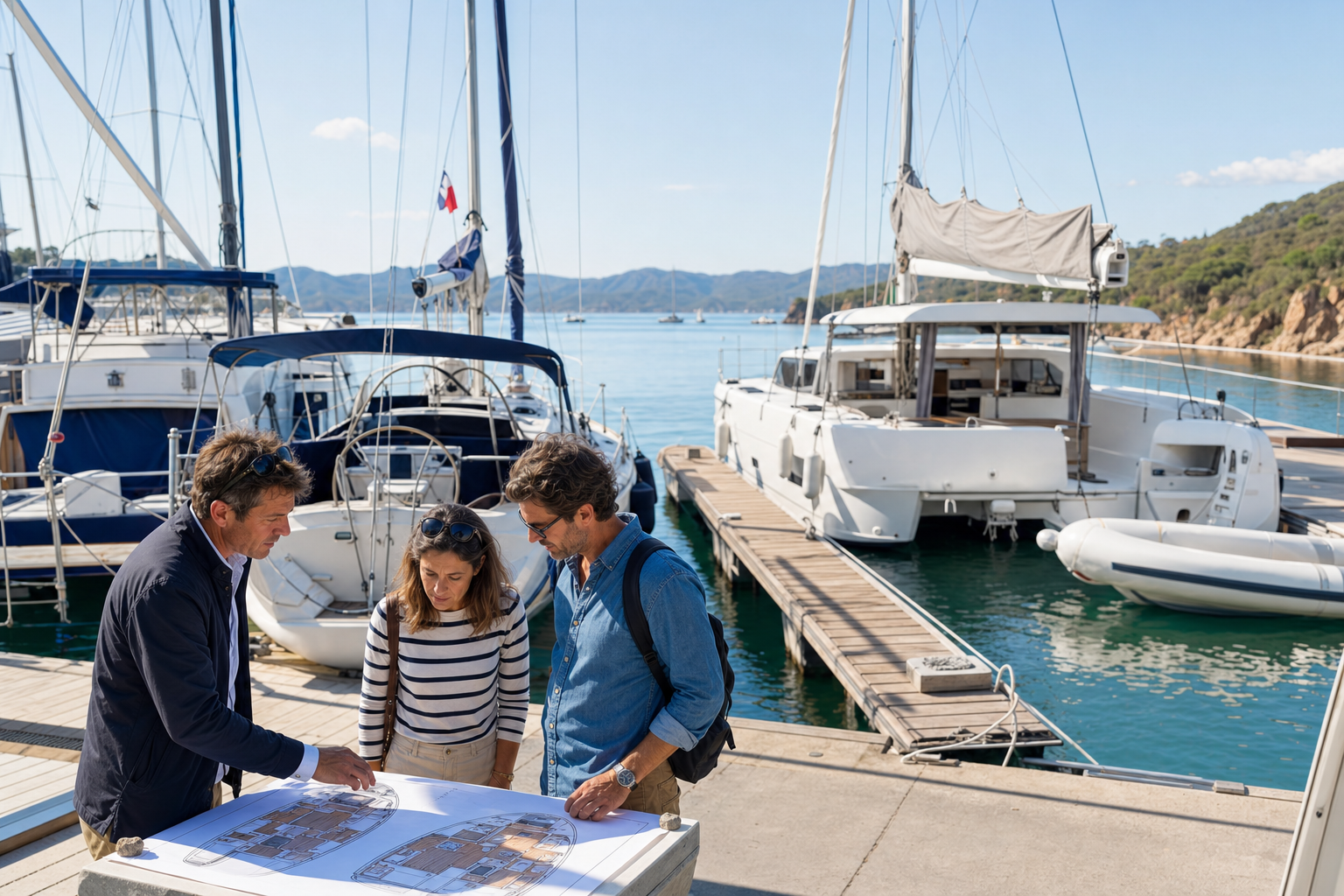
Count people by sleeping pattern, not by the maximum legal capacity. Two couples may value four proper cabins and two heads; a family with young children may prefer cabins close to the saloon and a protected cockpit. If guests cook, compare galley worktop, freezer volume, ventilation and the route from galley to cockpit. If they spend the day ashore, prioritise an easy tender launch and secure storage for day bags. These are measurable requirements, so ask for a layout drawing and mattress dimensions.
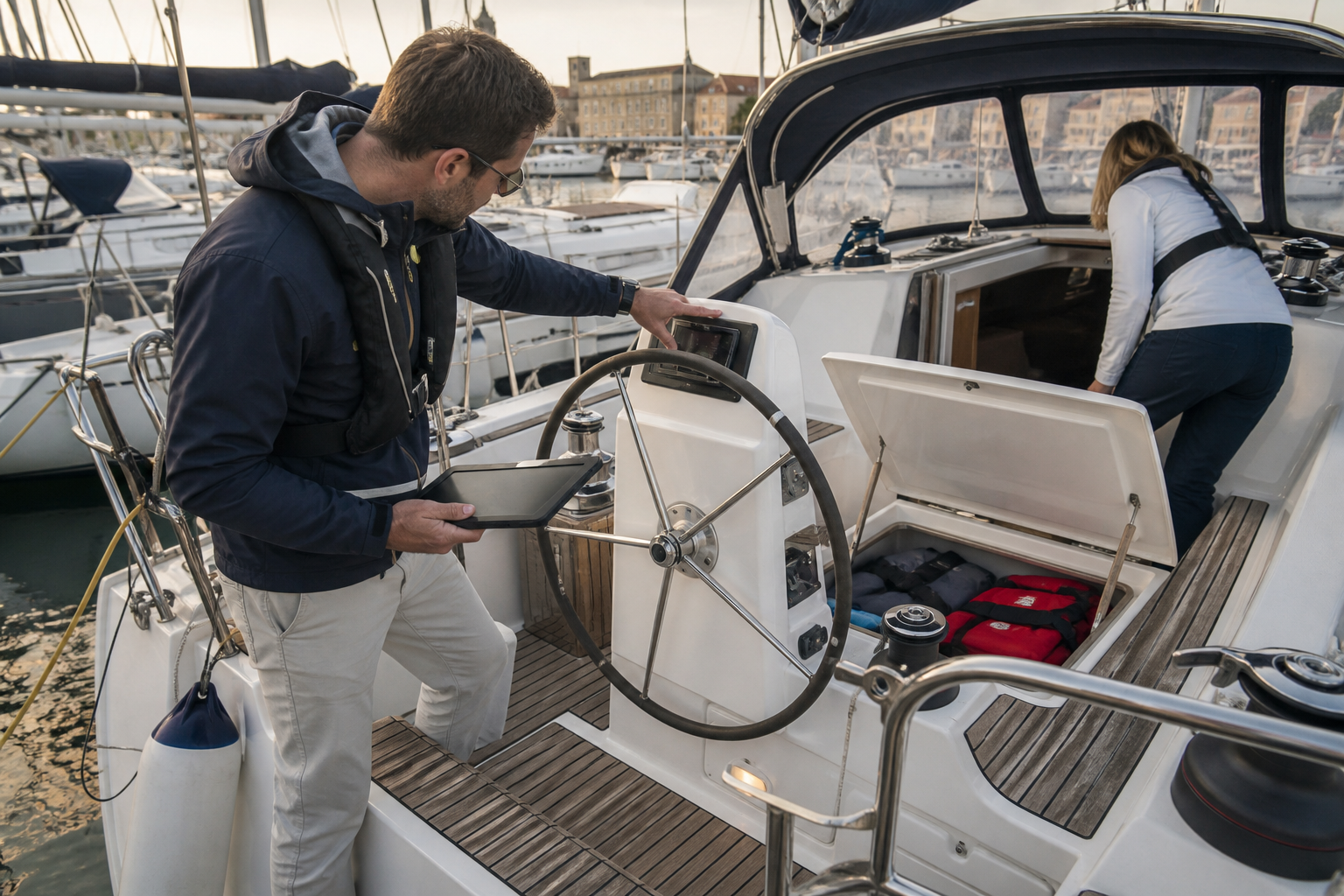
Ask who will actually handle the boat. A licensed skipper will care about visibility from the helm, engine access, anchor control and the reliability of the chart plotter. A family crew may need a low step, good handholds and a clear lifejacket locker. A sailing-focused group may accept a smaller saloon for a responsive rig. Choose the boat around the least confident person’s daily tasks; comfort is a safety feature when fatigue or wind makes every movement slower.
Match draft and berth to the route
Draft is not a line in a specification sheet; it decides which coves, moorings and fuel docks remain realistic. Before choosing a deep-keel monohull, ask the base for the charted depth at the planned berths and the operator’s minimum under-keel margin. A shallow-draft catamaran can open more anchorage options, yet its beam may reduce marina choices. Request the exact length overall, beam, draft and manoeuvring notes for the model offered.
Protected areas add another filter. The Port-Cros and Porquerolles national park publishes current navigation, speed and anchoring plans; a cove shown in an old blog may now require an organised mooring or prohibit stopping. Keep a mainland alternative near Hyères for every exposed island night. The right yacht is the one that can complete the legal, weather-appropriate route you will actually sail, not the one with the most impressive brochure range.
Use the handover as a sea trial
During handover, do not limit the inspection to scratches on the hull. Start the engine, check battery and water levels, test the anchor windlass, open every locker and confirm that the tender, outboard, lifejackets and first-aid kit match the inventory. Ask the base technician to demonstrate the gas shut-off, seacocks, bilge pumps and emergency steering. Note the model and serial number of critical equipment in your own checklist.
A short manoeuvre reveals more than a specification. Leave the berth, turn in a confined space, reverse under light wind and practise anchoring in a permitted area. Observe blind spots, propeller response, thruster controls and how quickly the crew can reach lines. If the boat feels wrong, raise the issue before signing the handover. A clear record protects the deposit and gives the skipper or base a chance to correct a real defect.
Read the offer like a contract
A weekly rate is not a comparable price until the model, year, base, cleaning, transit log, fuel policy, deposit and cancellation terms are named. Ask whether the listed yacht may be substituted and what happens if the replacement has a different beam or cabin layout. Confirm whether berth nights, water, shore power, linens, Wi-Fi and final cleaning are fixed charges or consumption items. A written answer is more useful than a reassuring phone call.
Finally, ask for a weather decision path. Météo-France marine forecasts show the wind and sea state that should drive a departure, shortening or return decision. Agree who can cancel an exposed passage, where the boat can shelter and when the base expects the yacht back. A yacht selected with a realistic Mistral margin will produce a better week than a larger boat that forces the crew into optimistic schedules.
Before sending a deposit, ask the broker to repeat the selection in one line: base, dates, exact yacht, crew format, included services and return conditions. Save that line with the signed offer. It becomes a practical reference if a last-minute substitution or weather change forces a decision at the dock.
Questions to send before booking
- Which exact model, year, beam, draft and berth does the offer cover?
- Which costs are fixed, and which depend on fuel, marinas or consumption?
- What equipment and safety items will be demonstrated at handover?
- Which legal anchoring zones and weather alternatives fit this boat?
- Who decides on an early return, and how is the decision recorded?
Sources and verification date
Use Météo-France marine forecasts for wind and sea-state decisions and the Parc national de Port-Cros navigation pages for current speed, anchoring and mooring rules around Porquerolles and Port-Cros. Charter-specific model, berth and contract details must be confirmed with the base. Reviewed 31 August 2026.
Sources