

Contents
Agree the trip before choosing the boat
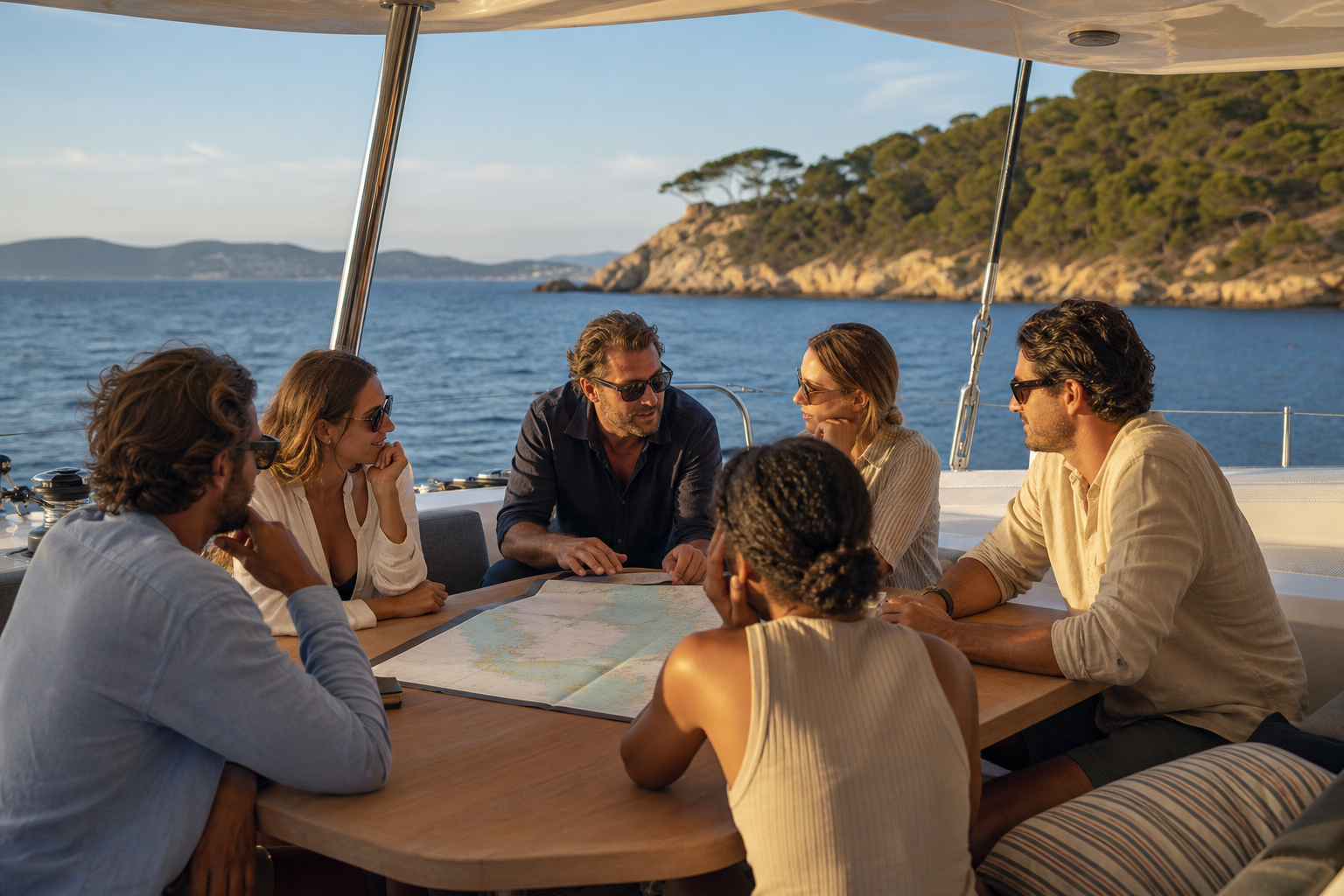
A friends’ charter works when everyone knows what they are buying. Before looking at cabins, agree the dates, maximum contribution per person, sailing experience, sleep expectations and whether the week is about swimming, sailing, restaurants or nightlife. Write down non-negotiables: a private cabin, air-conditioning, a skipper, a marina night or a quiet anchorage. This prevents one person from selecting a performance boat while another expects a floating villa.
Use one shared trip sheet for the boat offer, contract, flights, provisioning and costs. Nominate one booking lead, but keep financial approval with the group. If somebody joins late or leaves early, decide how the berth, skipper and fuel are recalculated. The conversation may feel less festive than choosing a sunset photo, yet it protects the friendship when the deposit or weather forces a change.
Choose space and handling for the group
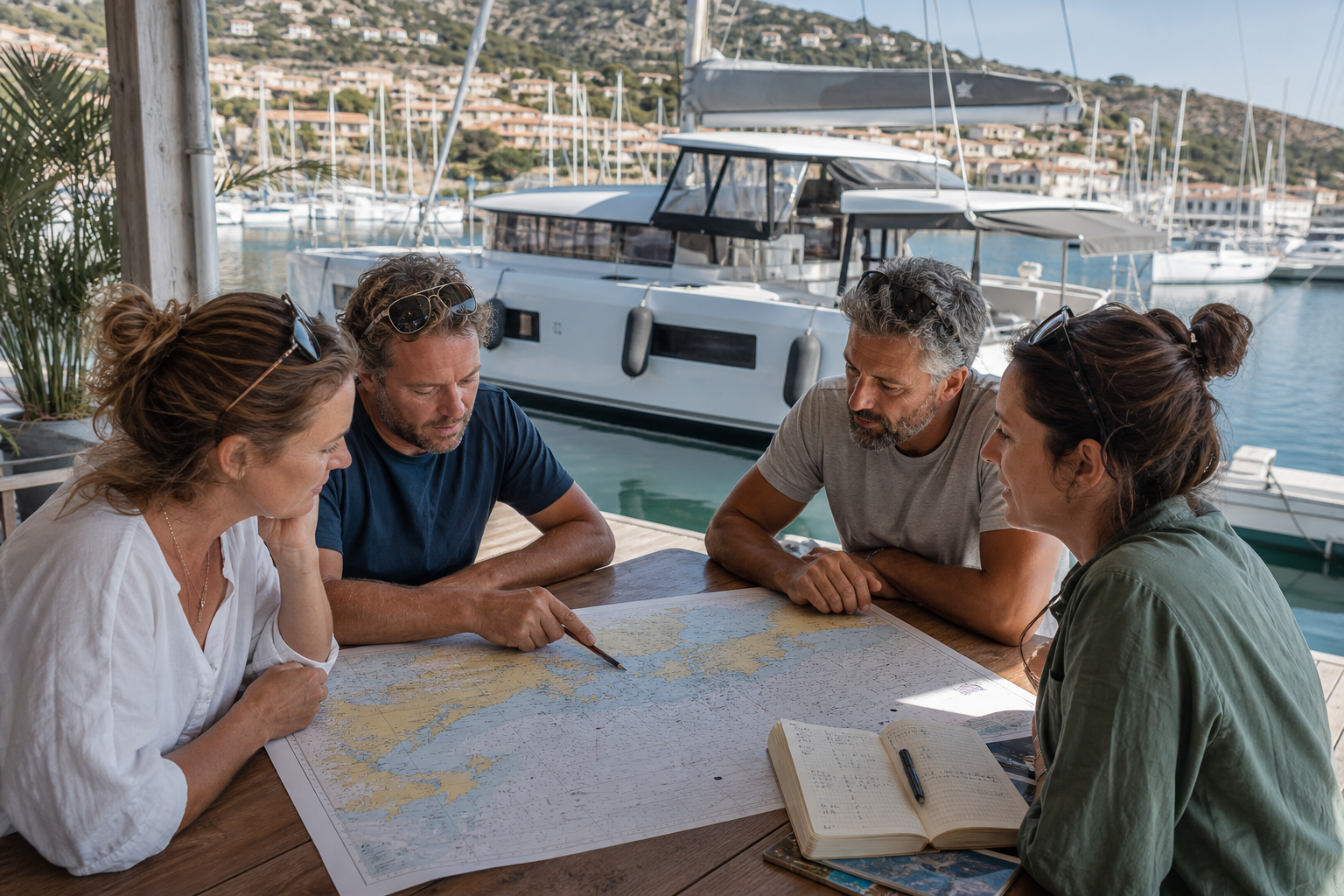
A catamaran often suits friends because the cockpit and foredeck create several social zones, while separate hulls let early sleepers and late talkers coexist. A monohull can feel more like a sailing trip, take less beam in a marina and cost less when the group accepts closer quarters. Compare the actual layout: four cabins can still mean one tiny double, a shared head or no practical place for wet gear. Ask for mattress sizes, shade, ventilation, tender capacity and the berth width at Hyères.
Handling is a group decision, not only the skipper’s problem. Ask whether the boat has a bow thruster, electric winches, an anchor alarm and cockpit lighting. Decide who is comfortable with lines, who will watch the chart and who will stay sober for the return. If nobody has a current licence and recent practice, book a skipper and treat the week as a shared experience rather than a test of pride. A local skipper can also explain which bays are realistic for the wind that day.
Split the budget without awkward surprises
Price the whole week per person. Start with the charter fee, then list transit log, cleaning, tax, skipper, fuel, water, marina and buoy nights, provisioning, transfers and the security deposit. Mark fixed items separately from consumption-based costs. Decide whether a guest who skips one restaurant still shares the common food fund, and how damage or a lost fender is handled. Written rules are kinder than a debate after the final fuel receipt.
Ask the operator what the security deposit covers and when it is released. Record the boat’s condition with photos at check-in, including tender, sails, fenders and crockery. Keep a small shared reserve for ice, taxis or a weather-driven marina night. This is not about squeezing every euro; it is about preventing one person from quietly financing a group decision made late in the evening.
A seven-day rhythm with a weather branch
Day 1 — Handover in Hyères, safety briefing and a nearby first night. Keep the evening short so the group can learn the boat.
Day 2 — Porquerolles north coast, swim and a shore dinner if the anchorage is calm. Mistral branch: remain on the mainland and move only after the afternoon forecast.
Day 3 — A second Porquerolles cove or a short leg toward Port-Cros. Mistral branch: a marina night near Hyères and a restaurant booked on foot.
Day 4 — Port-Cros nature day only if official conditions and park rules fit. Mistral branch: a shore excursion or a long lunch on the mainland.
Day 5 — Sail back toward the base with an early arrival; leave the late afternoon for a shared dinner. Mistral branch: keep the boat in a protected berth and skip the extra island.
Day 6 — Buffer for a final swim, fuel and packing. Do not turn the last day into the week’s longest passage.
Day 7 — Check-out at the stated time, with inventory and receipts ready. Finish the trip with a clear settlement while memories are still fresh.
Give the week clear roles
Rotate simple roles: navigator, deck lead, galley lead, provisioning keeper and evening checker. The navigator watches the official forecast and confirms the next berth; the deck lead handles lines and fenders; the galley lead tracks water, ice and food. Nobody needs to be a professional, but everyone should know who is responsible. Rotate the roles daily so one person does not become an unpaid crew member while the rest treat the yacht as a hotel.
Agree on quiet hours and alcohol limits before departure. A sunset drink is compatible with a safe charter only when the person responsible for a manoeuvre remains sober and the skipper’s instruction is final. Keep a shared signal for “stop”, and treat seasickness or fatigue as a reason to shorten the passage, not as a weakness. Good group etiquette protects both the holiday and the boat.
Friends’ charter checklist
- Everyone agrees the budget, deposit, skipper and cancellation rules.
- The actual yacht layout, shade, berth width and safety equipment are confirmed.
- Roles, quiet hours, alcohol limits and the stop signal are agreed.
- Each day has a destination, protected overnight and Mistral alternative.
- Check-in photos and a shared expense log are ready before departure.
Close the loop after check-out
Take ten minutes after check-out to photograph the final meter readings, fuel receipt and deposit confirmation. Record what worked and what should change before the next charter. A short post-trip note protects the group from arguing over memory and gives the booking lead concrete questions for a repeat week.
Sources and verification date
Use Météo-France for the official forecast and the Parc national de Port-Cros for current visitor and anchoring rules. Confirm marina, berth, fuel and boat-specific limits with the charter base. This guide is planning information, not a substitute for the contract or skipper’s briefing. Sources and practical checks were reviewed on 28 August 2026.
Sources