

Contents
- 01Set expectations for the professional on board
- 02Turn the crew’s wishes into a route the skipper can run safely
- 03Costs that belong in the same conversation
- 04What the skipper decides alone
- 05How guests can help without taking over
- 06Meals, berths and privacy for a professional crew
- 07A route meeting that takes ten minutes
Set expectations for the professional on board
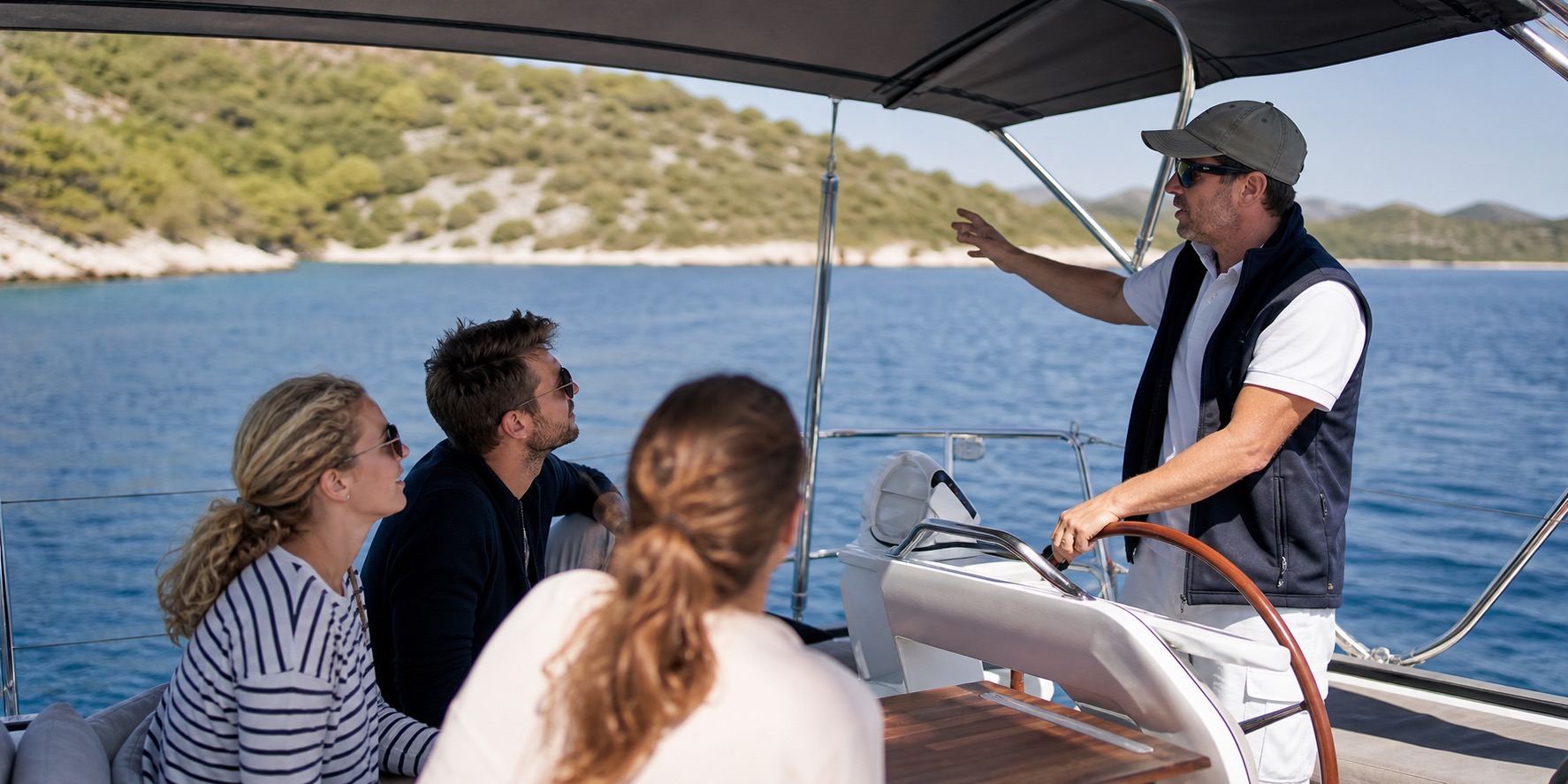
A skippered charter in Croatia works best when the group understands the division of responsibility before boarding. The skipper manages navigation and safety; guests choose the holiday style, budget and priorities. Agree the route logic, food arrangements and working space early, so no one has to improvise halfway through the week.
Do not accept a brochure answer. Ask for the exact vessel, week and base, then confirm which features are included, which depend on conditions and which cost extra. The useful choice is transparent enough to check before payment and flexible enough to remain safe after the forecast changes.
| Decision | Verification |
|---|---|
| Exact boat and dates | Written quote and current inventory. |
| Route scenario | Primary plan plus protected alternative. |
Turn the crew’s wishes into a route the skipper can run safely
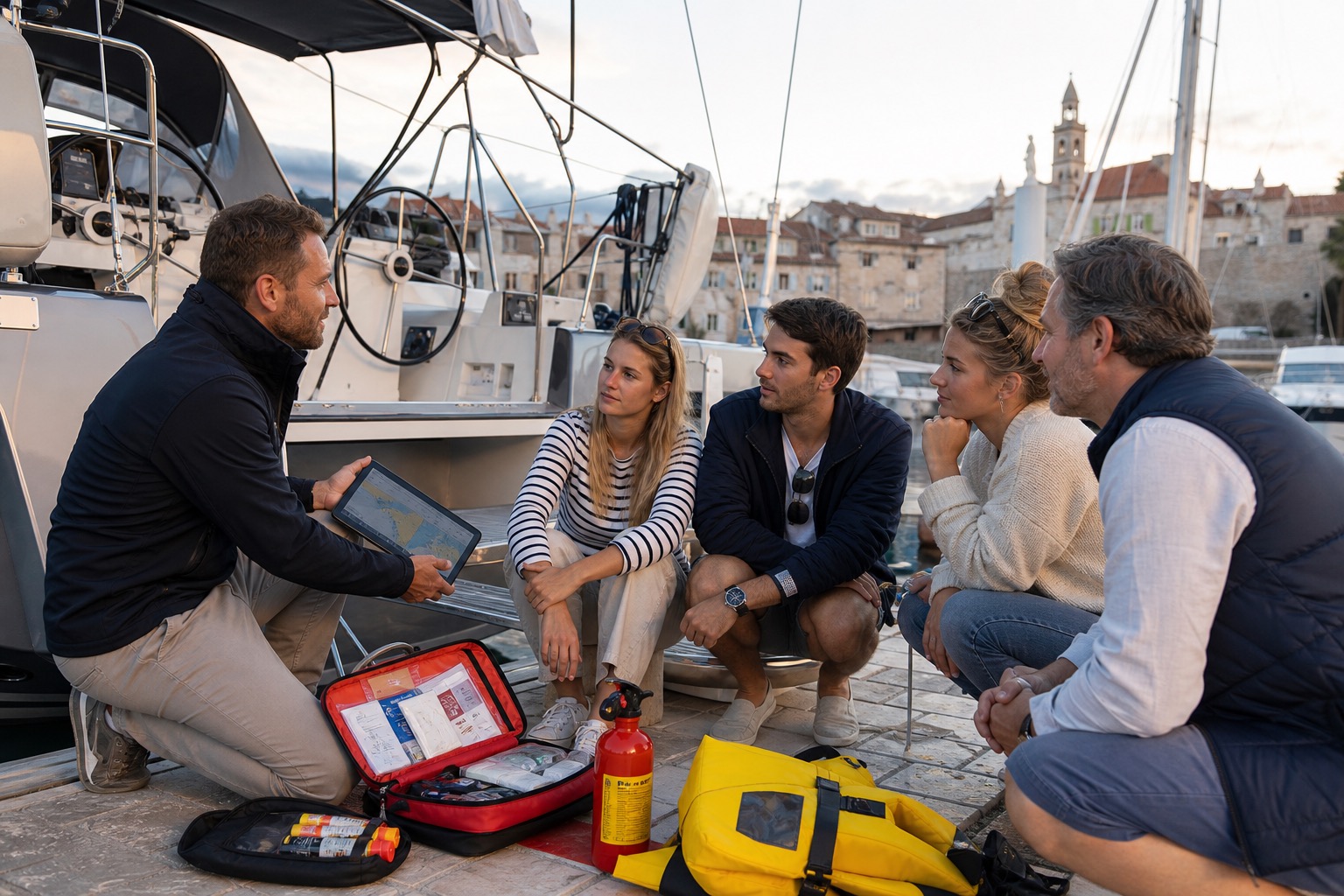
At the planning call, give the skipper usable information: sailing experience, children or non-swimmers, preferred daily pace, food needs, airport timing and the occasions that matter to the group. Ask which decisions remain with the skipper—weather, departure time, anchoring and marina approach—and how changes will be discussed.
Confirm the base, the first sheltered stop and the final return plan before departure. Keep the itinerary as a sequence of options rather than a promise to visit every island. If the forecast changes, the skipper can choose a shorter leg or a marina without the group feeling that the trip has failed.
Costs that belong in the same conversation
Separate the yacht rate from skipper or crew, mandatory pack, deposit or insurance, fuel, marina or mooring, provisions, transfers and final cleaning. Availability and operational charges change, so ask for an itemised current figure rather than relying on a past online example.
Do not accept a brochure answer. Ask for the exact vessel, week and base, then confirm which features are included, which depend on conditions and which cost extra. The useful choice is transparent enough to check before payment and flexible enough to remain safe after the forecast changes.
What the skipper decides alone
The skipper’s authority covers safe passage, manoeuvring, weather interpretation and the final decision to postpone, divert or stop. Guests can share preferences, but nobody should pressure the skipper to reach an exposed bay or arrive after dark because a restaurant reservation or a map pin looks attractive.
Ask every couple to choose their cabin before money is collected. Record the cabin plan, berth dimensions and any skipper cabin in the group message. Settling this before the first payment protects both the budget and the mood.
How guests can help without taking over
A guest can be very helpful by preparing fenders when asked, keeping walkways clear, passing a line and tracking the shared expense pot. Help is safest when it follows the skipper’s briefing and stops when conditions become busy. This lets the group participate without creating several competing sources of instruction.
Use a simple daytime test: where will wet towels dry, where can people eat in shade, and can two people move past each other while someone cooks? Compare real cockpit photos and the bimini coverage for the exact model.
Meals, berths and privacy for a professional crew
Confirm the skipper’s cabin or berth before allocating guest rooms, and agree how meals are handled. Some groups provision collectively and invite the skipper to eat; others arrange a per-diem or separate meals. Neither approach should be assumed. Privacy, rest and a clear food plan help the skipper stay effective through the week.
For a bay stop, check the swim ladder, tender capacity, draft and the distance from an anchorage to shore. A feature that seems minor in a specification can decide whether the group uses a bay at all.
A route meeting that takes ten minutes
Every evening, ask four short questions: what time do we leave, where is the likely stop, what weather change matters, and what must be ready before departure? This conversation keeps the route transparent and avoids the common mistake of discovering a difficult decision only when the boat is already underway.
If the price difference forces the group to cut food, marina nights or travel buffer, choose the smaller boat. A clear fit beats unused square metres.
Theme-specific booking check
- Confirm the skipper’s navigation role, guest briefing, e-Crew information and weather authority.
- Request the current written total and inventory.
- Agree a weather-safe fallback before the week begins.
Sources