

Contents
Compare the way the crew lives
Choose between a catamaran and a monohull by looking at how your specific group will sleep, eat, move around the deck and use Croatian marinas. The right answer depends on crew size, cabin expectations, budget and the kind of sailing day you want—not on which platform looks more impressive in a listing.
Do not accept a brochure answer. Ask for the exact vessel, week and base, then confirm which features are included, which depend on conditions and which cost extra. The useful choice is transparent enough to check before payment and flexible enough to remain safe after the forecast changes.
| Decision | Verification |
|---|---|
| Exact boat and dates | Written quote and current inventory. |
| Route scenario | Primary plan plus protected alternative. |
Choose the boat around the first and last night
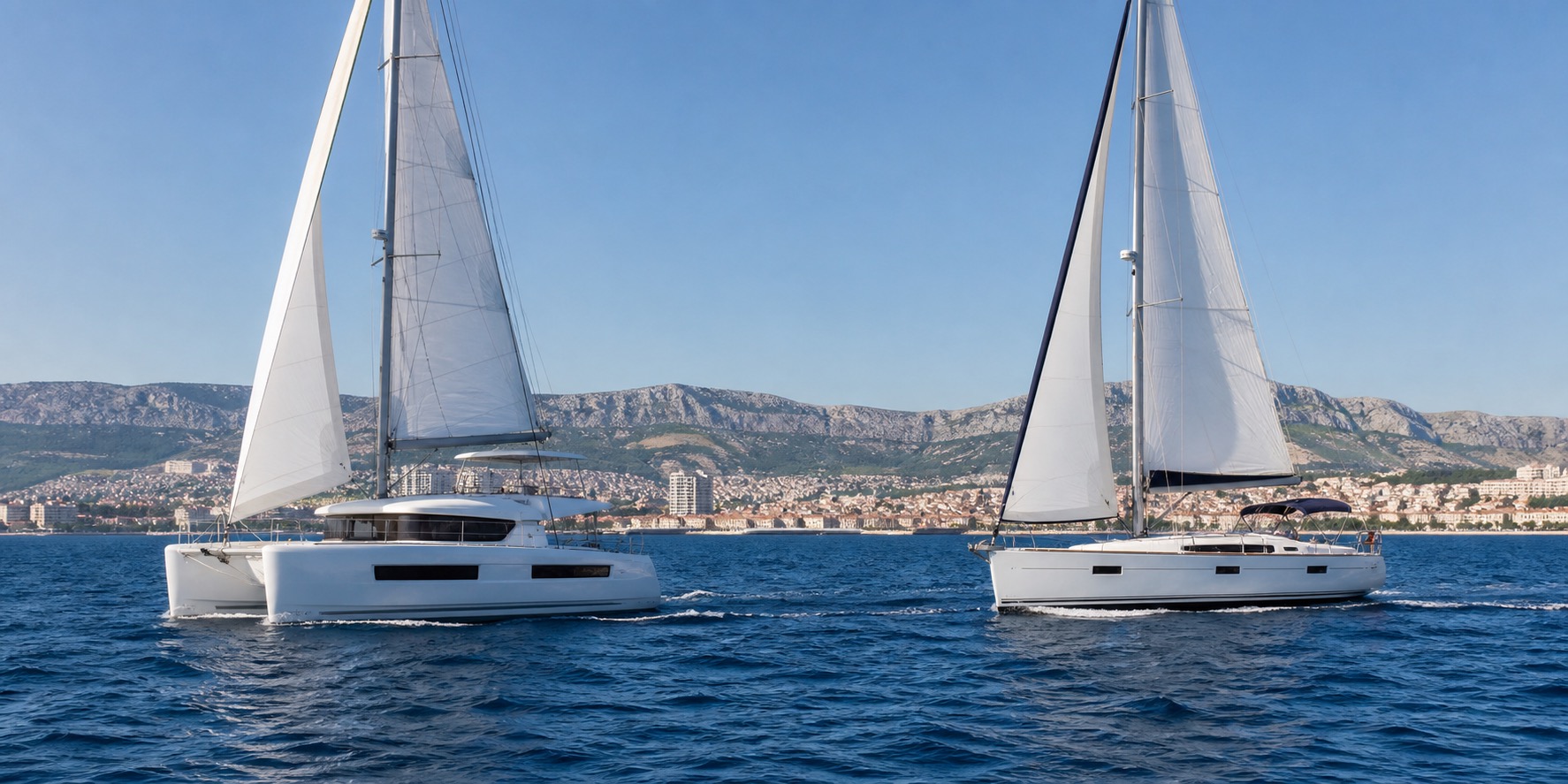
Your first and final night shape the comparison more than a brochure does. A catamaran gives the group a wide cockpit and separate hulls, while a monohull is narrower and often easier to place in a tight berth. Ask the base which berths are typical for your dates, whether beam affects marina options or fees, and how far the provisioning, fuel berth and parking are from the yacht. Then compare the actual boat plans, not generic model photos.
Before signing, request the current inventory and cabin plan, confirm the deposit and insurance conditions, and put the return procedure in writing. Check the first protected overnight option and a bad-weather alternative with the skipper or charter company. These details connect the type of yacht to where the group sleeps, swims, boards and returns.
Costs that belong in the same conversation
Separate the yacht rate from skipper or crew, mandatory pack, deposit or insurance, fuel, marina or mooring, provisions, transfers and final cleaning. Availability and operational charges change, so ask for an itemised current figure rather than relying on a past online example.
Do not accept a brochure answer. Ask for the exact vessel, week and base, then confirm which features are included, which depend on conditions and which cost extra. The useful choice is transparent enough to check before payment and flexible enough to remain safe after the forecast changes.
Cabin fairness is a real comfort metric
On a catamaran, four double cabins can feel more comparable, which matters when several adult couples share the charter cost. On a monohull, the best cabin may be clearly different from a bunk cabin or the berth assigned to a skipper. Put those differences into the group conversation before the booking, not after everyone arrives at the pontoon.
Ask every couple to choose their cabin before money is collected. Record the cabin plan, berth dimensions and any skipper cabin in the group message. Settling this before the first payment protects both the budget and the mood.
Use cockpit life to choose the platform
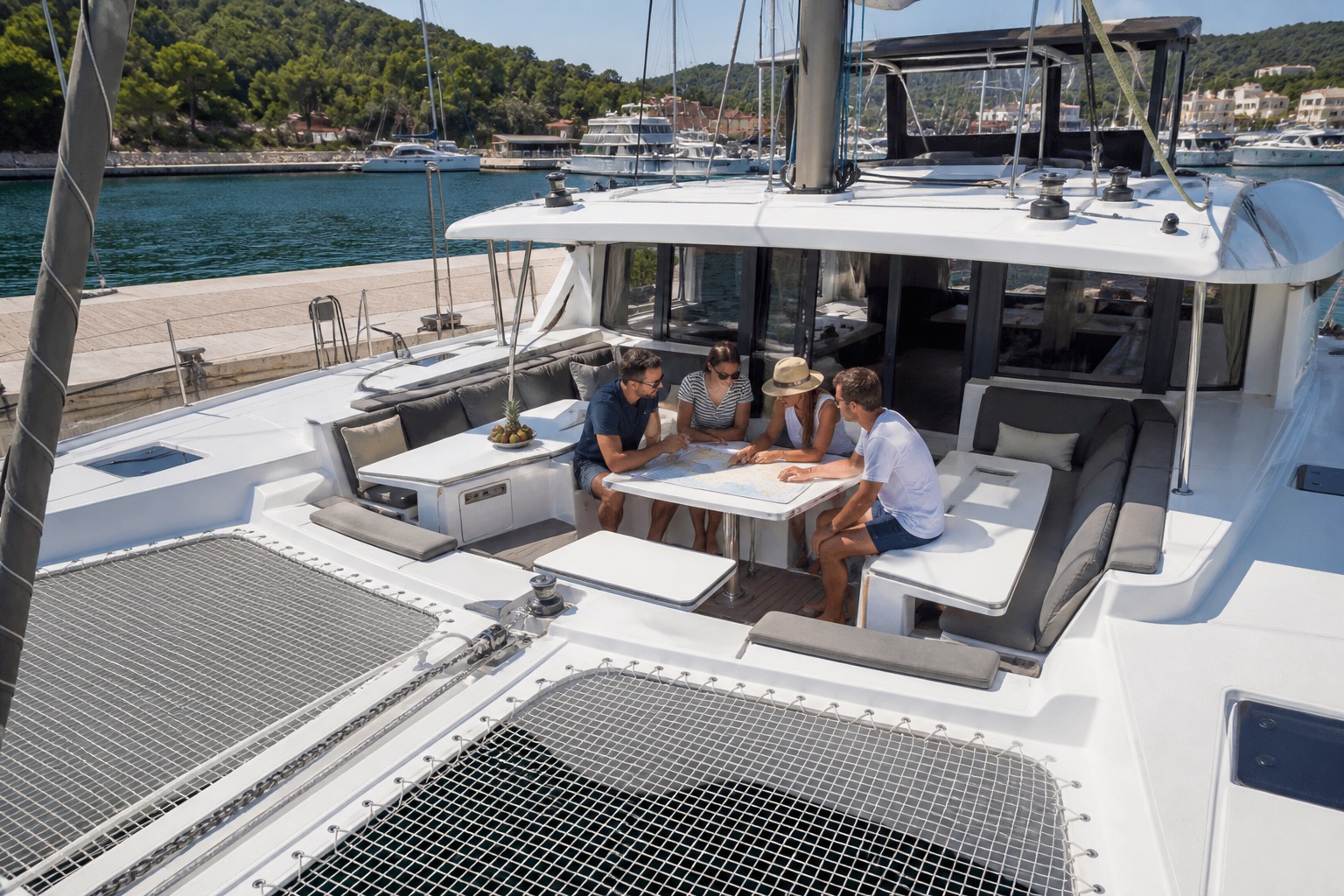
Think about where the group spends non-sailing hours. A broad catamaran cockpit supports breakfasts, laptops, children’s games and a shaded lunch without constant seat changes. A monohull cockpit is more intimate and can be excellent for a smaller crew that prefers to spend afternoons ashore or actively sail rather than treat the boat as an outdoor apartment.
Use a simple daytime test: where will wet towels dry, where can people eat in shade, and can two people move past each other while someone cooks? Compare real cockpit photos and the bimini coverage for the exact model.
Draft, beam and the last mile to shore
The boat’s dimensions affect more than a marina invoice. Beam changes the practical conversation about berth availability; draft affects confidence when approaching shallower areas; a tender and swim ladder affect how easy a bay stop feels. Ask about these on the actual model rather than assuming that all boats of one type behave the same way.
For a bay stop, check the swim ladder, tender capacity, draft and the distance from an anchorage to shore. A feature that seems minor in a specification can decide whether the group uses a bay at all.
When a smaller boat is the better holiday
More length and more cabins are not automatic upgrades. A smaller monohull with a reliable sail plan, good bimini and a layout the group understands can deliver a calmer week than a large boat that exceeds the budget or forces difficult berth choices. Choose the smallest option that satisfies the real sleeping and living brief.
If the price difference forces the group to cut food, marina nights or travel buffer, choose the smaller boat. A clear fit beats unused square metres.
Theme-specific booking check
- Confirm catamaran living space, monohull sailing feel, cabin equality and marina width.
- Request the current written total and inventory.
- Agree a weather-safe fallback before the week begins.
Sources