

Contents
Start with the right Spanish base
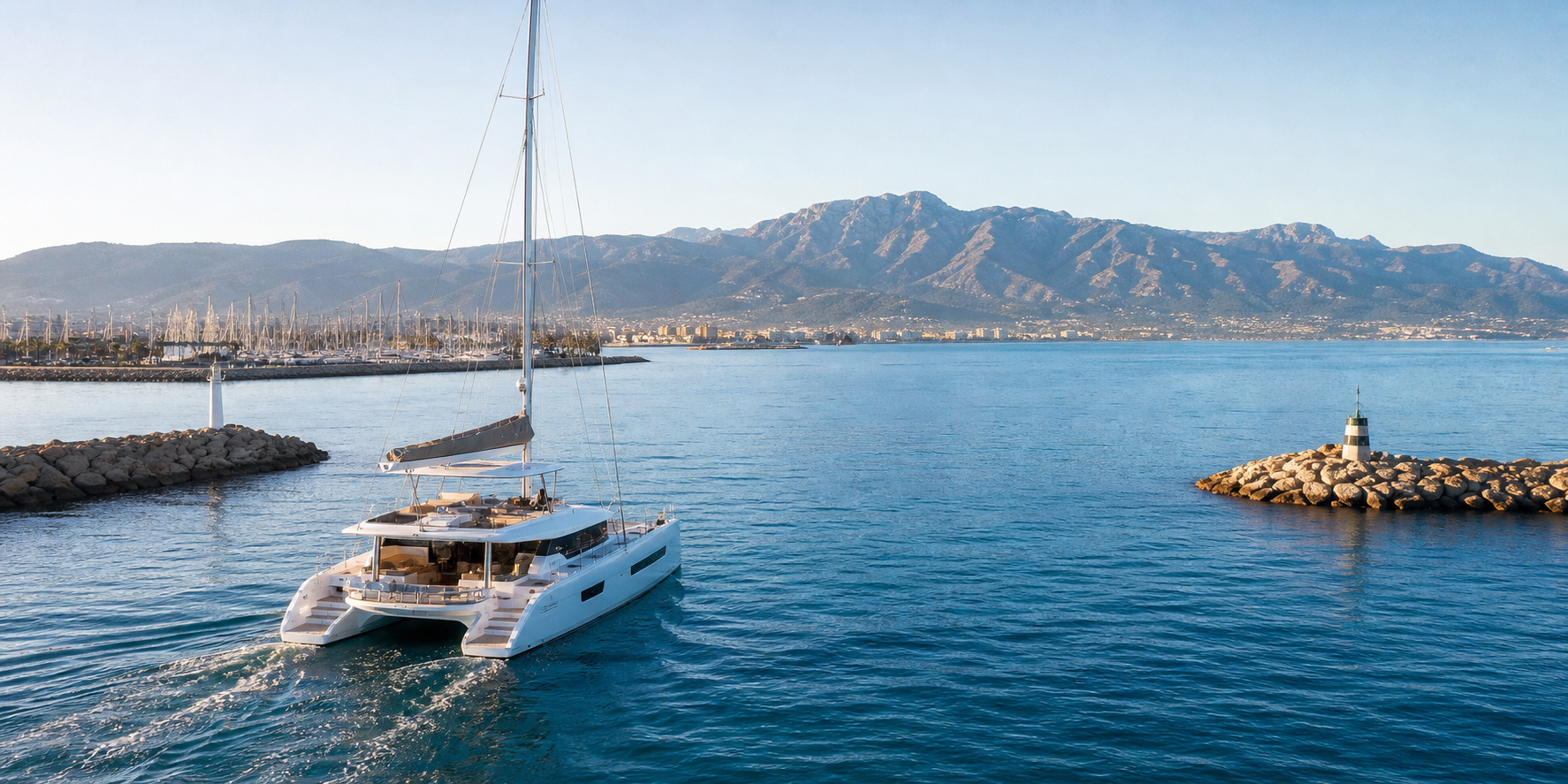
For a first family charter, Palma de Mallorca is usually the simplest logistics hub. Aena lists the airport as the main gateway to Mallorca, so transfers to a Palma marina are short and flight options are broad. From there, the south-west coast gives you sheltered bays, beaches and a forgiving first day. It is a useful choice when grandparents or children are joining, because nobody has to begin the holiday with a long road transfer.
Ibiza is attractive when the family wants a mix of beaches, Formentera and lively shore time. The trade-off is a busier summer rhythm and more demand for mooring space. Mahón in Menorca suits families who prefer a calmer, more scenic week: the long natural harbour makes the first and last nights easy, while the north and south coasts offer different wind exposure. Ask the operator which marina actually hosts the handover; the island name alone is not enough for planning transfers.
Before paying a deposit, request the exact embarkation berth, check-in time, parking or transfer instructions and the realistic first-day sailing distance. PortsIB is the official Balearic ports reference and is useful for checking the port context rather than relying on a generic booking description.
Choose the boat around family routines
A catamaran is often the practical default for families because the wide cockpit and saloon create separate shaded zones, the platform makes swimming easier and the shallow draft opens more calm anchorages. A monohull can be a better fit for an active family that values sailing feel and lower weekly cost, but the heel, narrower companionway and more movement at anchor need to be discussed honestly with younger children.
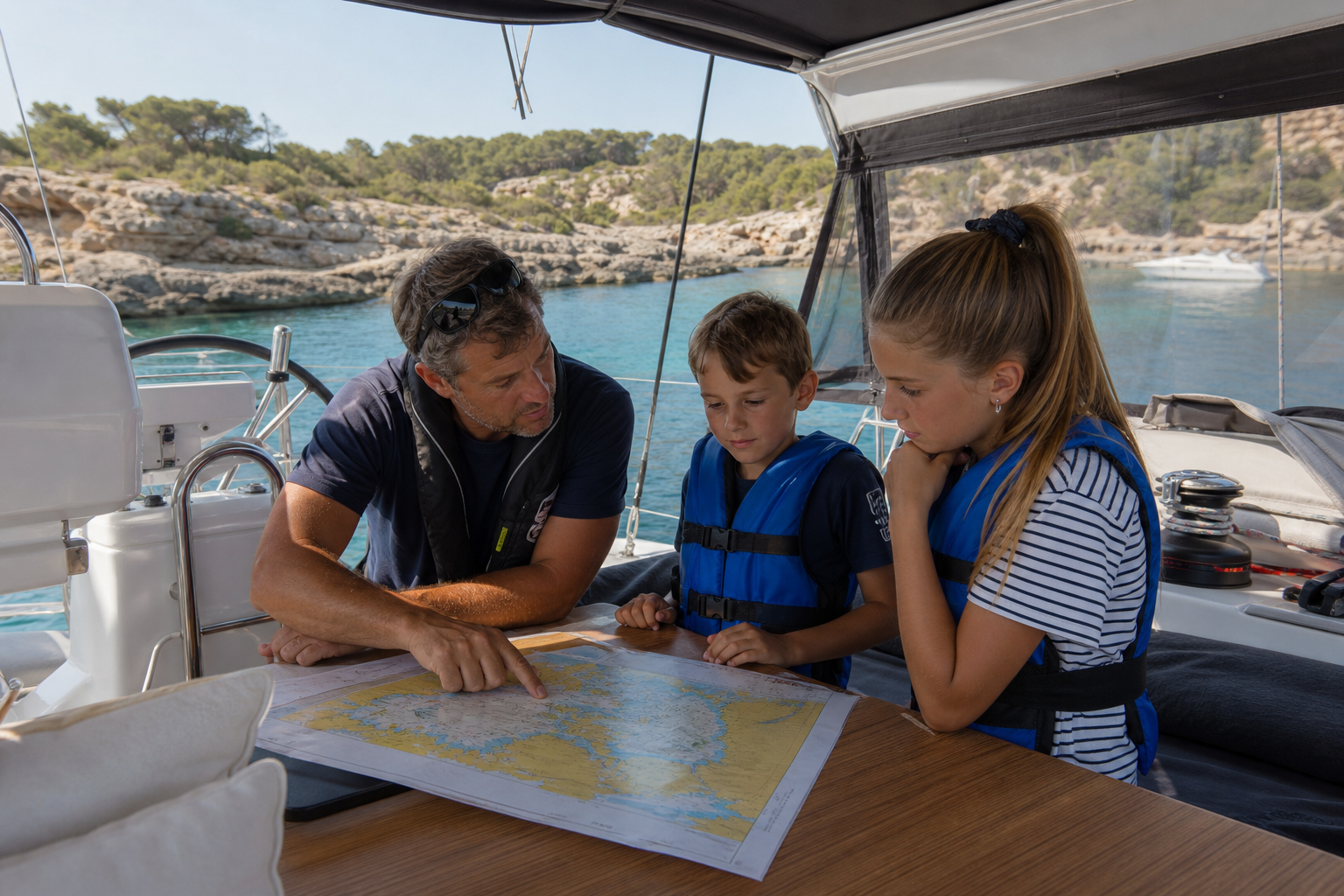
Ask for four concrete details: a cockpit bimini that covers the dining table, a secure lifeline or netting plan, cabins with usable ventilation and a refrigerator large enough for a first shop. Check whether lifejackets include child sizes and whether the crew will brief children on where to hold when moving on deck. A boat that looks spacious in photos can still have a steep swim ladder or a high freeboard that makes independent access difficult.
Do not treat the number of cabins as the only measure of comfort. One quiet cabin for the youngest child, a usable day head and a salon that can be cooled or ventilated after lunch often matter more than an extra small bunk. Confirm whether towels, linen, a tender and an outboard are included or charged separately.
Build a seven-day route with a daily reset
Day 1 should be deliberately short: complete the safety briefing, buy familiar food and move only to the nearest comfortable bay. Children settle faster when the first evening includes a predictable dinner and a simple swim rather than a forced passage.
Days 2 and 3 can combine one morning passage with a long afternoon stop. Around Mallorca, that might mean a west or south-west bay and then a marina night for supplies. Around Ibiza, keep Formentera as a weather-flexible option rather than a promise; the crossing is enjoyable in settled conditions but should not dictate the whole week.
Days 4 and 5 are the best time for the longest leg, once everyone understands the boat. Keep a backup anchorage on the same coast and agree on a no-argument turn-back time with the skipper. Days 6 and 7 should bring the boat gradually back toward the handover base. A family itinerary is successful when the last night is calm and the return morning is unhurried, not when every island is ticked off.
Use a simple rhythm: breakfast before departure, one planned snack, a shaded lunch, a swim stop and a shore option every second day. That prevents the common problem of children becoming hungry, sunburned and overtired at the same time.
Respect Posidonia and local anchoring practice
The Balearic Government publishes Posidonia cartography. Posidonia meadows are protected, so the skipper should use the current chart and select an approved sandy patch rather than dropping an anchor on seagrass. This is not a decorative environmental note: it affects where you can stop, how early you should arrive and whether a popular bay is realistic in August.
Ask the charter company which electronic chart layer is installed and how the crew identifies no-anchoring areas. Keep the tender route short, avoid dragging an anchor through grass and follow harbour-master instructions for buoys and pontoons. Salvamento Marítimo recommends a proper voyage plan, weather check, communication equipment and a safety briefing; give the children a simplified version so they know the meeting point and the rule that nobody goes on deck alone.
For heat, schedule the most exposed passage before midday, use the bimini, apply sun protection repeatedly and keep water accessible rather than stored in one place. If a child is prone to motion sickness, discuss a seat in the cockpit, a light first meal and the skipper’s preferred medication protocol before departure.
Family Spain charter checklist
- Confirm the actual marina, transfer time, check-in window and return deadline.
- Choose catamaran or monohull after checking shade, lifelines, child lifejackets, cabin ventilation and swim access.
- Ask for a seven-day route with short first and last days plus a weather backup.
- Verify Posidonia charting and the anchoring policy for every planned bay.
- Separate the quote into yacht, APA or fuel, end cleaning, moorings, provisioning, transfers and optional equipment.
- Agree on sun, swimming, tender and night-watch rules with both adults and children.
Sources and verification
Checked 1 September 2026. Logistics and port context were cross-checked against Aena Palma de Mallorca Airport and Ports de les Illes Balears; environmental guidance against the Balearic Government Posidonia cartography; safety planning against Salvamento Marítimo recreational-navigation guidance.
Sources