

Зміст
Починайте з ритму наймолодшого моряка
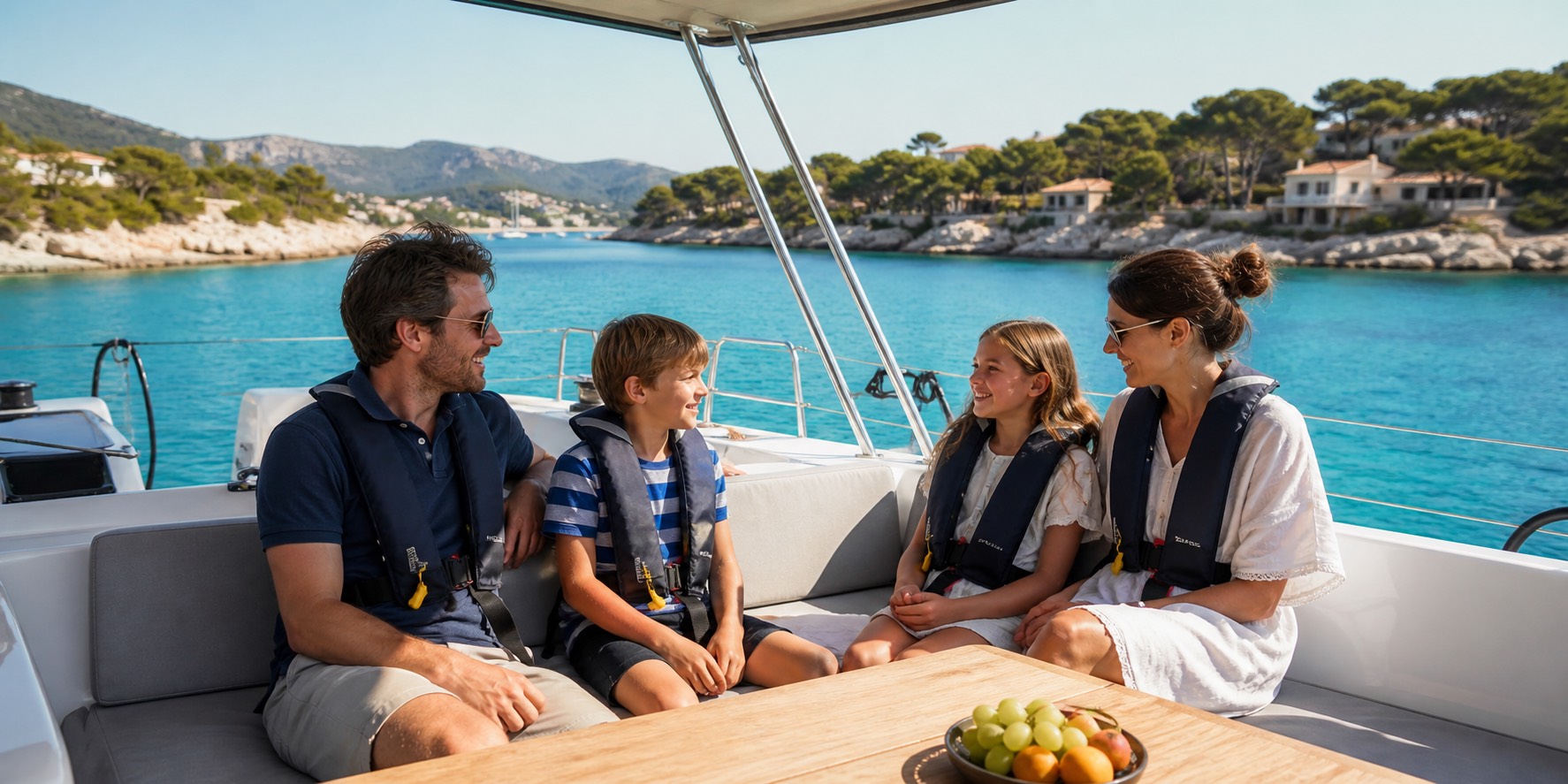
До порівняння яхт визначте реальні межі сім’ї: скільки часу наймолодша дитина спокійно проведе на палубі, коли потрібен денний сон, наскільки впевнено діти плавають і як переносять поїздку на тендері. Короткий перехід із тінню та зрозумілим обідом зазвичай кращий за довгий шлях до знаменитої бухти. Повідомте оператору вік і розмір дітей, щоб потрібні жилети були готові до чек-іну.
Плануйте кожен день трьома блоками: ранковий перехід, довга захищена стоянка та короткий рух після сну або берегова пауза. Під час маневрів один дорослий не має бути зайнятий камбузом. Правило жилетів просте: усі одягають їх на тендері, біля причалу та за командою шкіпера. Сигнал повернення діти мають знати до першого купання.
Офіційний туристичний гід Балеар описує Ібіцу й Форментеру як більш захищені від вітру порівняно з Майоркою та Меноркою, тоді як у бухтах Майорки літній бриз може бути сильнішим. Використовуйте цю різницю для вибору регіону, а конкретний маршрут підтверджуйте за прогнозом зі шкіпером.
Оберіть базу за трансфером і береговою підтримкою
Для першого тижня порівняйте Сан-Антоніо або місто Ібіца з базою біля Ла-Савіни на Форментері. Ібіца зручна аеропортом, супермаркетами та вибором операторів; Форментера дає короткі переходи між спокійною водою й пляжами, але має менше запасних сервісів. Майорка підійде, якщо бабусі й дідусю потрібні берегові зручності або сім’я хоче ночувати в марині.
Ports IB керує портами та бронюваннями на островах і дає посилання на резервацію причалів і буїв. У системі перелічені поля біля Platja de Ses Salines, Es Caló de S’Oli та Badia de s’Alga–S’Espalmador. Уточніть, чи підходять довжина й ширина вашої яхти та чи розрахована бронь на день, купання або ночівлю.
Одразу закладіть трансфер і першу закупівлю. М’які сумки простіше прибрати, аптека важливіша за дорогий ресторан, а душ на базі економить сили. Якщо плануєте їздити Форментерою, окремо перевірте дозвіл на автомобільний в’їзд: він регулює дороги острова й не замінює бронювання човна або буя.
Розглядайте яхту як сімейний дім
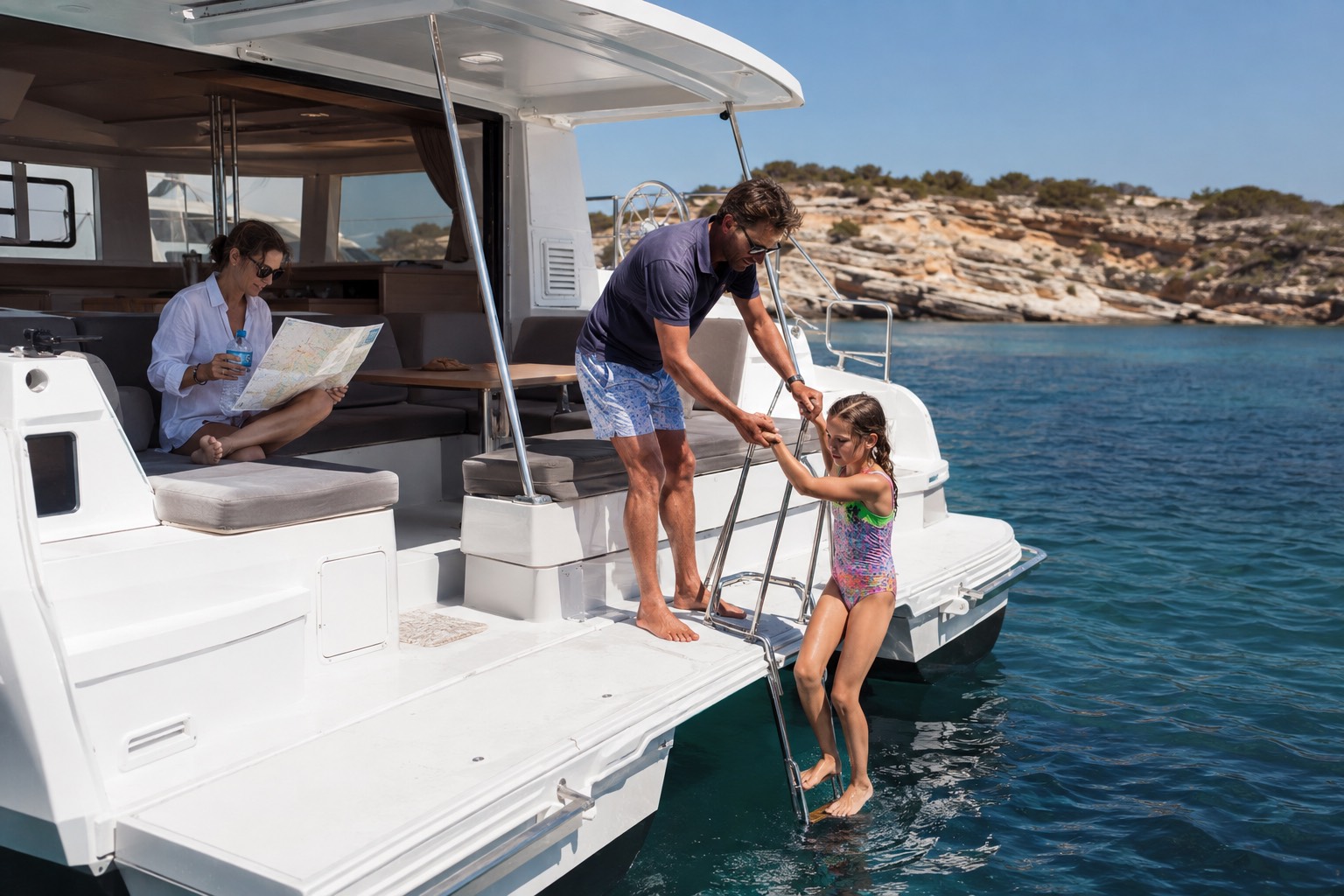
Спочатку рахуйте повноцінні ліжка, санвузли, поручні та тінь, а не максимальну місткість. Батькам часто потрібна каюта поруч із дітьми, а окреме тихе місце захищає денний сон. На катамарані перевірте безпечний доступ до кормової платформи, висоту сходинок і чи можна закріпити тендер так, щоб він не перекривав кокпіт.
Попросіть список дитячого оснащення: жилети за розміром, леєри або сітки, стійка драбина, місткість тендера, тент, холодильник і зарядки подалі від бризок. Уточніть, чи входять дитяче ліжечко, стілець, маски та аптечка або їх треба замовляти окремо.
Сімейний камбуз також впливає на маршрут. Обирайте великий холодильник, прості поверхні для готування й морозильник для холодових пакетів. Воду зберігайте в невеликих пляшках, коробку з перекусами тримайте в тіні, а багаж беріть м’який, щоб салон залишався безпечним проходом.
П’ятиденний сімейний ритм Ібіца–Форментера
День 1 — Сан-Антоніо або місто Ібіца та найближча захищена бухта. Завершіть приймання, купіть продукти для сніданків і купайтеся лише якщо діти відпочили. Першу ніч тримайте біля марини або надійної стоянки, щоб забута річ не перетворилася на нічний перехід.
День 2 — південь Ібіци та Ses Salines. Вийдіть після сніданку, зробіть короткий прибережний перехід і використовуйте офіційний буй або дозволений причал замість якоря на Posidonia. Головну зупинку розтягніть на обід, сон і купання під наглядом, а повертайтеся до посилення денного бризу.
День 3 — перехід на Форментеру із запасом. Ports IB перелічує буї біля Es Caló de S’Oli та Badia de s’Alga–S’Espalmador; доступність та обмеження для човна перевірте під час бронювання. Залиште марину або бік Ібіци запасним варіантом, якщо перехід буде некомфортним.
День 4 — Ла-Савіна та берегове перезавантаження. Поповніть воду, прийміть душ, пройдіть короткий маршрут і дайте дітям обрати темп. Охоронювані зарості Posidonia — одна з причин прозорої води, тому дотримуйтеся вказівок шкіпера щодо буїв і заборони якоря.
День 5 — раннє повернення на домашню базу. Заплануйте пальне, інвентар і великий запас до аеропорту ще до останнього купання. Якщо прогноз погіршується, скоротіть День 4 і поверніться на Ібіцу або в Сан-Антоніо раніше, а не перетворюйте ранок вильоту на перегони.
Внесіть охоронні зони та бронювання до сімейного брифу
Захист Posidonia змінює звичний сценарій якірної стоянки. Користуйтеся офіційними полями буїв та актуальним порталом Ports IB, а шкіпера попросіть показати зони, де якір заборонений. Бухта, зручна для дітей, не стає легальною, якщо човен стоїть на траві або перекриває купальну лінію.
Кабрера потребує окремого рішення й не є випадковою гілкою від Ібіци та Форментери. Уряд Балеар повідомляє, що приватним і чартерним суднам потрібен навігаційний дозвіл, для ночівлі — бронь буя, а якір у парку заборонений. Денними буями можуть користуватися судна до 15 метрів у названих зонах, тож додавайте Кабреру лише після перевірки.
Дозволи, підтвердження бронювання, номер оператора та свіжий прогноз тримайте у водонепроникній папці. Правила й доступність залежать від сезону, човна й дати; оператор має підтвердити їх безпосередньо перед виходом.
Захистіть сон, самопочуття та раннє повернення
Офіційний гід із вітрильництва описує майоркінський термічний вітер embat: він може посилюватися приблизно з 10-ї ранку до денних годин. Тому ранній вихід і довга захищена стоянка розумні, навіть якщо зранку вода гладенька. Відносна захищеність Ібіци та Форментери допомагає, але не замінює прогноз у день виходу.
План A — острівний перехід. План B — підвітряне коло з довгим обідом і без поїздки на тендері. План C — день у марині з душем, аптекою та вечерею на березі. Узгодьте тригери зі шкіпером: зростання хвилі, пропущений сон, захитування, заповнене поле буїв або повернення після темряви.
Останній вечір краще зробити навмисно простим: душ, легка вечеря, зібрані сумки та зрозумілий час підйому. Вдалий чартер — той, де діти пам’ятають воду, а батьки — керовані переходи.
Чекліст сімейного чартеру на Балеарах
- Передати оператору вік і розміри дітей, упевненість у воді, режим сну, алергії та захитування.
- Порівняти Ібіцу–Форментеру й Майорку за захищеністю, трансфером, аптекою та підтримкою марини.
- Підтвердити повноцінні ліжка, каюту батьків поруч, тент, жилети, леєри, драбину, тендер і холодильник.
- Забронювати відповідний причал або буй Ports IB і перевірити довжину, ширину, денні чи нічні умови.
- Скласти План A, підвітряний План B та План C у марині з порогом раннього повернення.
- Взяти м’які сумки, воду, захист від сонця, засоби від захитування, дозволи й офлайн-контакти.
Джерела
- Illes Balears Tourism — Enjoy sailing in the Balearic Islands
- Illes Balears Tourism — The Balearic Islands, the best destination for sailors
- Ports de les Illes Balears — Mooring and buoy fields
- Ports IB — Ibiza and Formentera buoy reservations
- Govern Illes Balears — Cabrera National Park permits and moorings
- Formentera.eco — 2026 access information