

Contents
Pick a north-coast base that matches the first day
Capo d’Orlando Marina is a strong starting point for a family heading toward the Aeolian Islands. The marina lists 553 berths, capacity for yachts up to 50 metres and VHF 09; it also presents the islands as roughly 14 nautical miles away. That combination means a short first offshore leg is possible after a calm handover, while a family can still remain along the Sicilian coast if the forecast or energy level changes.
Portorosa Marina Yachting is a larger canal-style base near Furnari and Tindari, with around 650 berths and direct access to provisioning and shore services. It can be convenient for a big crew or a late arrival, but ask exactly where the boat lies, how long check-in takes and whether the first night is inside the marina. A listing that says Sicily does not tell you how much road transfer is involved from the airport.
Before paying, ask for the embarkation berth, fuel procedure, deposit rules, tender details, parking and a realistic first-day distance. The base should be chosen around the family’s arrival time, not only around the most famous island on the map.
Select a boat for heat, motion and meal times
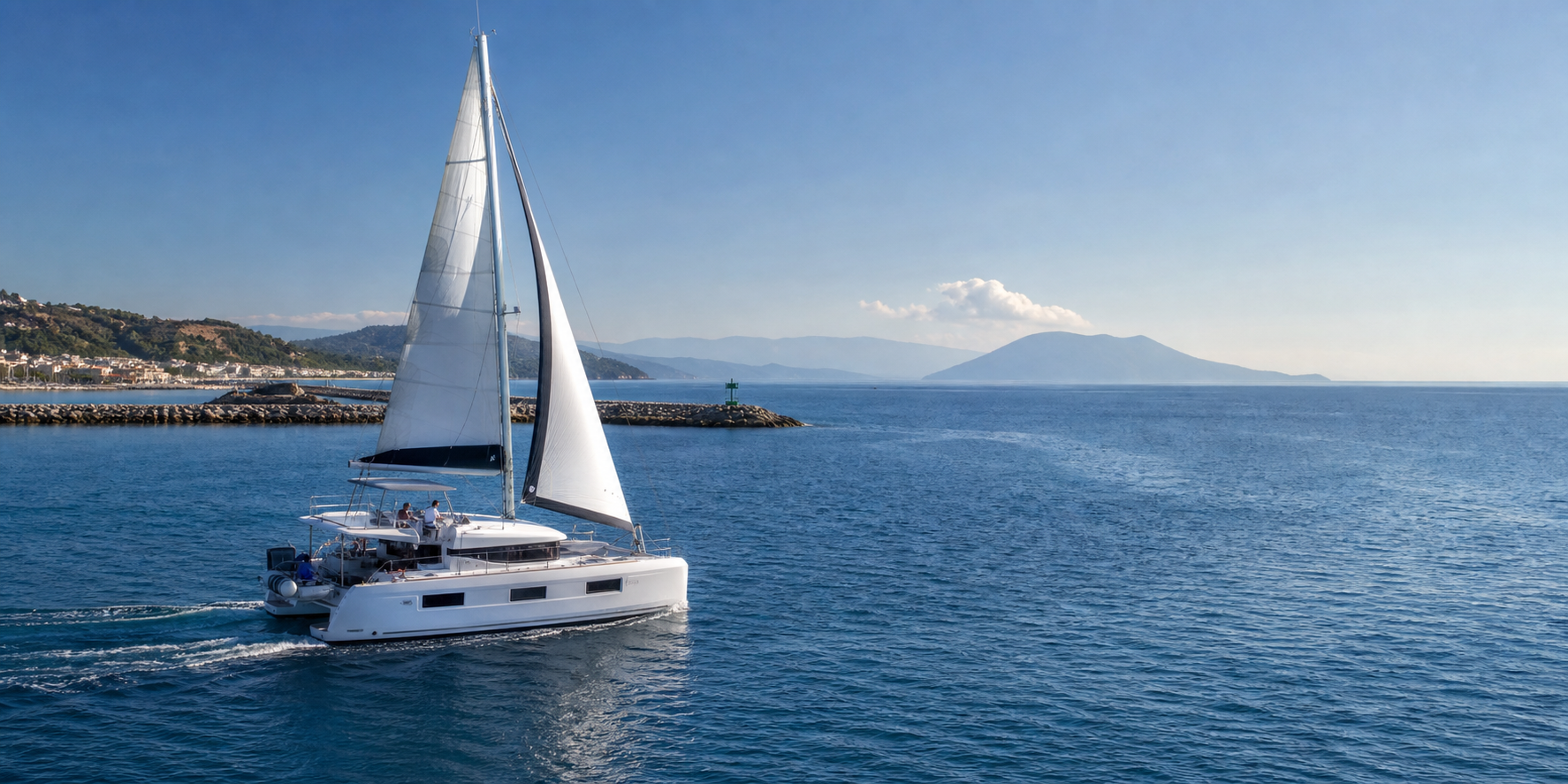
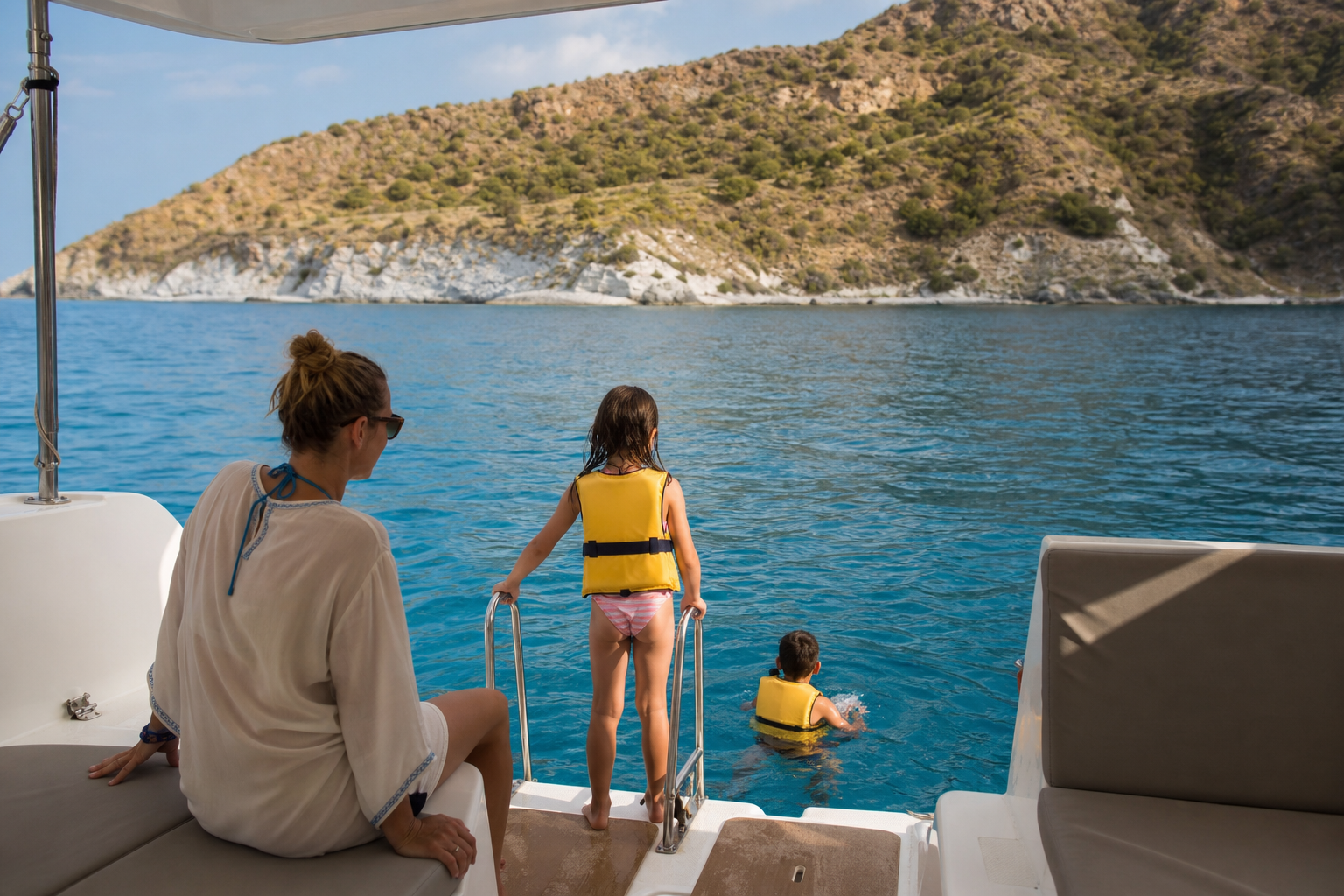
For children, the most valuable features are not the newest upholstery but a shaded cockpit, reliable refrigeration, good ventilation, a safe swim ladder and cabins that can be separated at bedtime. A catamaran usually offers more stable living space and a practical lunch area. A monohull can be rewarding for a family that wants a stronger sailing feel, but the heel and narrower deck make supervision more important.
Confirm child-size lifejackets, lifelines or netting, a tender with an outboard, mosquito screens and the actual air-conditioning policy. In August, a cabin that cools only while connected to shore power may feel very different from the same cabin at anchor. Ask how much water the tanks hold and whether the operator recommends a marina night for refill.
Plan food around the weather. A cold breakfast, fruit and a simple lunch reduce the temptation to run the galley while the boat is moving. Keep one familiar meal available for the first night; children often cope better with a new sea day when dinner itself is predictable.
Use the Aeolian Islands as a flexible chain, not a race
A week can be shaped around Lipari, Vulcano, Salina and a return toward the base, but the order should follow wind and swell. Day 1 is for check-in and a nearby Sicilian bay. Day 2 can be the crossing to Lipari or Vulcano when the morning forecast is settled. Keep the afternoon for swimming and a short walk rather than combining the crossing with a demanding excursion.
Days 3 and 4 work well for one island at a time. Lipari offers more services and a useful resupply option; Salina can feel calmer and greener; Vulcano adds a distinctive landscape but may be hot and exposed on shore. Do not promise children a full island tour before checking tender landing, shade and the distance to the first swim.
Days 5 and 6 are the weather buffer. If the sea remains comfortable, add a second island or a scenic coastal stop. If the forecast worsens, return toward the Sicilian coast early and use a marina night for water, laundry and a quiet dinner. Keep the final day short, with fuel and check-out scheduled before the airport transfer.
Read Italian weather warnings and local sea conditions
The Italian Civil Protection publishes vigilance bulletins that help frame the broader weather situation. The skipper still needs a marine forecast for the exact route, but a family should understand the decision rule: a thunderstorm warning, rising swell or excessive heat is a reason to shorten the leg, leave earlier or remain in a protected harbour.
The Tyrrhenian side can feel different from one island to the next. Afternoon breeze may be welcome for sailing but uncomfortable for a child trying to sleep in a rolling anchorage. Ask the skipper which side of each island is the fallback for the forecast wind and how quickly the boat can reach it. Agree on the turn-back time before leaving the marina.
Use the Italian Coast Guard and the marina’s check-in briefing for current navigation instructions, emergency procedures and local restrictions. Keep VHF watch as directed, make the tender rule explicit and assign one adult to weather while another handles swimming supervision. This small division of roles prevents avoidable rushed decisions.
Make shore days easy enough for the whole family
Sicily rewards short, well-chosen outings. A morning market, a gelato stop or a village walk can be more valuable than a three-hour excursion in full sun. Reserve the hottest hours for lunch and swimming. If you plan a volcano or archaeological visit, check the walking surface, shade and return time before promising it to younger children.
Keep a shore bag ready with water, hats, reef-safe sun protection, light shoes and a dry change of clothes. Return to the boat before everyone is exhausted, especially on an island with limited tender landing. A flexible captain can swap a crowded town for a quiet cove and preserve the mood of the week.
The best family charter in Sicily finishes with a calm final night near the base. Build the route backwards from fuel, check-out and transfer time, then use the remaining days for islands. That order protects the family from a last-day race and gives the skipper room to react to real sea conditions.
Family Sicily charter checklist
- Choose Capo d’Orlando or Portorosa after checking the actual berth, transfer and first-night logistics.
- Confirm shade, ventilation, refrigeration, child lifejackets, swim access, tender and water capacity.
- Treat Lipari, Vulcano and Salina as weather-flexible stops, not mandatory daily targets.
- Read Civil Protection bulletins together with a route-specific marine forecast.
- Schedule an early final return for fuel, check-out, water and airport transfer.
- Budget separately for yacht, fuel or APA, marina nights, moorings, provisioning, transfers, shore excursions and optional equipment.
Sources and verification
Checked 1 September 2026. Marina capacities and facilities were cross-checked against Capo d’Orlando Marina and Portorosa Marina Yachting; weather-alert context against Italian Civil Protection bulletins; navigation and emergency context against the Italian Coast Guard.
Sources