

Contents
Plan the family day around energy, not distance
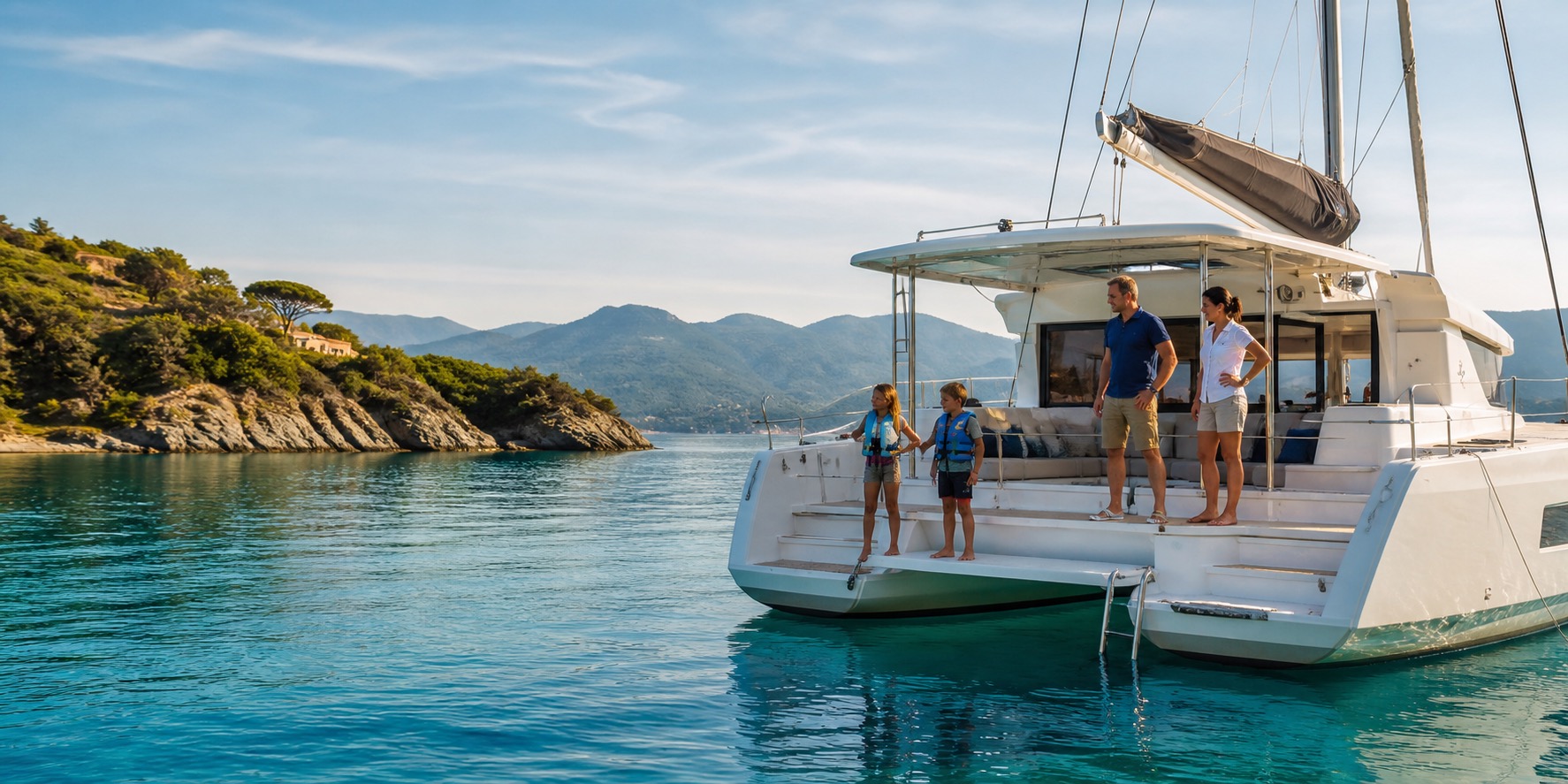
A family charter succeeds when children can predict the rhythm: breakfast, a short passage, a swim, food and a quiet period. One meaningful activity per day is enough. Trying to collect several coves before lunch usually leaves children tired and adults managing logistics instead of enjoying the sea.
Keep the first and final day intentionally light. A late arrival, provisioning and a new sleeping space are already a lot for children. A calm marina night can be the best opening, while an early final return avoids turning the last morning into a stressful race.
Choose the boat through daily family routines
Compare shade, secure cockpit seating, rail height, a swim ladder, night access to the heads, refrigerator capacity and somewhere to dry towels. A catamaran may give a level shared living space; a monohull can be excellent for a smaller family that wants a compact sailing experience. The correct choice is the boat that reduces the number of times adults need to say “be careful.”
Confirm child life-jacket sizes before travel, rather than hoping the base has a good fit. Ask whether safety netting is available, where the family can store medication and whether the tender, outboard and paddle equipment are provided on the exact boat. A water toy is a bonus; shade and correctly fitted safety gear are essentials.
Use an explicit supervision plan
Before the first departure, agree who watches children when the boat leaves, moors and stops for a swim. Name one adult for that moment; another adult can prepare food, fenders or towels. Rotate the role. Assuming that everyone is watching is how the most predictable risk becomes invisible.
Show children the safe areas when the boat is still tied up: where they may sit underway, how to use the heads, when the swim platform is open and why the galley is not a play area. The skipper manages the vessel, but parents remain responsible for their children and should make the onboard rules feel calm and consistent.
Build a bad-weather day children still enjoy
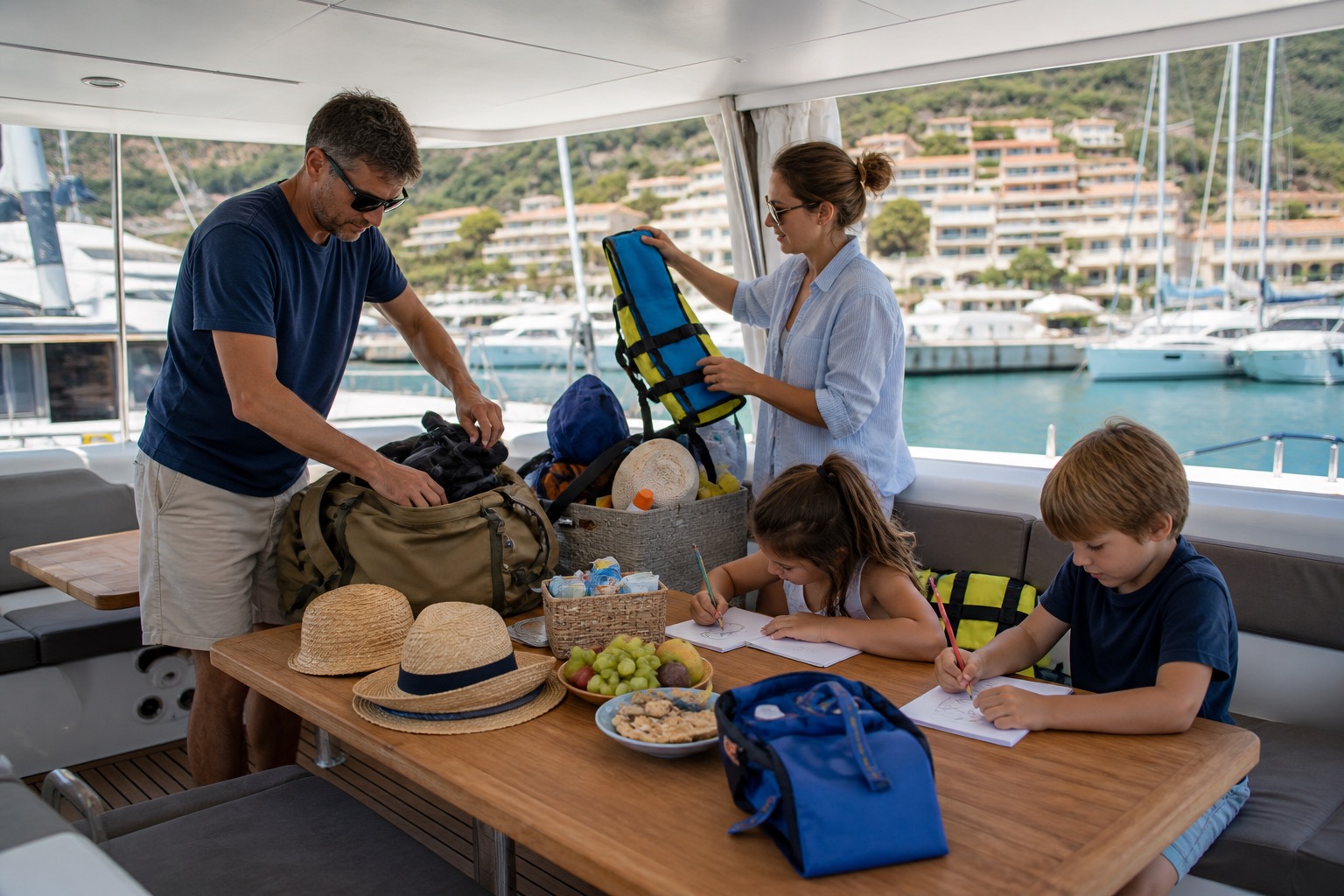
A windier day around Tuscany or Elba does not need to be a failed day. Arrive at a protected marina earlier, use the shore, cook together, draw, play cards or take a short walk. When the plan changes before frustration begins, children tend to remember the activity rather than the cancelled swim.
Ask the skipper for a protected alternative each morning, not only when the weather has already worsened. The fallback can be a shorter leg, a different bay, or a marina with an easy walk ashore. The best family weather plan is simple enough to explain to a child at breakfast.
Food, sleep and shore time are route tools
Provision for the first two days before leaving the base: easy breakfasts, water, fruit, familiar snacks and simple dinners. Do not rely on a remote stop having the exact products children expect. A well-stocked galley gives the skipper more freedom to choose the safer berth rather than chase a supermarket.
Protect bedtime by avoiding late, noisy arrivals whenever possible. A simple marina evening, showers and an early meal can be more restorative than squeezing in another bay. Children who sleep well make every following passage easier for the entire crew.
Set the family routine before the boat leaves the berth
A calm family charter usually begins with a five-minute agreement, not a long safety lecture. Decide who is the active adult when children are on deck, where life jackets live, when they are worn, and which areas are off limits while manoeuvring. Give children one or two useful jobs suited to their age—passing a soft fender only when asked, checking that hats and water bottles are aboard, or helping choose the swimming stop. A role makes the boat feel less restrictive without confusing safety with play.
Also agree a simple signal for changing plans. If a child is tired, seasick or overwhelmed, the right decision may be a shorter passage and a harbour lunch. Tell the skipper early. That is easier than waiting until everyone is uncomfortable and turns the itinerary into a practical tool rather than a test of endurance.
Family charter checklist for Italy
- Confirm child life-jacket sizes, shade and safe movement on the exact boat.
- Assign an adult supervisor for departure, mooring and swimming.
- Plan short legs, predictable food and an easy weather fallback.
- Keep the last day free for an early return and check-out.
Sources