

Contents
Start with the children's day, not the map
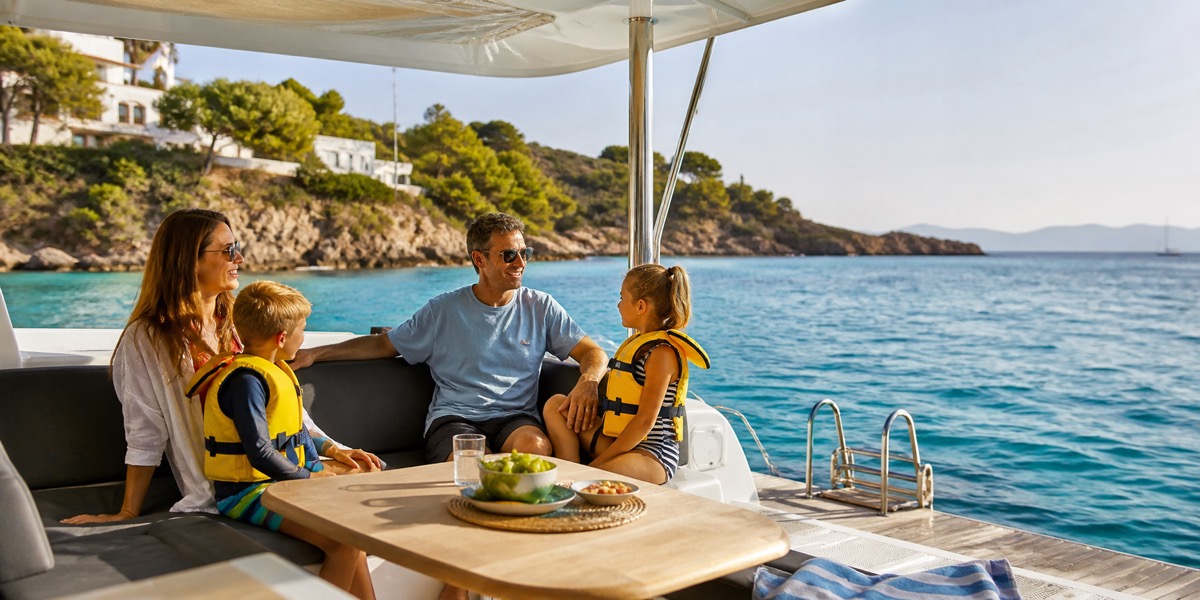
The best family route has a predictable pattern: breakfast, a short move, swim, lunch, quiet time and one optional shore activity. Children usually enjoy the trip more when the boat is not moving all day. Keep the longest passage for a morning with a reliable forecast and plan an easy alternative nearby.
| Priority | What to request | Why it matters |
|---|---|---|
| Shade and ventilation | Bimini, cockpit shade, fans or air-conditioning policy | Heat changes children's energy quickly |
| Cabins | Beds, access, bathroom sharing and night lighting | Night routines are easier when layout is clear |
| Water access | Swim ladder, platform, shallow anchorage and flotation gear | It reduces unnecessary climbing and stress |
Which Greek region works best?
The Saronic Gulf is convenient when you want short distances and an Athens transfer. The Ionian offers green scenery and many calm anchorages, with bases around Lefkas and Corfu. The Cyclades can work for older children who enjoy sailing, but meltemi and exposed water make the itinerary less predictable.
Choose the base by the whole journey: airport transfer, first-night provisioning, medical access, pharmacy and a realistic return window. A remote cove may be beautiful, but it is not always the best place for the first night with tired children.
Catamaran, skipper and onboard rules
A catamaran gives a broad, level cockpit and separate hulls, but the exact boat matters. Check the guardrail height, steps, cabin access, shade, fridge capacity and whether a safety net can be fitted. With a skipper, agree that the crew can change a stop when wind or traffic makes it uncomfortable.
Food, sleep and motion matter as much as the route
Children usually cope better with a charter when meals are familiar and the day has a visible pattern. Pack a few dependable snacks, keep water within reach and tell the crew which foods must be available before the first departure. If a child naps, plan the passage during that window and leave the afternoon anchorage quiet. A family does not need a restaurant stop every night; a simple dinner aboard can be the most relaxing option after a warm day.
Motion sickness is easier to prevent than to repair. Ask the skipper which legs are most exposed, keep the first passage short, avoid heavy meals immediately before departure and let the person who feels unwell stay in fresh air near the centre of the boat. If symptoms continue, stop and follow medical advice rather than treating the itinerary as more important than the child’s condition.
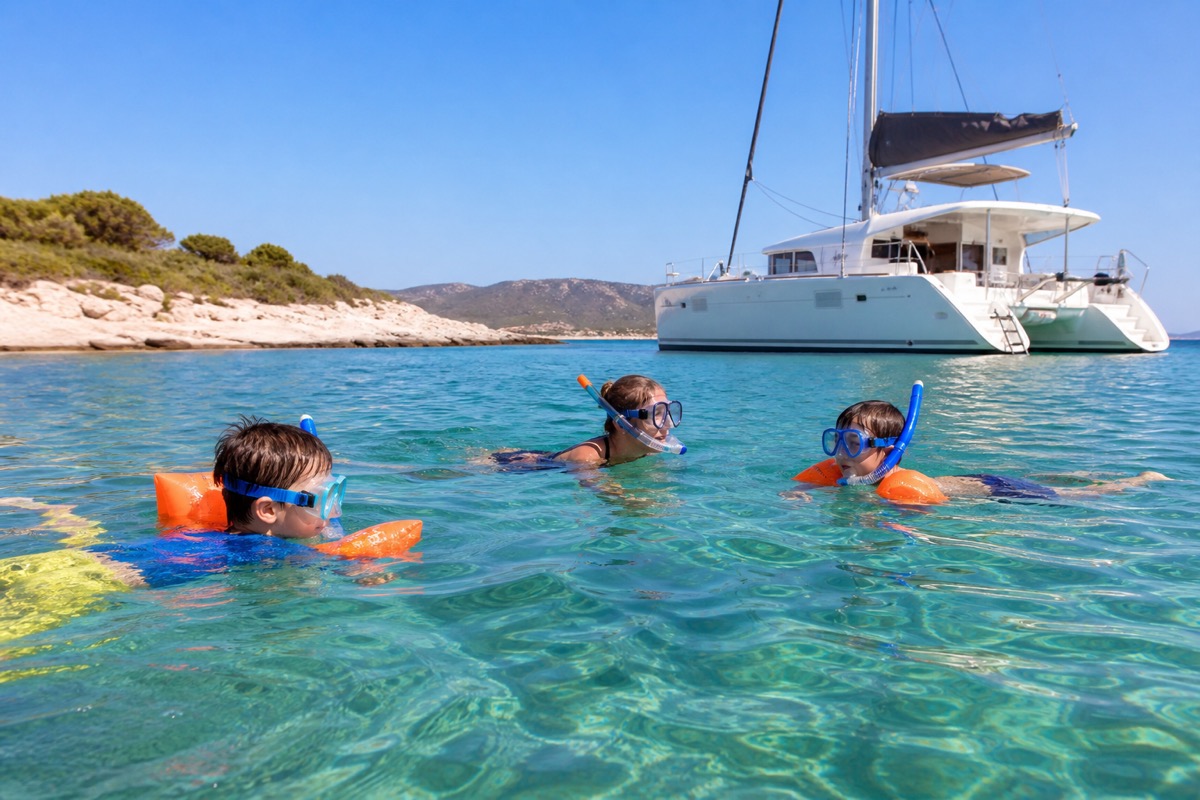
Before each swim stop, agree who supervises the children, where they enter the water and when everyone returns aboard. A visible routine is reassuring for young guests and reduces the chance that adults assume somebody else is watching. The crew can help, but parents remain responsible for their children.
Family charter questions
- Can the crew provide correctly sized life jackets for every child?
- Is there shade at the cockpit and a safe, non-slip route to the swim platform?
- Can meals be adapted to allergies, nap times and familiar foods?
- What is the plan if a child is unwell or the weather closes the anchorage?
Sources