

Contents
The short answer
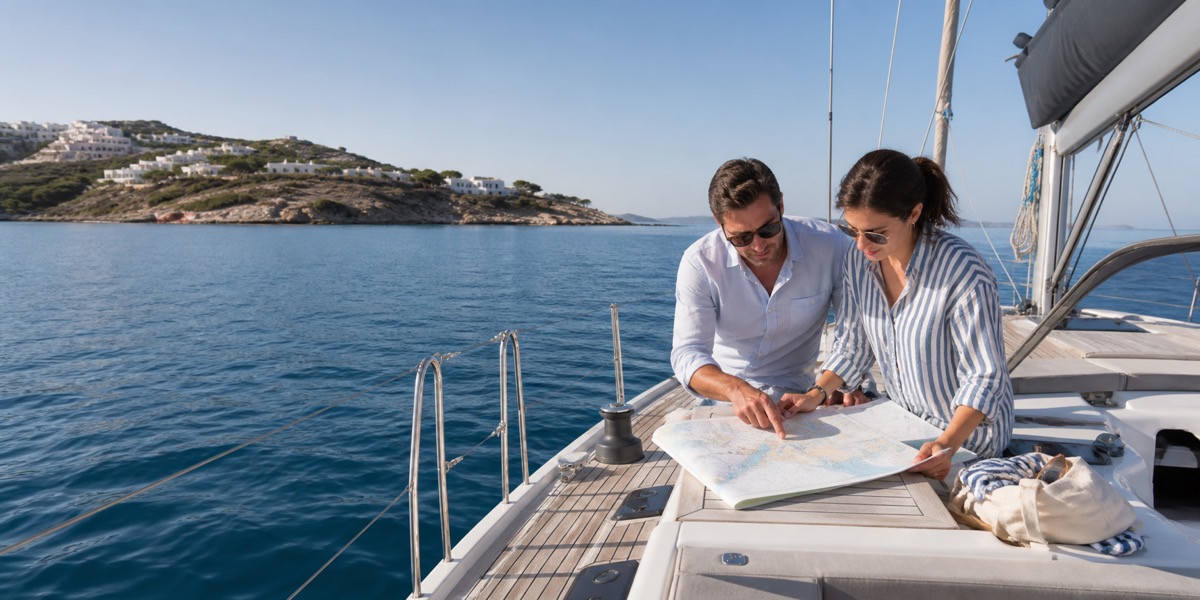
Start with the Saronic Gulf if your group wants an easy first week. From Alimos, a realistic seven-day loop can include Aegina, Agistri, Poros, Hydra and Dokos, with flexibility to shorten a passage when the forecast changes.
The Cyclades are spectacular but more exposed to the meltemi and usually demand more tolerance for wind, swell and longer open-water legs. The Ionian is another friendly option, especially from Lefkas or Corfu, but airport and base logistics differ.
| Route | Why it works for a first trip | Watch-outs |
|---|---|---|
| Saronic Gulf | Short legs, protected bays, Athens access | Busy weekends near popular ports |
| Ionian | Calmer summer pattern and green anchorages | Different airport and base transfer |
| Cyclades | Iconic villages and open-water sailing | Meltemi, swell and exposed passages |
Build the week around a rhythm, not a checklist
A good first charter normally has one main activity per day: a short morning passage, a swim stop, lunch at anchor and one shore visit. Leaving a buffer day is not wasted time; it protects the trip when wind, provisioning or a late arrival changes the plan.
Day 1 should be intentionally light: check-in, safety, stowing bags and a nearby anchorage. Days 2–5 can alternate between a port night and a quiet bay. On day 6, return toward the base early enough to handle fuel, checkout and any technical question without rushing.
Skippered or bareboat?
Choose a skipper when nobody in the group has the required licence, when the route is new or when guests would rather focus on swimming and meals than manoeuvres. Ask how much of the itinerary is flexible and who makes the final call on weather.
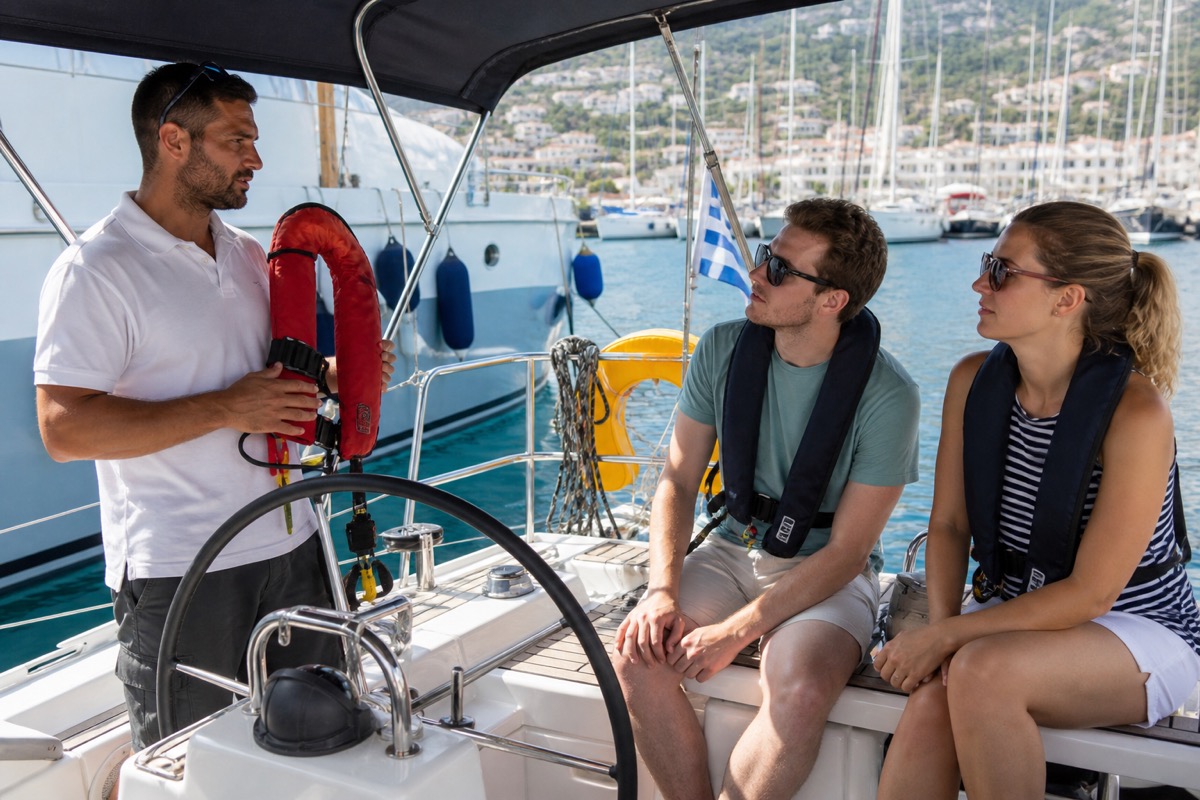
Bareboat can work for an experienced skipper, but the handover must cover navigation equipment, engine checks, anchoring, mooring lines, gas, water and emergency contacts. A lower charter price is not a reason to skip that briefing.
Book these points before paying
- Exact base, check-in day and latest arrival time
- Cabin layout, berth sizes and what linen or towels are included
- Whether skipper, fuel, transit log and final cleaning are included or variable
- Weather fallback and who can approve a route change
Make the first morning deliberately simple
Before leaving the base, buy only what you can store and use: water, breakfast, fruit, simple lunches and any medicines the group needs. Ask the crew where the nearest fuel, ice, pharmacy and rubbish point are. These details sound small, but they decide whether the first day feels like a holiday or a chain of errands. Keep passports, booking documents and emergency contacts in one dry folder, and make sure every guest knows the boat name and meeting point.
Ask for a short demonstration of the toilet, shower, water tank, charging points and tender. On a crewed boat, guests do not need to operate systems, but they do need to know what not to touch and how to ask for help. This is also the moment to clarify quiet hours, shoes, smoking, swimming after dark and how the crew wants guests to move around the deck. Clear expectations are part of a good charter, not an awkward formality.
After the first night, ask the skipper for a ten-minute route review. Confirm the next berth, expected wind, water level and shore option. This small reset helps first-time guests understand why the plan changes and keeps the week practical rather than mysterious.
Sources