

Contents
The short answer: Antibes is the most forgiving first base
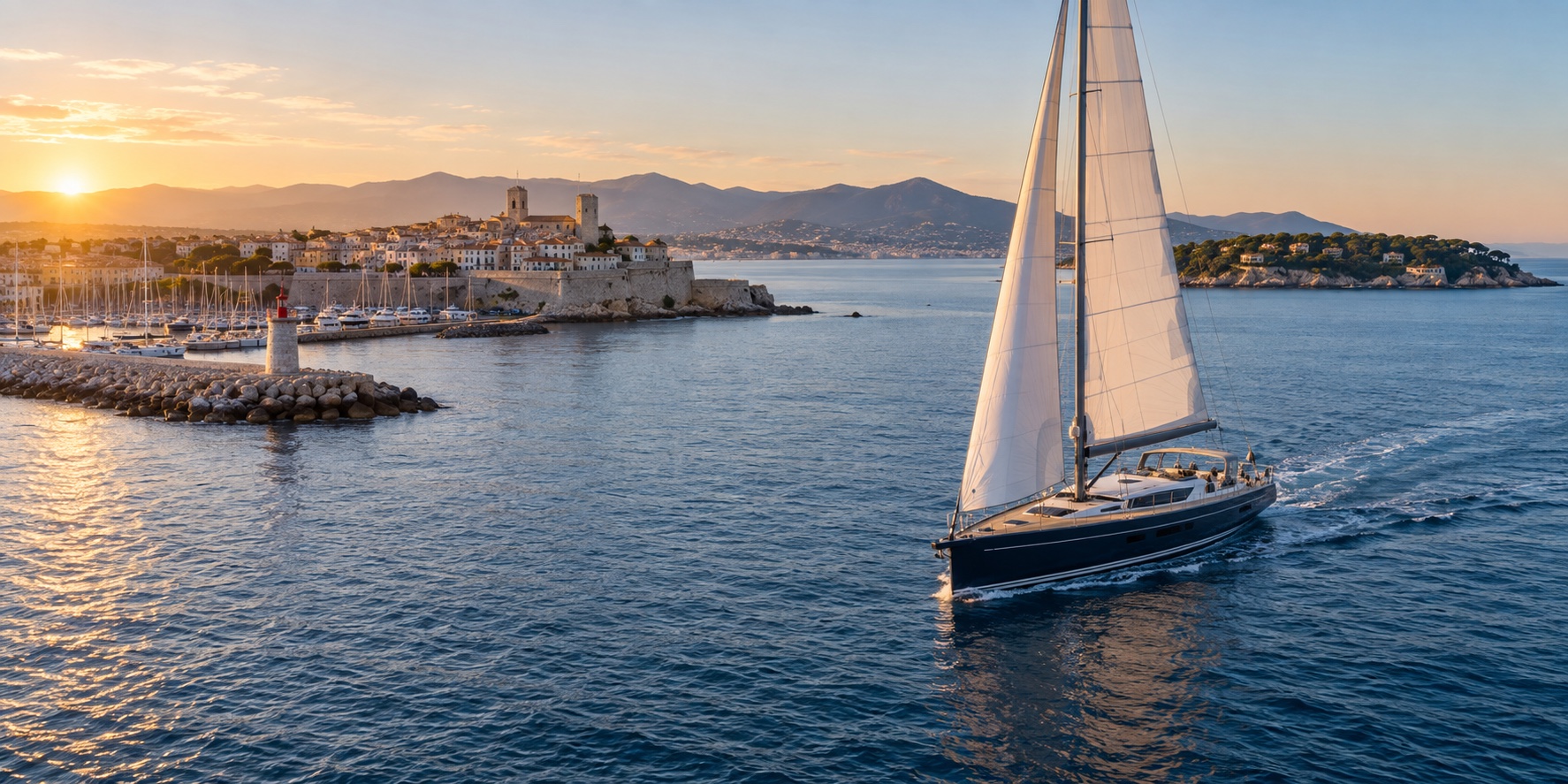
Port Vauban places a new charter crew in the middle of the Côte d’Azur rather than at one extreme of the coast. The marina publishes VHF channel 9, booking information, weather and berth services, and its official site describes about 1,500 berths with capacity for large yachts. For a sailing holiday, the useful point is practical: you can provision, complete the handover and reach either the Nice–Monaco side or the Cannes–Lérins side without committing to a long first passage.
Nice is convenient when guests fly in and out on different schedules, while Cannes is attractive for a short event-led stay or a Lérins-focused plan. Both can work, but ask the operator where the exact handover takes place, whether overnight berthing is included and how a late arrival changes the first day. TrimTeam can compare suitable boats in the fleet before you lock the itinerary.
| Base | Best first-trip use | What to confirm before paying |
|---|---|---|
| Antibes / Port Vauban | Best all-round start; easy split between east and west coast | Handover berth, check-in time, provisioning delivery and port charges |
| Nice / Port of Nice | Airport-led trip, city break, or a short coastal cruise | Exact marina, tender rules, parking and whether the yacht is actually based in Nice |
| Cannes / Port Canto or Vieux-Port | Lérins Islands, events and a glamorous shore programme | Berth availability, draft limit, reservation process and local mooring rules |
Arrival day: turn the marina into a checklist, not a sightseeing race
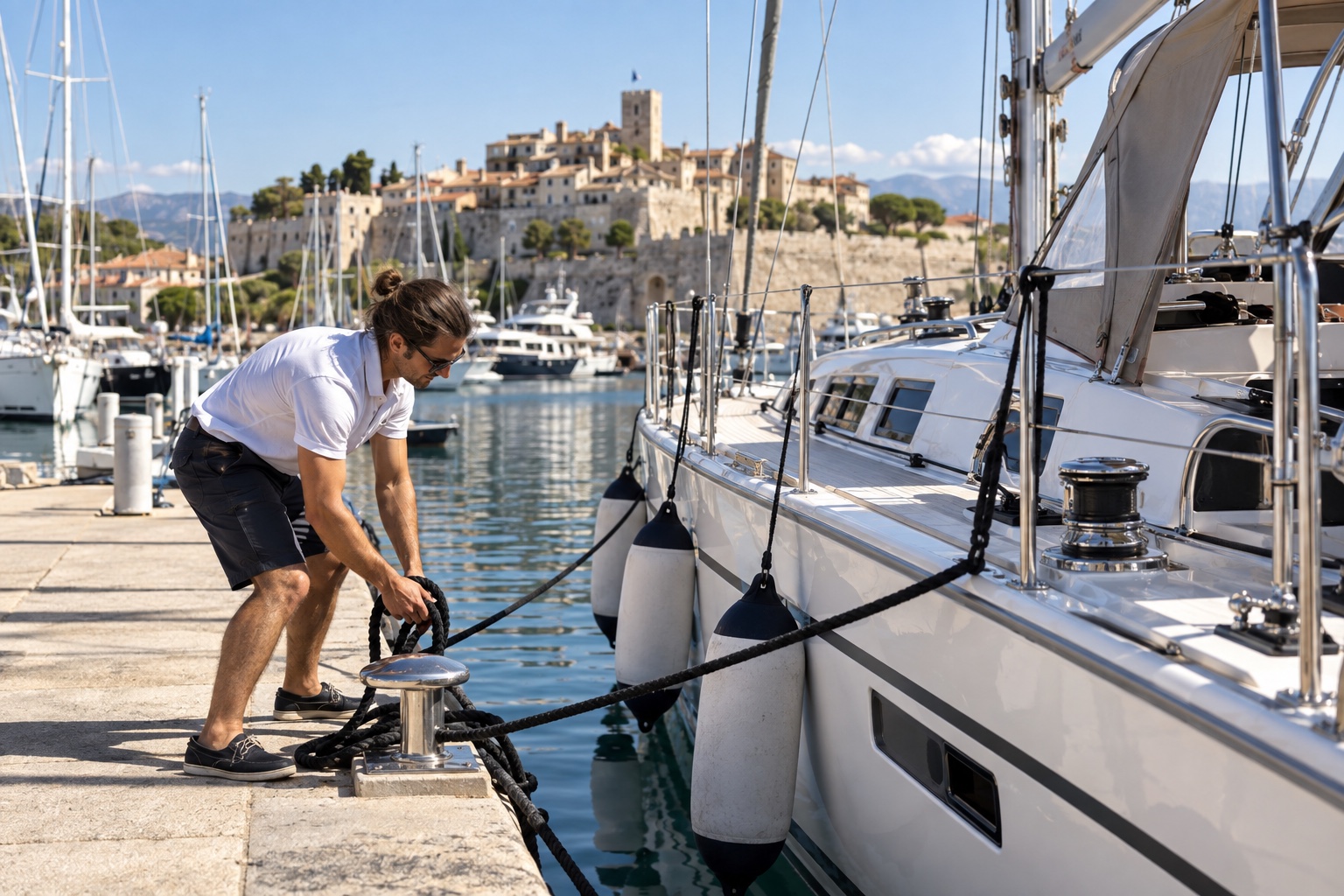
Set aside a full handover window. Photograph the hull, gelcoat, sails, tender, fuel gauge and safety inventory; test the chart plotter and the VHF; then ask the base team to mark the nearest fuel dock and the return procedure. Port Vauban lists a 24-hour VHF watch on channel 9, but operating hours and assistance for your specific charter still need confirmation in the contract.
Provision for one breakfast, one easy lunch and a simple first dinner rather than loading a week of fragile food before you know the galley and fridge. Keep passports, licences, the crew list, insurance documents and the deposit card in one waterproof folder. If a skipper is aboard, agree who speaks for the group and when the skipper can change the plan.
A realistic first week has three sailing windows
Use the coastline as three compact zones. East of Antibes, Villefranche-sur-Mer, Saint-Jean-Cap-Ferrat, Beaulieu and Monaco provide short legs with strong shore interest. West of Antibes, Juan-les-Pins, Cannes, Port Canto and the Lérins Islands create an easier swimming-and-anchoring rhythm. A flexible week can sample both sides, but do not promise a fixed restaurant or berth until the harbour confirms it.
Plan by elapsed time, not by straight-line distance. At a relaxed 5–6 knots, a 10 nautical mile leg is roughly two hours under power, longer when sailing or manoeuvring. Add time for harbour entry, anchoring, dinghy trips and a crew that wants to swim. Leave at least one half-day with no passage so a forecast change does not turn the holiday into a delivery trip.
Weather logic: keep two versions of the same holiday
On the easy forecast, depart after the morning briefing, use a protected bay for lunch and move to the next harbour before the afternoon traffic builds. On an unsettled forecast, stay close to Antibes, Cannes and the Lérins side, shorten the leg and keep a marina night in reserve. Météo-France’s marine service is the right starting point for the official forecast; compare it with the base team’s local briefing and never treat a sunny shore forecast as a promise of calm water.
A good skipper should be able to say what gets removed first: Monaco, a late dinner reservation or the final swim stop. Write that order into the group chat before departure. It prevents the common first-trip mistake of defending the map instead of protecting the crew’s energy and the return window.
Before you confirm a French Riviera charter
- Choose the base by handover convenience, not only by the town name in the search result.
- Request a line-item quote: yacht, cleaning, transit log, deposit or insurance, fuel, berths, water, provisions and any local tax.
- Confirm licence requirements, skipper availability, check-in and check-out times, and the latest safe-return deadline.
- Ask for the actual draft, beam, air draft, tender size and berth plan for your dates.
- Save Météo-France marine forecasts and the harbour’s VHF and contact details offline.
- Select one east-coast plan and one west-coast plan before the first night.
The booking decision that saves the most stress
Send the broker a short brief: guest count, cabins required, sailing experience, preferred start day, mobility needs, whether children are aboard and whether the priority is swimming, food, nightlife or sailing time. Ask for two boats that fit the same brief in different layouts, then compare the real total rather than the weekly headline price.
If you want a captain, explain whether the skipper is expected to sleep aboard, cook, teach or simply navigate. TrimTeam’s Helm service can help turn that brief into a route and boat shortlist. The next step is a written offer with the base, dates, inclusions and cancellation terms visible on one page.
Sources