

Contents
Why Corfu works for a first charter
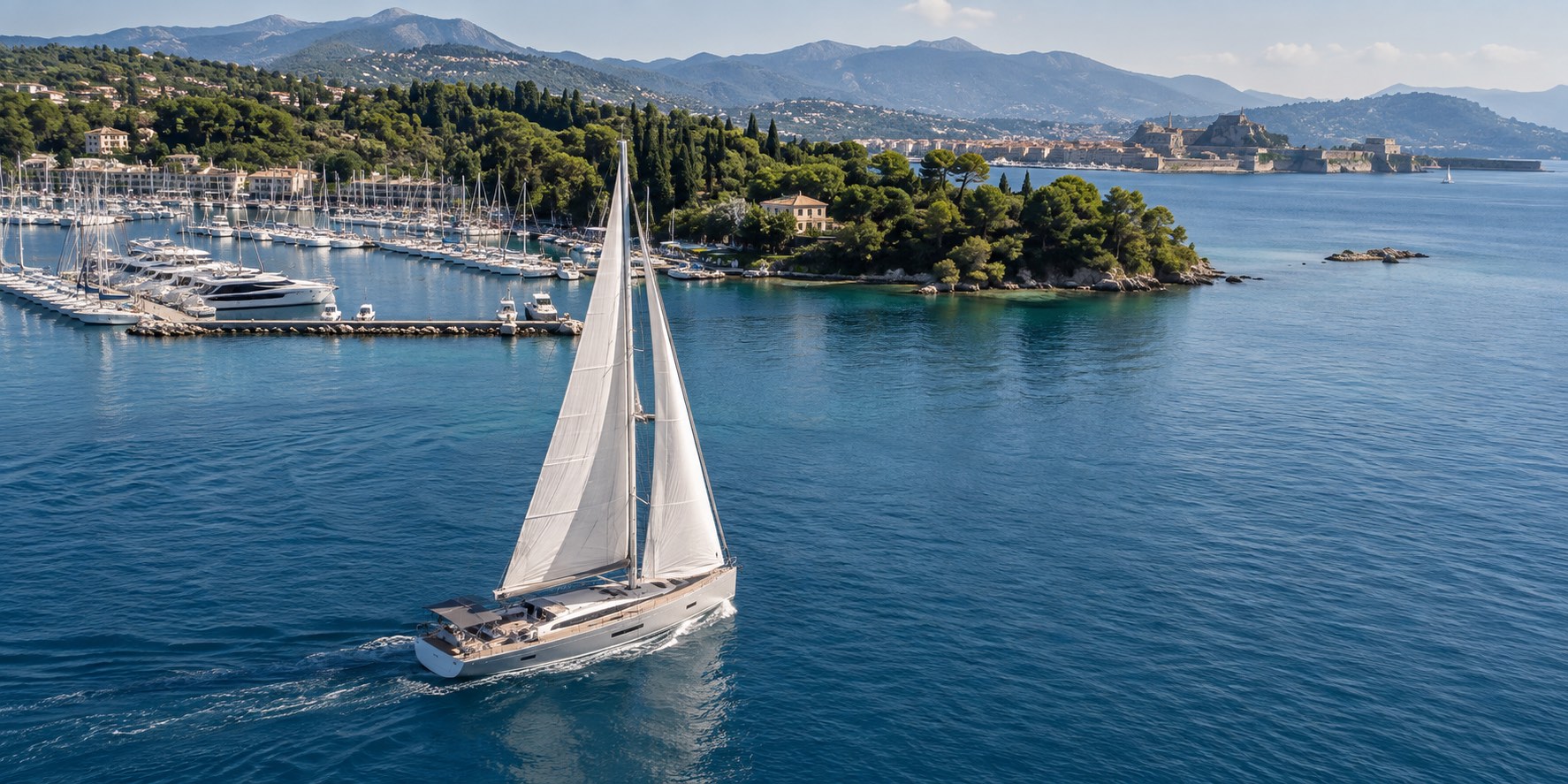
The Ionian north combines green hills, sheltered-looking bays, historic ports and a sailing rhythm that can feel gentler than an open Aegean itinerary. Visit Corfu’s official tourism site describes smooth winds for much of the year, diverse coves and several harbours around the island; it also identifies Gouvia as the country’s second-largest marina and a major sea-tourism base. Those are useful planning facts, not a guarantee of calm water on your dates.
A first-trip brief should define the group before the island list: how many guests sleep aboard, whether anyone is new to boats, how often you want to swim, and whether the priority is Corfu Old Town, quiet coves, tavernas or a southbound extension to Paxos. TrimTeam can use that brief to shortlist the fleet and show what changes when the same boat starts in Gouvia, a smaller local harbour or a crewed day charter.
| Starting option | Best for | What to confirm |
|---|---|---|
| Gouvia Marina | First-time logistics, broad fleet, services and easy Corfu Town access | Exact berth, transfer time, check-in window, draft and provisioning |
| Corfu Town / NAOK or Sailing Club | A short city-focused charter or guests who want historic harbour atmosphere | Visitor access, berth permission, depth, traffic and shore landing |
| South Corfu or Benitses | A quieter start and short coastal days | Fleet availability, transfer, fuel, water and whether the berth is seasonal |
| Paxos as the base | Repeat Ionian sailors seeking immediate island time | Transfer, provisions, ferry fallback and the operator’s contract limits |
Build the first two days around learning the boat
On embarkation day, keep the plan deliberately small: safety briefing, cabin allocation, water and charging check, tender launch, a short manoeuvre and one nearby swim if the skipper approves. Gouvia is about seven kilometres from Corfu Town and is presented by Visit Corfu as a full-service sailing centre, so use the base to solve practical details rather than rushing toward a sunset anchorage.
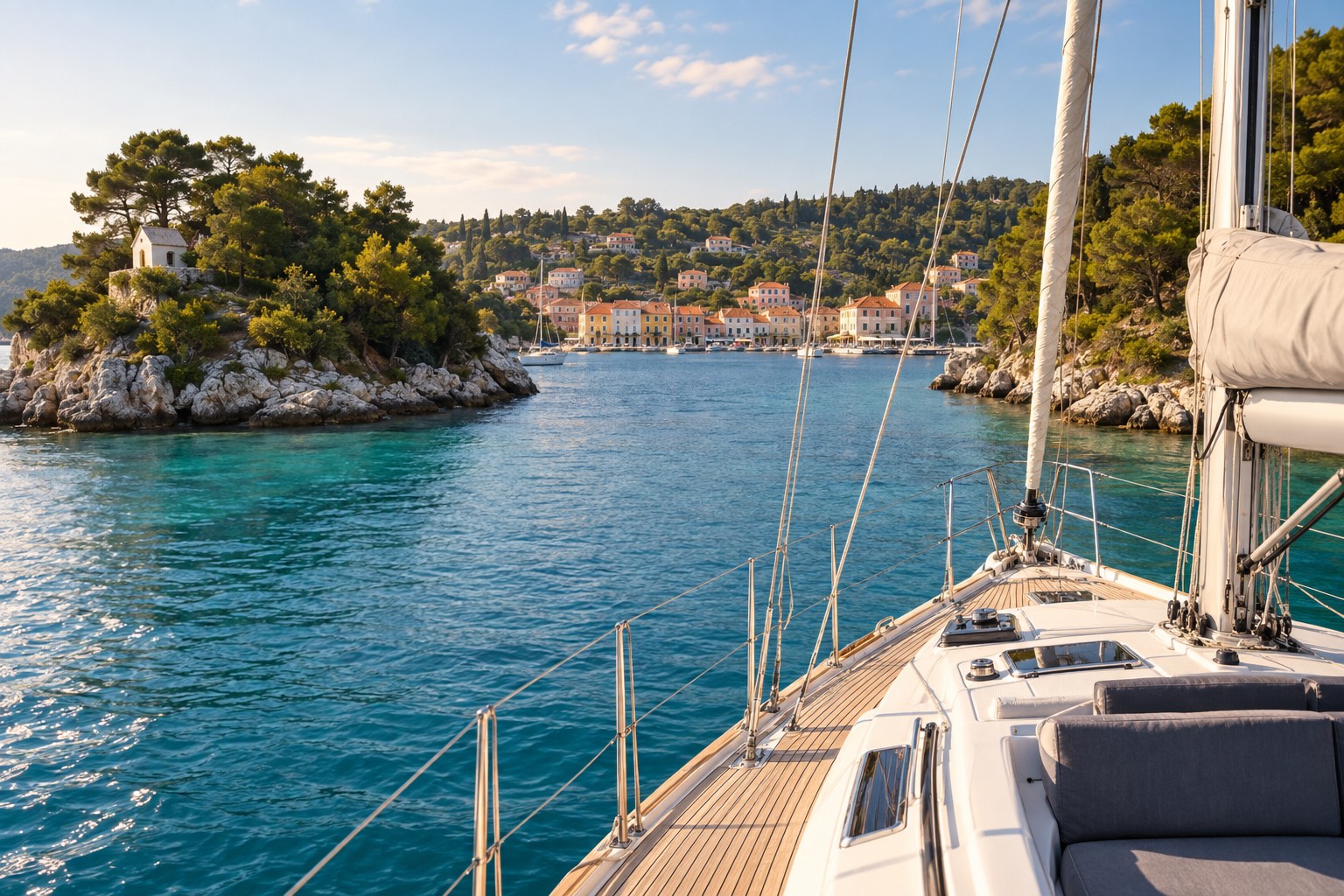
The second day can move north toward Kassiopi, Agios Stefanos or the Diapontian-facing coast, or south toward Benitses and quieter coves. Do not lock the order before seeing the live wind and ferry traffic. A realistic first week normally has one main coastal objective per day, one shore meal that can move, and one confirmed marina night for water, laundry, charging and provisioning.
When to add Paxos and when to keep Corfu local
Paxos and Antipaxos are the natural southbound extension. Visit Greece places them among the Ionian islands and highlights Gaios, sea caves and Antipaxos beaches; Visit Corfu notes that Paxos lies roughly seven nautical miles south of Corfu. That proximity makes the islands attractive, but the passage still deserves a proper forecast, a departure window and a safe-return decision. A small map is not a permission slip to cross in deteriorating conditions.
Add Paxos when the group has at least one flexible day, the skipper confirms the passage and you have a confirmed overnight option in Gaios, Lakka or another agreed harbour. Keep the week on Corfu when children, mixed mobility or a short holiday make transfers and simple returns more important. A good Helm brief can show two versions before you pay: a north-and-east Corfu loop and a Corfu–Paxos option with a protected fallback.
Harbours, old town and shore logistics
Corfu Town is more than a photo stop. The official local guide explains that bus line 15 connects the airport and the port, while the Old Town and Venetian fortresses are close to landing points. That makes a pre- or post-charter hotel night worthwhile, especially if the crew arrives late or wants a proper provisioning run. Agree whether the yacht will berth in Gouvia, at a city facility or only anchor outside town.
Small Ionian harbours reward early communication. Ask the operator how stern-to or lazy-line mooring works, where water and rubbish are handled, and whether a tender landing is practical for your guest profile. In a compact village, the berth may be close to a restaurant but not to a supermarket; plan the last-mile transfer instead of assuming that a pin on the chart equals a service.
Choose the boat for shade, draft and crew confidence
A crewed catamaran is the easiest default for a mixed group: level cockpit, shade, wide swim platform and more separation between the skipper’s work and guest time. It is particularly useful on a week built around swimming and long lunches. Check beam and draft against Gouvia and any small harbour you want to use; comfort at anchor does not remove berth limits.
A monohull suits a smaller, confident crew that wants the sailing sensation and accepts heel, narrower decks and a compact cockpit. Ask about reefing, water capacity, tender, outboard, generator and skipper accommodation. For either hull, compare certified day capacity with the number of beds, then test the proposed route against the boat’s air draft and draft.
| Question | Catamaran default | Monohull default |
|---|---|---|
| Who feels comfortable? | Families and mixed experience; stable social deck | Sailing-focused crew comfortable with heel |
| Where is it strongest? | At anchor, in shade and for cockpit living | Under sail and in narrower berth approaches |
| What can limit the plan? | Beam, windage and tight village berths | Motion, smaller living space and draft |
| What to compare? | Certified capacity, beam, tender and shade | Draft, reefing setup, cockpit and skipper cabin |
Budget and booking checks for Corfu
Ask for a dated proposal that separates yacht, skipper, fuel, final cleaning, berthing, provisioning, transfers and taxes. As a planning band, a week on a small crewed yacht in the Ionian may begin around €4,500–€14,000 before premium catering and optional excursions; this is a working range, not a tariff. Month, cabin count, fleet age and whether fuel is included can change the total materially.
Before paying, confirm the exact Gouvia or local berth, deposit, cancellation and weather terms, passenger insurance, skipper cabin, check-in documents, fuel procedure and the latest safe return time. Keep shore reservations flexible until the skipper confirms the sea state. Save a plan B that can be completed without Paxos, because the most expensive surprise is a route that cannot be shortened.
First Corfu charter checklist
- Name the exact marina, transfer and handover window.
- Share guest count, swimming ability, motion sensitivity, children and mobility needs.
- Decide whether Paxos is a must-see or a weather-dependent option.
- Confirm beam, draft, certified capacity, shade, water, tender and skipper cabin.
- Ask for a Corfu-local route and a Corfu–Paxos alternative.
- Request a dated, itemised quote with cancellation and weather wording.
Sources