

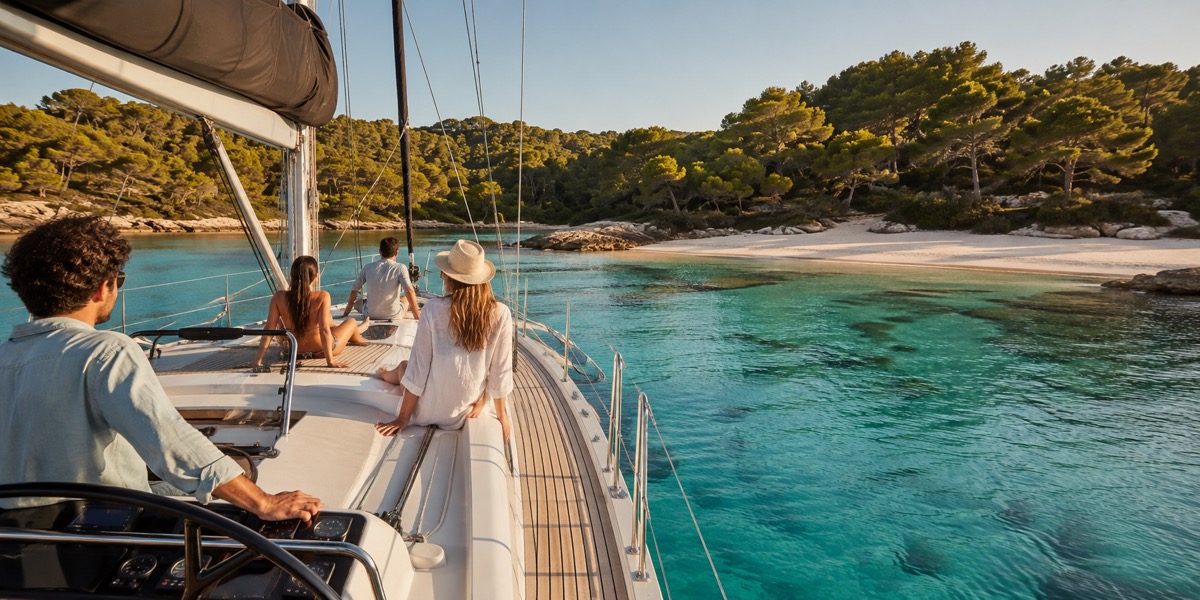
Contents
Pick one sailing personality
The official Balearic tourism guide identifies around 50 marinas and describes different wind patterns across the islands. Mallorca and Menorca are more exposed to the Gulf of Lion and offer stronger summer sailing conditions; Ibiza and Formentera are closer to the mainland and are generally better suited to calm crossings. Treat that as a route decision, not a ranking.
For a first week, resist mixing Mallorca with Ibiza unless you have a one-way charter and a crew that accepts a long transfer. A compact island group leaves time for swimming, shore walks, weather changes and a calm return. Ask the operator whether the contract allows one-way drop-off before building the route around it.
Decide what “first charter” means for your group: a fully skippered holiday, a bareboat learning week or a hybrid where guests help with lines and navigation. That choice changes the cabin brief, handover time, daily mileage and contingency budget.
Choose a base and book the first night
Palma, Alcúdia, Port de Pollença, Port d’Andratx, Ciutadella, Mahón, Sant Antoni de Portmany and La Savina all create different first afternoons. Choose by airport transfer, fleet availability and how quickly you can reach protected water—not by the prettiest marina photo. Ask for the exact check-in window, berth instructions and fuel-return plan.
Ports de les Illes Balears publishes an online process for transit berths in directly managed ports and lists locations such as Port d’Andratx, Port de Fornells, Port de Pollença, Port de Sóller and Sant Antoni. Availability is date-sensitive, so reserve early for the nights that make your route work, then keep a second bay or marina for each exposed leg.
If you choose Ibiza and Formentera, clarify whether the operator includes a buoy reservation or expects you to arrange it. If you choose Mallorca or Menorca, confirm draft and beam limits for the marinas on the north and south sides. The base should match the yacht, not force the yacht to match an unrealistic base.
Use a seven-day route with two versions
Days 1–2, Mallorca version: complete the handover near Palma, provision, then make a short first hop toward a sheltered south-west or south coast anchorage. Keep the first evening close to the base so the crew can learn the tender, water system and berth routine.
Days 3–5, Mallorca version: choose one north-coast day toward Pollença or Alcúdia only when the forecast supports it, then keep a shore or marina day as a reset. Official tourism guidance highlights the bays of Pollença, Alcúdia and Palma as places where the thermal embat can build through the day, so plan departure and reefing around the forecast rather than a fixed timetable.
Days 6–7, Mallorca version: move back in stages and keep the final night within a conservative run of the return base. If the north is uncomfortable, stay south and make the holiday about coves and shore time; the safe route is the one that protects the handback.
Ibiza–Formentera version: use day 1 for a short run from the base to a sheltered cove, days 2–3 for Formentera beaches and a buoy or marina night, days 4–5 for Ibiza’s west or north coves when the wind allows, and days 6–7 for a staged return. Keep the plan compact: the point is to enjoy turquoise water, not to collect every island name.
Make anchoring part of the itinerary
The Balearic Government’s Posidonia guidance says uncontrolled anchoring is prohibited and anchoring directly on Posidonia oceanica is generally forbidden. The official cartography and buoy-booking resources exist to help skippers find permitted, lower-impact options. Do not treat a turquoise patch on a chart plotter as permission to drop the anchor.
Before departure, save the official Posidonia map, identify regulated buoy fields and ask the operator which reservations are required for your dates. In a marine reserve, check the current access and activity rules as well; a beautiful bay may have restrictions on anchoring, landing, fishing or water sports.
Build the route so a buoy is a bonus, not the only safe option. Keep a marina, a second field or a sheltered shore-side plan for every night when the forecast or availability changes.
Prepare the crew for a short, useful briefing
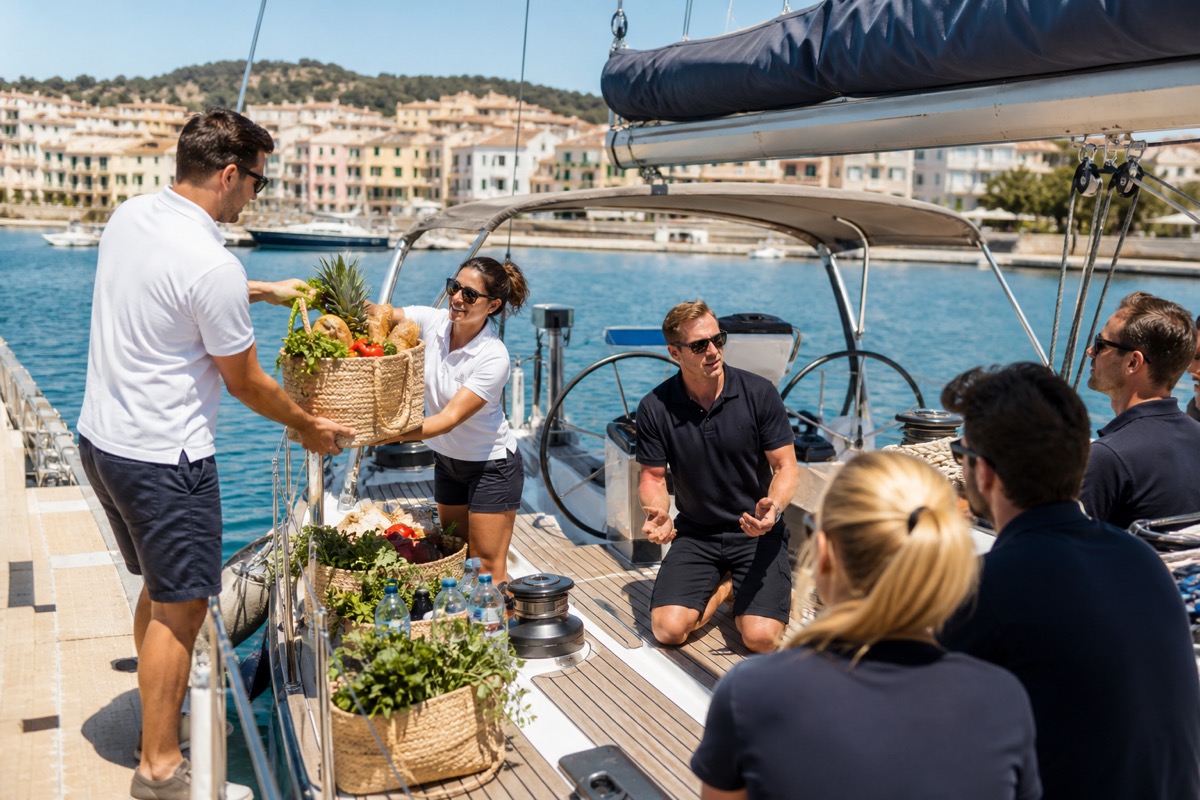
Bring ID details, crew data, deposit method, insurance documents, allergies and the preferred language for the safety briefing. Photograph the boat, note existing marks and learn the location of gas, shore power, water intake, spare keys and emergency equipment. The handover is the moment to ask what the operator expects at return.
Provision in two stages: water, breakfast, lunch and basics before leaving; fresh food and shore treats after you understand the storage. Keep bags soft and small, and agree who handles lines, depth, weather and the tender. A first charter feels easy when everybody knows the next simple job.
Set a daily decision time, preferably before the wind builds. Compare forecast, wave direction, mooring availability and the group’s energy, then choose the next leg. This keeps an attractive itinerary from becoming a race against the sea state.
Keep two calm exits from every plan
If the wind rises on Mallorca or Menorca, shorten the leg, stay on the sheltered side or move to a marina with services. If a buoy field is full in Formentera, use the operator’s approved alternative or a port reservation rather than anchoring on seagrass. The decision is successful when the crew remains rested and the return time stays protected.
The last night should be close enough to the base for a conservative morning run. Keep fuel and water margins, do not schedule a long crossing after the final dinner, and confirm the operator’s return checklist before the week begins.
A first Balearic charter is not measured by the number of islands visited. It is measured by whether the crew had clear choices, legal anchorages, enough sleep and a route that still worked when the wind changed.
First Balearic charter checklist
- Choose Mallorca/Menorca or Ibiza/Formentera before selecting a route.
- Confirm base transfer, check-in, berth, fuel and final-return procedures.
- Reserve key marina or buoy nights and keep a second option for each leg.
- Save official Posidonia cartography and check marine-reserve restrictions.
- Plan days 1 and 7 short, with one flexible day in the middle.
- Bring soft bags, crew documents, allergy notes and a deposit method.
- Agree the weather decision time and safe return threshold with the skipper.
Sources
- Illes Balears tourism — Enjoy sailing in the Balearic Islands
- Illes Balears tourism — The Balearic Islands, the best destination for sailors
- GOIB — Information on boat licences, transit berths and buoy reservations
- Cuidam la Posidònia — Posidonia cartography and anchoring guidance
- Cuidam la Posidònia — Rules for regulated buoy fields