

Содержание
Короткий ответ
Катамаран выбирайте, если неделя — это купания, якорные стоянки, общие обеды и возможность разойтись по каютам. Монохулл подойдёт, если группе важнее активное плавание, ощущение крена и более узкая лодка для манёвров в марине.
Ни один вариант не является автоматически безопаснее или роскошнее. Важнее понять, поддерживает ли лодка ваш маршрут и то, как гости проводят день: идут под парусом, отдыхают в тени, сходят на берег или остаются на якоре.
Для первого сравнения запишите три приоритета группы, реальное число гостей и самый длинный переход. Затем сверяйте их с планировкой и техническим листом лодки, а не с рекламным заголовком.
Пространство, тень и приватность кают
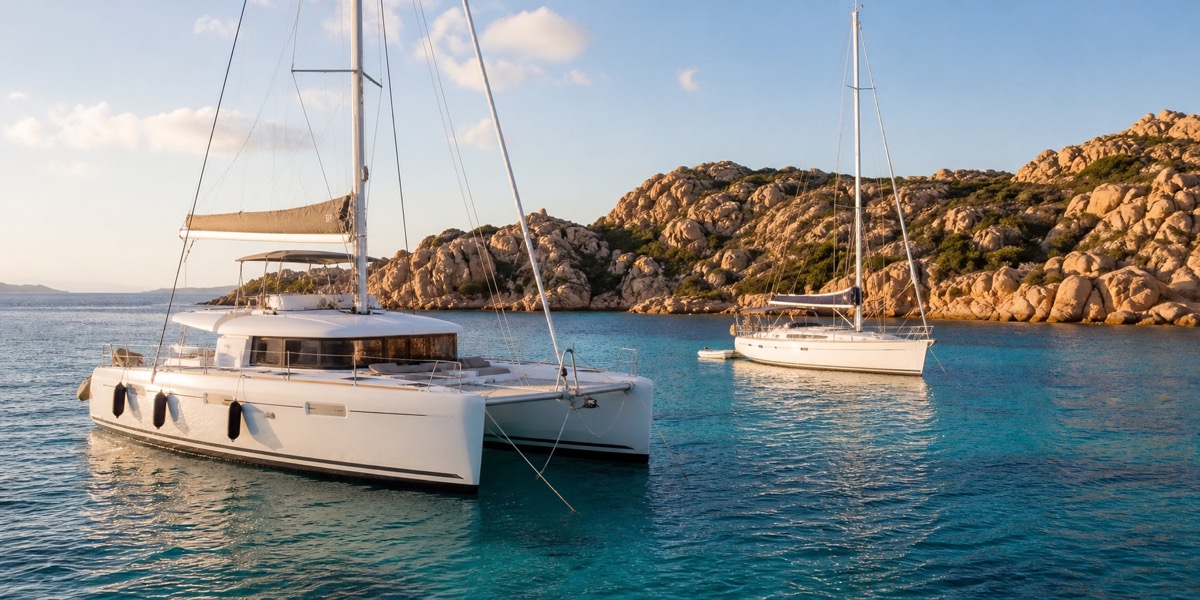
Катамаран распределяет жилое пространство между широким кокпитом и двумя корпусами. Нескольким парам проще провести неделю без постоянного соседства, а у повара, купающихся и тех, кто читает, могут быть разные зоны. Компромисс — большая ширина и особые ощущения в тесной марине.
Монохул сохраняет компактную общую зону и обычно сильнее передаёт крен и работу с парусами. Он подойдёт небольшой компании, которая хочет держаться вместе и рассчитывает больше идти под парусом, чем стоять на якоре.
Проверьте число двуспальных кают, санузлов, трансформируемых мест, объём холодильника, запасы воды, тент и шкафчики. Просите план кают, а не только максимальное число спальных мест.
Сопоставьте корпус с маршрутом Сардинии
Северо-восток подходит обоим типам: из Портиско открывается Коста-Смеральда, а Ла-Маддалена даёт много островов и бухт на компактной акватории. SardegnaTurismo описывает архипелаг как более чем 60 островов и островков в охраняемом национальном парке, поэтому шкипер может выбрать защищённую бухту вместо гонки по точкам.
Небольшая осадка катамарана удобна для купаний, но не означает, что в каждой бухте разрешён якорь или что широкая лодка войдёт в любой гостевой причал. Узкая осадка монохулла иногда упрощает манёвр в марине, зато глубокий киль ограничивает подход к берегу.
Дайте шкиперу бриф: желаемые стоянки, города, часы под парусом и ветровой запасной вариант. Корпус должен поддерживать этот сценарий, а не заставлять группу проводить другой отпуск.
Управление, якорь и ритм дня
Катамаран часто устойчивее на якоре и даёт ровный кокпит, но его парусность и ширина влияют на манёвры в тесном месте. Монохул иначе реагирует на ветер и настройку парусов, может быть привычнее опытному яхтсмену, а крен меняет движение и приём пищи на борту.
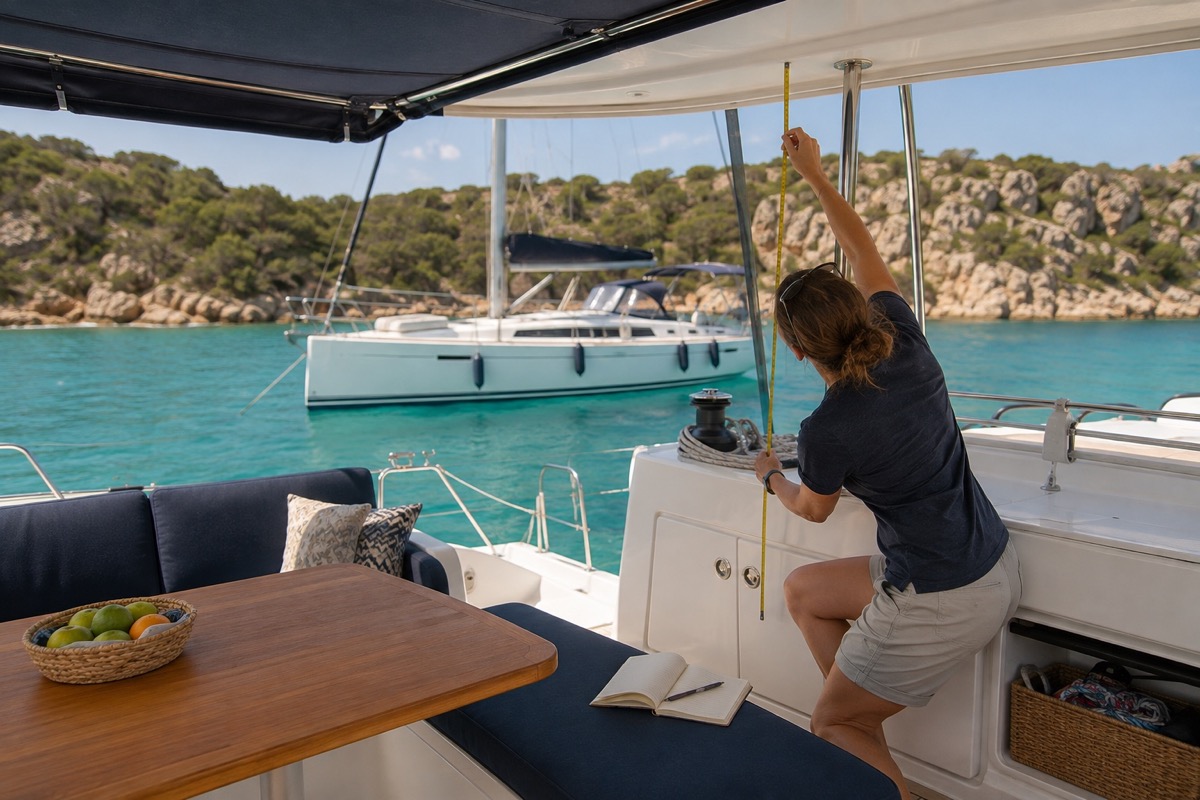
Спросите, кто будет стоять за штурвалом, где хранится тендер, как управляется якорь и что входит в приёмку. На чартере со шкипером он отвечает за навигацию и безопасность, но гости всё равно должны знать, как двигаться по палубе и когда держаться подальше от концов.
Подстройте ритм под лодку: идите в прохладное время, купайтесь в спокойной бухте и возвращайтесь в марину заранее, если место забронировано. Лодка — инструмент маршрута, а не сам маршрут.
Сравнивайте реальную стоимость
Начинайте с полной суммы, а не с базовой недельной ставки. Добавьте шкипера, топливо, финальную уборку, transit log или обязательные пакеты, страховку или условия депозита, провизию, трансферы и марины или буи.
Катамаран может стоить дороже и тарифицироваться иначе из-за ширины. Уточните у базы тарифную категорию, воду и электричество и нужен ли мультикорпусному судну специальный причал. IGY Portisco публикует порядок захода, VHF 69 и услуги провизии, но конкретный договор контролирует чартерная компания.
Монохул может выглядеть дешевле, но потерять преимущество, если группе нужны дополнительные каюты, второй санузел, большая тень или тендер. Сравнивайте цену комфортного гостя и дня маршрута, а не только цену корпуса.
Кому какой вариант подходит
Катамаран выбирайте для семьи или компании друзей, которым нужны отдельные каюты, устойчивый общий кокпит, обеды в тени и частые купания. Он удобен и тогда, когда часть гостей впервые выходит в море.
Монохул подойдёт небольшой группе, которая ставит плавание на первое место, любит настройку парусов и время за штурвалом. Это хороший выбор, если в маршруте больше часов в пути и меньше времени на якоре.
Если приоритеты разделились, проведите нейтральное сравнение с чартерной компанией. Спросите про конкретную модель, её аналоги, размеры причала и действия при замене заявленной лодки.
Чек-лист выбора лодки в Сардинии
- Записать три главных приоритета группы и самый длинный переход.
- Сравнить реальные каюты, санузлы, места, тень, холодильник, воду и хранение.
- Проверить осадку, ширину, тендер, доступ к двигателю, якорное управление и ограничения причала.
- Уточнить, как Портиско, Ла-Маддалена и охраняемые зоны влияют на выбор корпуса.
- Посчитать вместе шкипера, топливо, уборку, страховку, провизию, трансферы и марины.
- Подтвердить модель, объём приёмки, правила замены и отмены.
- Оставить второй тип лодки как запасной, если желаемой модели не будет.
Источники